Bhoger Khichuri
Roasted moong dal and short fragrant gobindobhog rice cooked soft with cauliflower, potato and peas, finished with ghee off the heat. No onion, no garlic, no shortcuts.

Ingredients
Serves 5
- 150 g gobindobhog rice (about 3/4 cup)
- 150 g sona moong dal (about 3/4 cup)
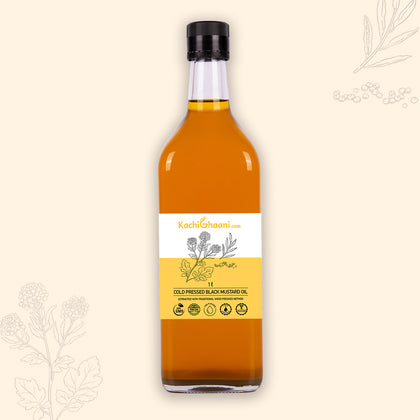
- 3 tbsp Cold Pressed Black Mustard Oil
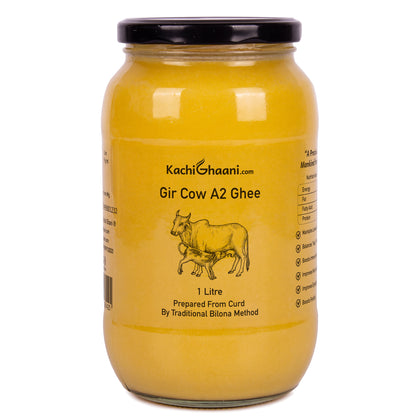
- 3 tbsp Gir Cow's A2 Ghee
- 2 medium potatoes, cut into large chunks
- 1 small cauliflower, cut into large florets
- 1/2 cup green peas
- 2 tomatoes, chopped
- 1 1/2 tbsp ginger paste
- 4 green chillies, slit
- 4 bay leaves, 1 inch cinnamon, 4 green cardamom pods, 4 cloves
- 2 dried red chillies and 1 tsp cumin seeds
- 1 1/2 tsp turmeric powder
- 1 tsp cumin powder
- 15 cashews and 2 tbsp raisins
- 2 tsp sugar
- 2 tsp salt, or to taste
- 1 1/2 litres hot water, kept simmering on a second burner
Quantities are scaled up. Taste as you go and adjust the salt and spice.
Shop this recipe
Everything you need, from our press house
Ashtami morning, and the queue outside the pandal is already down the lane. Inside, the khichuri is being cooked in vessels big enough to sit in, offered to the goddess first, then served on sal leaf plates with a piece of begun bhaja and a spoon of labra. There is no onion and no garlic in it, because it is bhog. What goes in instead is whole spice, cashews, raisins and ghee, and nobody standing in that queue feels anything is missing.
Two fats do the work. Wooden cold pressed black mustard oil starts the pot, frying the potato and cauliflower to a gold edge and carrying the bay leaf, cardamom and cumin. Gir Cow's A2 Ghee finishes it, stirred in after the flame is off so its smell stays on top instead of cooking away. Ours is made the bilona way from Gir cow milk, and that last spoon is what people recognise before the plate has even reached them.
The one thing that decides this khichuri is the water. Keep a pot of it hot on a second burner and use only that. Cold water poured onto cooking rice and dal stops them mid-swell, and they finish uneven and sticky instead of soft and separate.
How to make it
- Dry roast the moong dal in a heavy pan on low heat for 3 to 4 minutes, shaking the pan, until it turns a shade darker and smells nutty. Do not let it brown. Tip it out, wash it in cold water and drain.
- Rinse the rice gently twice and drain it. Keep 1.5 litres of water hot on a second burner, because everything from here on needs hot water.
- Heat the mustard oil in a heavy pot until it thins and a light smoke rises, then lower the flame. Fry the cashews and raisins for 30 seconds and lift them out. Toss the potatoes and cauliflower with a pinch each of turmeric and salt, fry them for 3 minutes until the edges are gold, and lift them out too.
- Into the same oil put the bay leaves, dried red chillies, cinnamon, cardamom, cloves and cumin seeds. Wait 20 seconds until the smell lifts off the pan.
- Add the tomatoes and cook 3 minutes until soft. Add the ginger paste, turmeric, cumin powder and 2 tbsp water. Fry on low for 2 to 3 minutes until the raw smell goes and oil shows at the edges.
- Add the roasted dal and the rice. Stir for 2 minutes so every grain is coated in the spice and oil.
- Pour in 1.2 litres of the hot water. Add the salt, green chillies and the fried potatoes. Bring it to a boil, lower the flame, cover and cook 15 minutes.
- Add the cauliflower, peas, cashews and raisins. Cook another 10 to 12 minutes until the rice and dal are completely soft. Add more hot water if it looks tight. Bhog khichuri should be thick but still fall off a spoon.
- Stir in the sugar and cook 2 minutes. Switch off the flame, add the ghee, cover and let it sit for 10 minutes before serving.
- Serve hot with begun bhaja, labra and a wedge of lime.
Tips
- Bengali garam masala, if you want to add 1/2 tsp at the end, is only cinnamon, green cardamom and clove ground together. Nothing else. Regular garam masala will pull the khichuri away from its bhog taste.
- Rice swap: gobindobhog is short, sticky and fragrant, and it is what makes bhog khichuri smell the way it does. Basmati will work but the dish loses its perfume, so choose any small grain rice over long basmati if you can.
- Stir gently and rarely once the rice is in. Over-stirring breaks the grains and turns the khichuri into paste. Use a flat spoon and lift from the bottom rather than mixing hard.
- Storage: keeps 2 days in the fridge and sets almost solid when cold. Reheat in a pan with a good splash of hot water and a fresh half spoon of ghee, and it comes right back.
- Add the ghee off the heat. Boiling it away in the pot wastes it. Stir it in at the very end and keep the lid on for ten minutes so the smell settles into the rice.