Maharashtrian Kanda Poha
Mustard seeds popping, peanuts turning gold, onions going soft and sweet, then poha folded through until every flake is yellow. Lemon at the end, sev on top.

Ingredients
Serves 3
- 2 cups (150 g) thick poha (flattened rice)
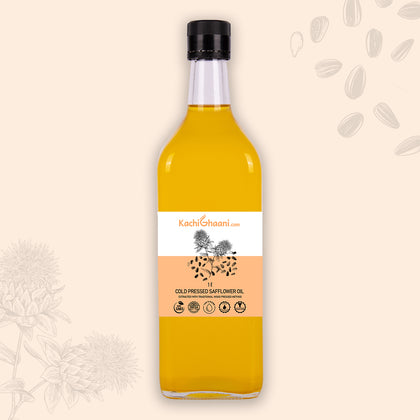
- 2 tbsp Cold Pressed Safflower (Kardai) Oil
- 1 tsp mustard seeds
- 1 tsp cumin seeds
- 2 tbsp raw peanuts
- 8 to 10 curry leaves
- 2 green chillies, chopped
- A pinch of hing (asafoetida)
- 2 medium onions (about 200 g), chopped fine
- 1 medium potato, cut into small cubes (optional, but very Maharashtrian)
- ½ tsp turmeric
- 1 tsp sugar
- 1 tsp salt, or to taste
- Juice of half a lemon
- 2 tbsp fresh coriander, chopped
- 2 tbsp fresh grated coconut and a handful of sev, to serve
Quantities are scaled up. Taste as you go and adjust the salt and spice.
Shop this recipe
Everything you need, from our press house
Half past seven on a Nashik morning. The mustard seeds go first and jump around the kadhai, then the peanuts turn gold, then the onions go in and soften until they are almost see-through. The poha is folded in from the bottom, the turmeric spreads, and a lid goes on for two minutes. It comes out fluffy and pale yellow with a squeeze of lemon over it, grated coconut and a fistful of sev on top. Half the state eats this before nine.
Wooden cold pressed safflower oil, kardai tel, is the old Maharashtrian oil and it is right for poha because it stays out of the way. It is light and almost neutral, so the sweetness of the onion, the smell of the curry leaf and the sharp lemon at the end all stay clear. A heavier oil sits on top of the flakes and makes the whole plate feel greasy by the third spoon. Ours is pressed slowly in a wooden ghaani, unrefined, nothing added.
The one thing that decides poha is the water. Rinse it in a colander under running water for twenty or thirty seconds, moving it with your fingers, and then leave it alone for ten minutes. Do not soak it in a bowl. Poha that sat in standing water goes to mush the moment it hits the pan.
How to make it
- Put the poha in a colander and rinse under running water for 20 to 30 seconds, moving it with your fingers. Do not soak. Leave it in the colander for 10 minutes. It will soften on its own. Sprinkle the salt, sugar and turmeric over it and toss lightly.
- Heat the safflower oil in a kadhai on medium. Add the mustard seeds and let them crackle. Add the cumin and peanuts and fry for a minute till the peanuts turn golden.
- Add the curry leaves, green chillies and hing. Sizzle for 20 seconds.
- Add the onions. Cook for 3 to 4 minutes, stirring, till soft and see-through. Do not let them brown.
- If using potato, add it now with a pinch of salt. Cover and cook on low for 5 to 6 minutes till the cubes are tender.
- Add the poha. Mix gently from the bottom up so the flakes do not break and the turmeric colours everything evenly.
- Sprinkle 1 to 2 tbsp water over the top, cover, and steam on low for 2 to 3 minutes.
- Switch off. Add the lemon juice and coriander and fluff with a fork. Serve hot, topped with grated coconut and sev, with a lemon wedge on the side.
Tips
- Use thick poha only. Thin poha turns to paste the moment it meets water.
- The teaspoon of sugar is not a mistake. Maharashtrian poha has a gentle sweet note that balances the lemon.
- Leftover poha? Sprinkle a little water, cover, and warm it on low for 3 minutes. It comes back soft.
- Add ½ cup green peas with the onions for a colourful matar poha.