Nolen Gurer Payesh
Milk cooked down slowly with short fragrant gobindobhog rice, jaggery folded in off the heat, and fried cashews on top. Warm in a clay bowl, or cold from the fridge.

Ingredients
Serves 4
- 1 litre full fat milk
- 50 g gobindobhog rice, about 1/4 cup
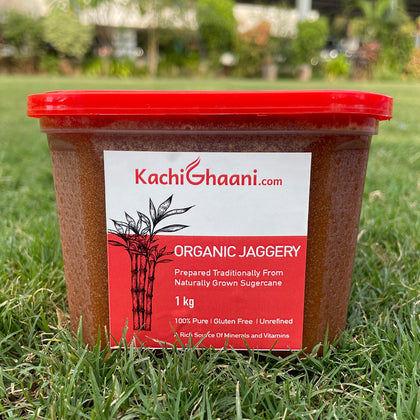
- 150 g Organic Jaggery, grated or chopped fine
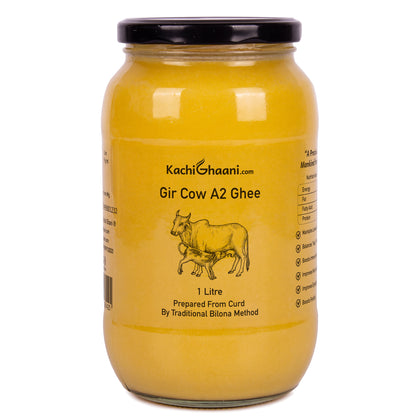
- 2 tsp Gir Cow's A2 Ghee
- 1 bay leaf (tej patta)
- 1/4 tsp salt
- 20 g cashews, halved
- 10 g raisins
- 1/4 tsp green cardamom powder
- 1 tbsp chopped pistachios, optional
Quantities are scaled up. Taste as you go and adjust the salt and spice.
Shop this recipe
Everything you need, from our press house
Someone in the house has a birthday, so there is payesh. In Bengal that is simply how it works, and it happens again at Poush Parbon in January when the new gur is in. A litre of milk goes on a low flame with a bay leaf and reduces for the better part of an hour while somebody scrapes the cream off the sides back into the pot. The rice goes in and cooks until the grains crush between two fingers. It is served warm in small clay bowls, or chilled overnight, and both camps are certain they are right.
We will be straight with you about the gur. Real nolen gur is date palm jaggery, tapped only in the Bengal winter, and we do not sell it. Our Organic Jaggery is sugarcane gur, unrefined, and it makes a genuinely lovely payesh, deep in colour and round in taste, just without that smoky date-palm note. A little Gir Cow's A2 Ghee is rubbed through the drained rice and used to fry the cashews, which keeps the grains separate and adds a soft nutty smell to the milk.
The one rule: switch off the flame, take the pan off the stove, and wait a full five minutes until the surface has completely stopped bubbling before the jaggery goes in. Gur added to boiling milk splits it in seconds, and there is no way back from that.
How to make it
- Rinse the rice once, gently, in a bowl of water. Do not wash it hard or scrub it. You want the starch to stay, because that is what thickens the payesh. Soak 30 minutes, drain, and spread on a cloth for 10 minutes.
- Rub 1/2 tsp of the ghee through the drained rice with your fingers until every grain is lightly coated. Heat the rest of the ghee in a small pan, fry the cashews until pale gold, lift them out, then drop the raisins in for 10 seconds until they puff. Keep both aside.
- Bring the milk to a boil in a heavy bottomed pan, then turn the flame to medium-low. Drop in the bay leaf. Let it reduce for about 15 minutes, stirring often and scraping the cream off the sides back into the milk.
- Add the rice. Cook on low for 25 to 30 minutes, stirring every couple of minutes so nothing sits on the bottom. The grains should crush easily between two fingers with no hard centre left.
- Stir in the salt and cardamom powder. Look at the consistency now. It should be a shade thinner than you want to eat, because payesh thickens a lot as it cools.
- Switch off the flame. Take the pan off the stove and wait a full 5 minutes. The surface must stop bubbling completely. This is the whole trick, so do not rush it.
- Add the jaggery in three lots, folding gently after each one until it melts in. Add the fried cashews and raisins and fold once more.
- Cover and rest 10 minutes so the flavours settle. Serve warm in small clay bowls, or chill it for 3 hours and serve cold with the pistachios on top.
Tips
- About nolen gur: the real thing is date palm jaggery from the Bengal winter, and it has a smoky note our sugarcane Organic Jaggery does not carry. If you can get nolen gur in December or January, use it here in the same quantity. The rest of the year, our jaggery makes a very good gurer payesh, and we would rather say that plainly than pretend they are the same.
- Rice swap: gobindobhog is short, sticky and fragrant. If you cannot find it, use basmati broken roughly in half with your fingers, or any short grain rice. Do not use long unbroken basmati, it stays separate instead of melting into the milk.
- If it splits anyway, your pan was still too hot. Take it off the flame, wait, and next time test by touching the side of the pan. It should be warm, not hot enough to make you pull your hand back.
- Storage: keeps 3 days in the fridge and thickens into a near solid. Loosen with 2 to 3 tbsp warm milk before serving. Do not reboil it, that will split the milk.