Puliyodarai (Tamarind Rice)
Dark, glossy, sour rice with crunchy peanuts and chana dal through it, resting in a covered vessel while the flavour settles. It is better an hour later, and better still tomorrow.

Ingredients
Serves 4
- 1 cup (200 g) raw rice, cooked with 2 cups water and cooled
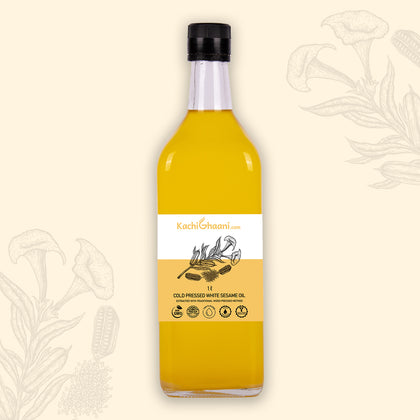
- ⅓ cup Cold Pressed White Sesame Oil, plus 1 tbsp to finish
- 1 lemon-sized ball of tamarind (about 40 g), soaked in 2 cups warm water
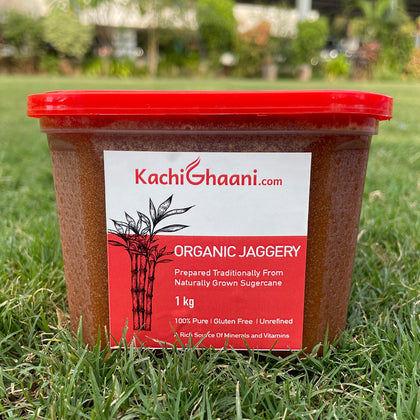
- 2 tbsp Organic Jaggery, grated
- 1 tsp mustard seeds
- 2 tsp chana dal
- ½ cup raw peanuts
- 6 dried red chillies, broken
- 1 tsp hing (asafoetida)
- 1½ tsp turmeric
- 3 sprigs curry leaves
- 2½ tsp salt, or to taste
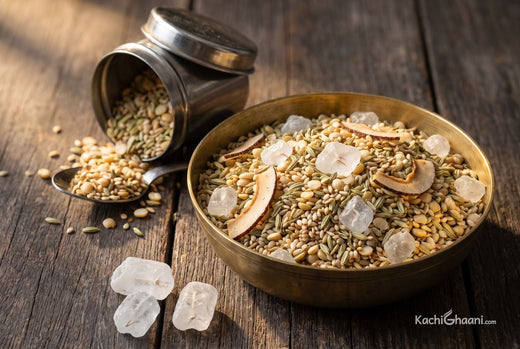
- 3 tsp coriander seeds, for the podi
- 1½ tsp black peppercorns, for the podi
- 3 tsp white sesame seeds, for the podi
- ¾ tsp fenugreek seeds, for the podi
- 4 dried red chillies, for the podi
Quantities are scaled up. Taste as you go and adjust the salt and spice.
Shop this recipe
Everything you need, from our press house
Outside a temple in Srirangam they hand it to you in a leaf cone, still warm, and it is sour and hot and faintly sweet all at the same time. Iyengar households keep a jar of the tamarind base, the pulikachal, and mix a fresh batch of rice into it whenever it is needed. It travels better than any other rice in India. Opened on a train around Villupuram, it will still be exactly right.
This is the gingelly oil dish above all others. Wooden cold pressed white sesame oil is pressed slowly in a wooden ghaani, so it stays pale and keeps its warm nutty smell. A full third of a cup goes into the pulikachal and it is not too much: the oil coats the tamarind, keeps the paste from spoiling, and is what makes the finished rice shine instead of sitting dull and dry. Organic Jaggery goes in to round the sourness off without turning it sweet.
One rule decides it. Cook the pulikachal until it darkens, thickens to a spoonable paste, and the oil rises and glistens on the surface. Twenty to twenty-five minutes on a low flame. Stop before the oil comes up and it tastes raw and sharp, and it will not keep either.
How to make it
- Soak the tamarind in 2 cups warm water for 30 minutes. Squeeze it well with your fingers and strain. Keep the thick extract, throw away the fibre and seeds.
- Cook the rice so the grains stay separate: 1 cup rice to 2 cups water, 2 whistles in a pressure cooker. Spread it on a wide plate, drizzle a little sesame oil over it and let it cool completely.
- For the podi, dry roast the coriander seeds, fenugreek seeds, peppercorns and 4 red chillies one by one on low heat, 2 to 3 minutes each, till they smell toasty. Roast the sesame seeds last, only till they start popping. Cool fully and grind to a coarse powder.
- Heat ⅓ cup sesame oil in a heavy kadhai on medium. Add the mustard seeds and wait for them to pop. Add the chana dal, peanuts and the 6 broken red chillies. Fry 2 to 3 minutes till the dal is golden and the peanuts smell roasted.
- Add the curry leaves, hing and turmeric. Let them sizzle for 20 seconds, then pour in the tamarind extract. Stand back, it will spit.
- Add the salt and jaggery. Simmer uncovered on low for 20 to 25 minutes, stirring now and then, until the mixture darkens, thickens to a spoonable paste and the oil rises and glistens on top. That oil on top is your signal.
- Switch off the flame. Stir in 3 tbsp of the ground podi and mix well. Let the pulikachal cool completely. This makes enough for two batches of rice.
- Put the cooled rice in a wide vessel. Add about half the pulikachal, 1 tbsp raw sesame oil and 1 tsp more of the podi. Mix gently with your fingers so every grain is coated and no grain breaks.
- Cover and rest for at least 1 hour before eating. The flavour needs that time to settle into the rice. Serve at room temperature with appalam and a spoon of curd.
Tips
- Storage: the leftover pulikachal keeps 3 to 4 weeks in the fridge in a clean, dry glass jar. Always use a dry spoon. The oil layer on top is what protects it, so do not skim it off.
- The commonest mistake: mixing hot rice. Hot grains are soft, they break and turn the rice into a lump. Cool the rice fully and use your hand, not a spoon.
- If it tastes too sour, add another teaspoon of jaggery and a little more podi rather than more salt.
- Some families skip the peanuts and use only chana dal, others add a handful of cashews. Both are correct. What no home cook in Tamil Nadu will skip is the sesame oil.
- Made in the morning, it is at its best by lunch and still good at dinner. This is why it travels so well.