Sooji ka Halwa
Glossy, golden and heavy with ghee, spooned hot into a steel katori with a raisin swelling on top. Twenty-five minutes from start to finish.

Ingredients
Serves 4
- 1 cup (170 g) sooji (semolina), the coarse variety, not fine
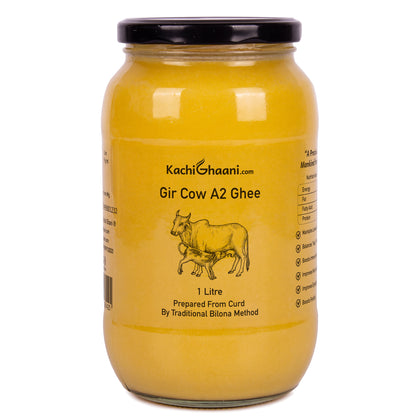
- 1 cup (200 g) Gir Cow's A2 Ghee
- 1 cup (200 g) sugar
- 3 cups (720 ml) water
- 1/2 tsp green cardamom powder
- 12 cashews, halved
- 2 tbsp golden raisins
- 10 almonds, slivered
- A pinch of saffron, soaked in 2 tbsp warm milk, optional
- 1 tbsp desiccated coconut, optional
Quantities are scaled up. Taste as you go and adjust the salt and spice.
Shop this recipe
Everything you need, from our press house
You know this smell before you see the halwa. Sooji hitting warm ghee, then ten minutes of stirring while it slowly turns from cream to sand to gold and starts smelling like roasted nuts. Then the hot water goes in and the pan erupts. It settles into something thick and glossy that holds the spoon upright. Served warm in a steel katori after a puja, with a raisin swelling on top, this is the first sweet most of us ever tasted.
Sooji ka halwa is one part sooji, one part ghee, one part sugar and three parts water, and the ghee is not a garnish in that list. Gir Cow's A2 Ghee is what roasts the semolina evenly without scorching, and it is what makes the finished halwa loose, shining and separate rather than sticky. Cut the ghee down and you get a dry, pasty halwa. Ours is made the bilona way from Gir cow milk.
The rule: the water must be boiling hot, and it goes in all at once while you stir. Cold water gives you lumps that never break. And stand back when you pour, because the pan will splutter hard for a few seconds.
How to make it
- Put the water in a pan with the sugar and bring it to a boil. Stir once so the sugar dissolves, then leave it simmering on the smallest burner. It has to still be hot when you need it.
- Heat 2 tbsp of the ghee in a heavy kadhai. Fry the cashews and almonds to pale gold, about 1 minute, then the raisins for 10 seconds until they puff. Lift them all out and keep aside.
- Add the remaining ghee to the same kadhai and tip in the sooji. Stir on medium-low, keeping it moving constantly.
- Roast for 10 to 12 minutes. The sooji drinks the ghee at first and looks pasty, then dries out, loosens, and turns from cream to the colour of wet sand and finally to a light golden brown. When it smells nutty and the grains move freely, it is ready.
- Take the pan off the flame for a moment, stand back, and pour in all the hot sugar water at once while stirring hard with your other hand. It will splutter and steam violently for a few seconds.
- Put it back on low heat and keep stirring. In 3 to 4 minutes the sooji swells and drinks everything up, and the halwa pulls away from the sides of the pan in one mass.
- Add the cardamom, saffron milk, coconut if using and most of the fried nuts and raisins. Stir once, cover and rest off the heat for 5 minutes. It goes soft and glossy in that time.
- Spoon into steel katoris while hot, top with the remaining nuts and serve.
Tips
- Sugar goes in with the water, not later. Once sugar touches roasted sooji directly, the grains stop softening and the halwa stays gritty.
- Coarse sooji, not fine. Fine sooji or rava turns gluey. Ask for mota rava or Bombay rava.
- For a richer prasad version, replace 1 cup of the water with full-fat milk. Add it hot, exactly the same way, and expect it to thicken a little faster.
- Storage: keeps 3 days in the fridge. Reheat in a pan with 2 tbsp hot water and 1 tsp ghee, stirring till it loosens. Do not microwave it dry.
- If you got lumps, the water was not hot enough or went in slowly. Press them against the side of the pan with the back of the spoon while the halwa is still loose, and they will break.