Sukhdi (Gud Papdi)
Wheat flour roasted in ghee till it smells like toasted biscuits, jaggery stirred in off the flame, pressed into a thali and cut warm. Three things, twenty minutes.

Ingredients
Serves 20
- 1½ cups (200 g) wheat flour (coarse atta or bhakri atta is best)
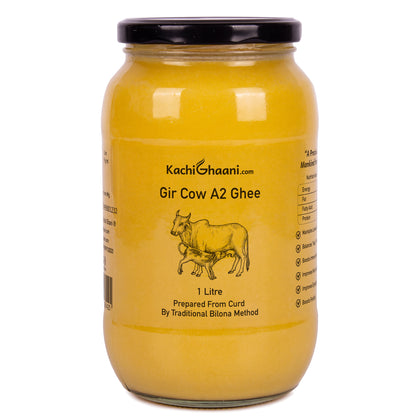
- ¾ cup (150 g) Gir Cow's A2 Ghee, plus 1 tsp for greasing the thali
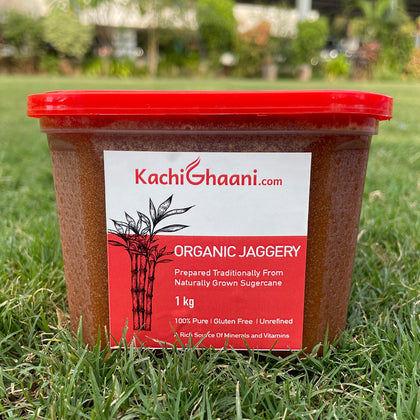
- 1 cup (170 g) Organic Jaggery, grated or chopped fine
- ½ tsp green cardamom powder
- 1 tbsp almonds or pistachios, sliced, to top
- ½ tsp sonth (dry ginger powder), optional, for the winter version
- 1 tbsp gaund (edible gum), fried and crushed, optional
- A small pinch of nutmeg (jaiphal), optional
Quantities are scaled up. Taste as you go and adjust the salt and spice.
Shop this recipe
Everything you need, from our press house
Somebody in the house has passed an exam, or got a job, or come home after a long time. In a Gujarati kitchen that means a thali of sukhdi within the half hour. The atta goes into melted ghee and is stirred on a low flame until it darkens and smells like toasted biscuits. The flame goes off, the gud goes in, and it melts on its own in about a minute. It is pressed into a greased thali, marked into squares while still warm, and half of it is gone before it has fully set.
There are only three things in this sweet, so two of them have to carry it. Gir Cow's A2 Ghee, churned the bilona way, is what roasts the flour evenly and gives sukhdi its soft crumbly break and its nutty smell. Organic Jaggery is unrefined, so it brings a deep caramel sweetness with a mineral edge behind it, the kind white sugar simply does not have. Between them, that is the entire flavour of the dish.
The one rule that cannot be broken: switch the flame off before the jaggery goes in. The heat held in the roasted flour is more than enough to melt it. Cook jaggery over a live flame and it goes to hard-ball stage, and your sukhdi sets into a slab you can barely cut, let alone bite.
How to make it
- Grease a thali or a 20 cm square tin with 1 tsp ghee and keep it next to the stove. Sukhdi sets fast, so everything should be ready.
- Melt the ghee in a heavy kadhai on low heat. Add the wheat flour and stir to mix.
- Roast on low to medium-low, stirring all the time, for 12 to 15 minutes. The flour will turn a shade darker, smell nutty and toasty, and the ghee will bubble at the edges. Do not rush this. Under-roasted flour is the only thing that can spoil sukhdi.
- Switch off the flame and wait for one minute. Add the jaggery, cardamom, and the sonth or nutmeg if using. Stir. The heat of the flour melts the jaggery in 1 to 2 minutes. Do not put the kadhai back on the flame.
- When the mix is smooth and thick, pour it into the greased thali. Spread it about 1.5 cm thick with the back of a katori or a spoon. Press the nuts on top.
- After 5 minutes, while still warm, cut into squares or diamonds with a knife. Let it cool fully for 30 to 40 minutes, then lift the pieces out.
Tips
- Coarse atta gives the classic grainy bite. Fine chapati atta works, but the sukhdi will be a little smoother.
- Store in an airtight box at room temperature for up to 2 weeks. It gets a little firmer by day two, which many people prefer.
- Winter version: add the sonth and gaund. Fry the gaund in 1 tsp ghee first till it puffs, crush it, and stir it in with the jaggery.
- If your sukhdi turns out hard, the jaggery cooked too long or the flame was still on. Next time, take it off the heat before the jaggery goes in.