Ven Pongal
Rice and moong dal cooked until they lose their edges, crushed pepper and cumin through every spoon, cashews fried in ghee, and ghee pooling gold on top.

Ingredients
Serves 4
- 1 cup (200 g) raw rice, preferably sona masuri
- ½ cup (100 g) split moong dal (yellow moong)
- 4 cups water, plus more to loosen
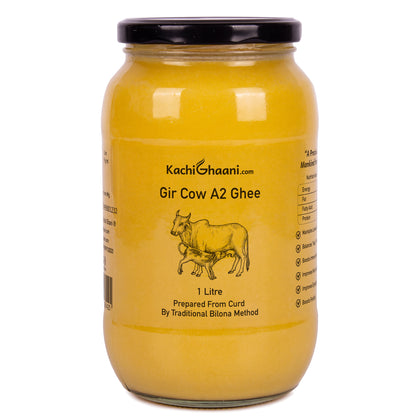
- 4 tbsp Gir Cow's A2 Ghee
- 2 tbsp cashews, broken
- 2 tsp cumin seeds, coarsely crushed
- 1½ tsp black peppercorns, coarsely crushed
- 1 tbsp ginger, chopped fine
- 1 green chilli, chopped, optional
- 1 sprig curry leaves (10 to 12 leaves)
- ¼ tsp hing (asafoetida)
- 1¼ tsp salt, or to taste
Quantities are scaled up. Taste as you go and adjust the salt and spice.
Shop this recipe
Everything you need, from our press house
A tiffin room in Chennai at seven in the morning, and the pongal comes on a steel plate soft enough to fall off the spoon, with a small hollow on top where the ghee has collected. Crushed pepper catches you a second after you swallow. It is also temple prasadam, served warm in a leaf, and it is the first solid thing anybody in a Tamil house gives to someone who has been unwell. Coconut chutney on the side, sambar if you want it.
Ghee is not a garnish here, it is the dish. Gir Cow's A2 Ghee is made the bilona way from Gir cow milk, so it smells sweet and nutty and sits gold on the surface instead of thinning away into the rice. Four generous spoons is the right amount, not two. It is also what keeps the pongal soft and loose rather than pasty as it stands, which is why the ghee goes in at the end with the pepper, cumin and cashews, all at once.
The one thing that decides pongal is water. Four cups to a cup and a half of rice and dal, which will look like too much. It is not. Ven pongal should be soft and slightly loose, just falling off the spoon. If it holds its shape like cooked rice, it is not pongal yet, so stir in half a cup of hot water and mash it again.
How to make it
- Dry roast the moong dal in a pan on low heat for 3 minutes, until it turns a shade darker and smells nutty. Do not let it brown. This one step is what gives pongal its aroma.
- Rinse the roasted dal together with the rice in 2 or 3 changes of water and drain.
- Crush the peppercorns and cumin coarsely in a mortar. Whole spices sit in the mouth, crushed ones release into the whole pot. This is how it is done in Tamil homes.
- Put the rice, dal, 4 cups water and the salt in a pressure cooker. Cook on medium for 6 to 7 whistles, about 12 minutes, then let the pressure drop on its own.
- Open the cooker and mash the pongal lightly with the back of a ladle. It should be soft, thick and just loose enough to fall off the spoon. If it looks stiff, stir in ½ cup hot water.
- Heat 4 tbsp ghee in a small pan on medium. Add the cashews and fry till pale gold, about 1 minute. Lift them out if you like them crisp, or leave them in.
- To the same ghee add the crushed pepper and cumin, the ginger, green chilli and curry leaves. Let them sizzle for 30 seconds, then switch off and stir in the hing.
- Pour the whole thing, ghee and all, over the pongal and fold it through. Cover and rest 5 minutes. Serve hot with coconut chutney and sambar.
Tips
- The fix for the commonest mistake: pongal thickens fast as it sits and turns into a solid block. Keep a cup of hot water ready and stir a little in just before serving. Never use cold water, it makes it gluey.
- Make ahead: it keeps 1 day in the fridge. Reheat it in a pan with hot water and half a spoon of fresh ghee, not in the microwave alone, which dries the top.
- No pressure cooker? Use a heavy pot with 5 cups water, cover and simmer 30 to 35 minutes, stirring now and then so the bottom does not catch.
- For the temple version, leave out the green chilli and onion entirely and be generous with the pepper. For a Karnataka khara pongal, add a pinch of turmeric.
- If you want it lighter, use 3 tbsp ghee instead of 4. Going below that changes the dish, and not for the better.