Ubtan and udvartana: the Indian body scrub, done gently
Ubtan is the gram flour and turmeric paste of Indian weddings; udvartana is its classical Ayurvedic cousin. Here is how to make and use both gently, what they do, and what they cannot do.

Ubtan is a paste of gram flour (besan), a pinch of turmeric, milk or water and a few drops of oil, rubbed off the skin as it dries. Udvartana is its Ayurvedic cousin, a dry powder massaged against the direction of hair growth. Both gently lift dead skin; neither lightens skin nor melts fat.
Ubtan is best known from the haldi ceremony, when family members smear the bride and groom with turmeric paste in the days before an Indian wedding. In Punjab it is called vatna, in Bengal the ritual is gaye holud, and many families use a simple ubtan before festivals too. Done gently, it is a lovely ritual. Done harshly, or with the wrong extras, it can leave skin red and sore.
At a glance
- Ubtan: besan, a pinch of turmeric, milk, curd or rose water, and a few drops of mustard, almond or sesame oil.
- Udvartana: a dry powder massage done upwards, against the hair, traditionally after oiling.
- What they do: lift dead skin and leave it feeling smooth. What they do not do: lighten skin colour or reduce body fat.
- Once or twice a week is plenty; skip broken, sunburnt, inflamed or acne-prone areas.
- Leave lemon and lime out, and expect turmeric to tint fair skin yellow for a few hours.
What is ubtan made of?
A soft flour, a little turmeric, a liquid and a little fat. Recipes vary by family and region, but most start with besan, the fine flour ground from chana dal, and add a pinch of turmeric for colour and tradition.
| Ingredient | What it does | Keep in mind |
|---|---|---|
| Besan (gram flour) | The gentle scrubbing base | Rice flour or finely ground oats work too |
| Turmeric (haldi) | Colour and tradition | A pinch only; it tints skin, stains fabric and can cause itching in some people |
| Milk, curd or rose water | Turns the powder into a paste | Curd or rose water for oily skin; milk or malai for dry skin |
| Mustard oil | Warmth and the classic North Indian and Bengali aroma | Pungent; can sting sensitive skin |
| Almond oil | Softness | The mildest of the three; a tree nut |
| Sesame oil | A warm Ayurvedic body oil | Good in winter; sesame allergy is possible |
| Lemon or lime | Often added for "brightening" | Best left out: lime juice on skin plus sunlight can cause red, blistering patches and dark marks that can last for years |
What is the difference between ubtan and udvartana?
Ubtan is a home paste; udvartana is a classical Ayurvedic therapy. The Ashtanga Hridaya, one of the classical texts, includes udvartana in its daily routine and says it reduces kapha and fat, firms the limbs and brightens the skin.
| Ubtan | Udvartana | |
|---|---|---|
| Form | A wet paste that dries on the skin | A dry powder, sometimes mixed with a little oil |
| Direction | Gentle circles, any direction | Brisk upward strokes, against the hair |
| Who does it | Family, at home | Often a trained therapist |
| When | Before weddings and festivals, or weekly | As part of an Ayurvedic routine, usually after oiling |
Does it lighten skin or reduce fat?
No. The glow after ubtan is smoothness, the dull outer layer rubbed away, not a change of colour. Skin colour is set by genes, and no scrub changes it, nor should it need to. Likewise, there is no good evidence that a powder massage reduces body fat, whatever the classical texts say. The US National Center for Complementary and Integrative Health notes that few well-designed trials support Ayurvedic approaches, so enjoy udvartana as a bracing massage, not a slimming plan.
Ubtan for body: how do you use it, step by step?
- Patch test a little paste on your inner arm and wait 24 hours.
- Mix 2 tablespoons of besan, a pinch (about ⅛ teaspoon) of turmeric and ½ teaspoon of oil, then add milk, curd or rose water a little at a time to make a thick, spreadable paste.
- Apply it to clean, slightly damp skin on the arms, legs and body, about as thick as a coin. Keep it away from the eyes.
- Leave it for 5 to 10 minutes, until it starts to dry but before it cracks.
- Wet your fingertips and rub gently in small circles; the paste rolls off with dead skin.
- Rinse with lukewarm water, pat dry and smooth on a few drops of oil.
Do it in the bathroom with an old towel, because turmeric stains grout, towels and clothes. For the whole body, double or triple the quantities.
At a haldi ceremony
At a haldi, family members dab the paste lightly on the face, arms and feet as a blessing, and the bride or groom bathes it off afterwards. If the ceremony falls just before the wedding, test the exact paste on the bride's or groom's skin a week or two earlier, so there are no surprises on the day.
How do you do a gentle udvartana at home?
Traditionally, a trained therapist does udvartana with herbal powders, often after a full oil massage. At home, a gentle version works: oil the body lightly, then rub a dry powder such as besan or barley flour in long, firm strokes upwards, from ankles to thighs and from wrists to shoulders, for 5 to 10 minutes. Then bathe.
Keep the pressure moderate. Rubbing against the hair can redden skin and irritate hair follicles, and it is not for varicose veins, thin or fragile skin, or pregnancy without your doctor's advice. For the oil step, see our guide to abhyanga at home. Dry udvartana is traditionally favoured for kapha types, explained in our vata, pitta and kapha oil guide.
How often should you use ubtan?
Once or twice a week is plenty for most skin. Before a wedding, families often apply ubtan daily for a few days, which most people tolerate, but stop at the first sign of redness, stinging or dry patches. Scrubbing too often leaves skin raw and dry.
For oily, dry, sensitive or acne-prone skin
- Oily skin: mix the besan with curd or rose water and use little or no oil.
- Dry skin: use milk or a spoon of malai, with almond or sesame oil.
- Sensitive skin: skip mustard oil and choose almond, the gentlest of the three (our almond oil guide covers why), keep the paste on for five minutes and rub very lightly. If turmeric stings, leave it out.
- Acne-prone skin: do not scrub over active pimples, which spreads irritation.
Does turmeric in ubtan stain the skin?
Yes, a little, especially on fair skin. Curcumin, turmeric's yellow pigment, can leave a golden tint for a few hours. Use only a pinch, rinse well, and if a tint remains, wipe the skin with a cotton pad dipped in milk or a little oil before washing again. Curcumin on the skin can also cause hives or itching in some people, the US National Center for Complementary and Integrative Health notes, which is one more reason to patch test.
Who should skip ubtan
- Anyone with broken, sunburnt, freshly waxed or shaved, or inflamed skin, including eczema and psoriasis flares.
- Anyone with active acne on the area to be scrubbed.
- People allergic to almond, sesame, mustard, chickpea or turmeric.
- Babies and young children, unless your paediatrician agrees; their skin does not need scrubbing.
- Around the eyes: keep the paste well away, and rinse with plenty of clean water if any gets in.
Choosing our oil for your ubtan
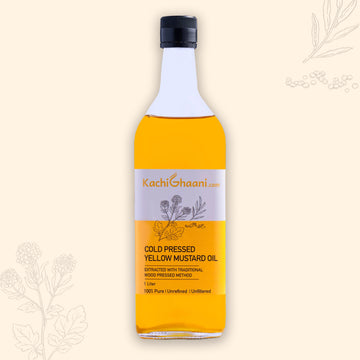
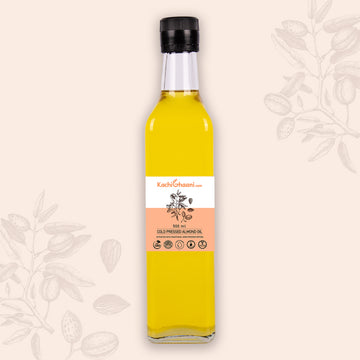
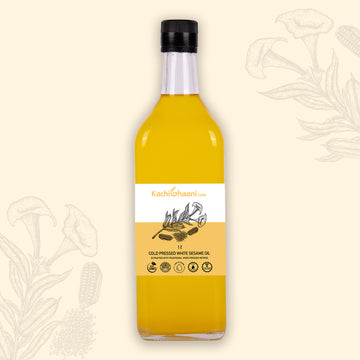
For the oil in your ubtan, our Truly Cold Pressed yellow mustard oil keeps the traditional warmth, our almond oil is the mildest choice for sensitive or dry skin, and our white sesame oil suits a winter routine after abhyanga. All are pressed slowly in wooden ghaanis and left unrefined, and half a teaspoon is enough for one paste.
The bottom line
Ubtan and udvartana are gentle, sensory ways to exfoliate: a soft paste for celebrations, a brisk powder massage for Ayurvedic routines. Use a pinch of turmeric, a few drops of oil and a light hand, leave out lemon, and enjoy smooth skin for what it is, not as a way to change your colour or shape.
Frequently asked questions
Can I use ubtan every day before my wedding?
Many brides and grooms do for a few days, and most skin copes if the paste is gentle and the rubbing light. Start a week or two before, patch test first, skip lemon, and stop if you see redness or stinging. Avoid trying new ingredients in the last few days before the wedding.
Does ubtan remove body hair?
Not in any lasting way. Rubbing off a drying paste can break some fine hairs, which is where the belief comes from, but it does not remove hair from the root or stop it growing back. Use a proper hair removal method if you want smooth skin, and do not scrub freshly waxed areas.
Can I store ubtan paste?
Store the dry mix, not the paste. Besan, turmeric and other dry powders keep for a few weeks in a clean, airtight jar. Once you add milk or curd, the paste spoils quickly, so mix only what you need and use it the same day, or keep leftovers in the fridge for no more than a day.
Is ubtan safe for babies?
Some families rub a gentle besan paste on babies, but baby skin is thin and easily irritated, and it does not need scrubbing. Skip turmeric, mustard oil and any rubbing on newborns, and ask your paediatrician before using any paste on a baby's skin.
Can men use ubtan?
Of course. Grooms have ubtan at the haldi ceremony too, and the same paste suits any skin. Men with oily or acne-prone skin should use curd or rose water with little oil, and avoid scrubbing over beard bumps or freshly shaved skin.