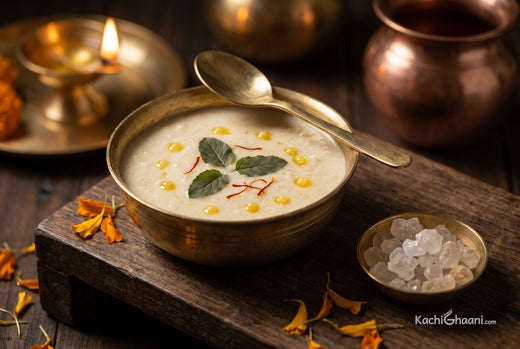
Saunf Mishri Mukhwas
The saunf cracks first, green and sharp. The mishri holds on a second longer and turns the whole mouthful sweet just as the fennel starts to bite.

Ingredients
Serves 20
- 1 cup (100 g) fennel seeds (saunf)
- ½ cup (60 g) dhana dal (split roasted coriander seeds)
- ¼ cup (35 g) white sesame seeds
- ¼ cup (20 g) dried coconut (khopra), cut into thin slivers
- ¾ cup (110 g) Organic Dhaga Mishri, broken into small pieces
- ½ tsp green cardamom powder (optional)
- ¼ tsp black salt (kala namak), optional
Quantities are scaled up. Taste as you go and adjust the salt and spice.
Shop this recipe
Everything you need, from our press house
In Gujarati homes there is a steel dabba kept near the front door and it gets opened after every single meal — one spoon tipped into the palm, then into the mouth on the way out. What is inside rattles rather than pours: fennel seeds, split coriander, sesame, thin slivers of dry coconut, and pieces of mishri broken small enough to chew. You take a spoonful and the saunf cracks first, green and sharp between the teeth. The sesame arrives next, toasted and oily. Then the mishri, which holds on a second longer than everything else and turns the whole mouthful sweet exactly as the fennel oil starts to bite.
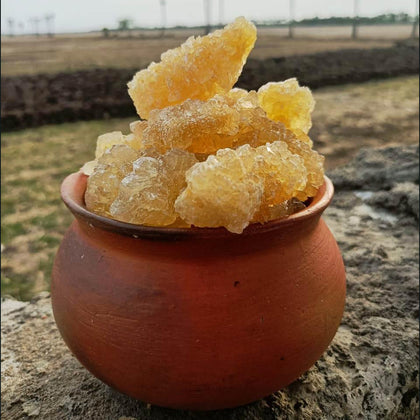
This is the one recipe where the mishri never dissolves at all — you eat the crystal whole — which means the crystal itself is the point. Dhaga mishri is grown slowly on cotton thread over eight to ten days, and it breaks into hard, irregular, semi-translucent pieces rather than the soft round balls of moulded sugar candy. Those hard pieces keep their shape in the dabba, stay dry against the roasted seeds instead of going tacky, and release sweetness slowly while you chew rather than collapsing in the first second. Break them small, roughly the size of a moong dal, so no single piece dominates a spoonful.
Cool everything completely before you mix. The roasted seeds must be at genuine room temperature — cold against the back of your hand — before the mishri goes in. Warm seeds carry moisture into the jar, the crystals turn tacky, and inside two days you will have one sweet lump instead of a loose, rattling mix.
How to make it
- Heat a heavy kadhai on a low flame. Dry roast the fennel seeds for 4 to 5 minutes, stirring constantly, until they smell sweet and turn a shade lighter and drier. Do not let them brown. Tip onto a wide plate.
- In the same pan roast the dhana dal for 2 to 3 minutes until it smells warm and toasty. Add it to the plate.
- Roast the sesame seeds for 2 minutes on low, stirring, until they start to pop and turn pale gold. Add to the plate.
- Last, roast the coconut slivers for 2 minutes until the edges just colour. Coconut burns fast, so keep the flame low and the spoon moving. Add to the plate.
- Spread everything out in a single layer and leave to cool completely, at least 30 minutes. Test with the back of your hand — it must feel cold, not just warm.
- Meanwhile break the mishri. Pull out the cotton threads, put the crystals in a thick cloth or a steel bowl and press them with a pestle into pieces about the size of a moong dal. You want small chewable pieces, not powder.
- Tip the cooled seeds into a dry bowl. Add the broken mishri, the cardamom powder and the black salt, and toss with a dry spoon until it is evenly mixed.
- Store in a clean, dry, airtight steel or glass dabba. It stays crisp for 2 months. Serve a teaspoon after meals.
Tips
- Cold before mixing, always. Warm seeds put moisture into the jar and the mishri goes sticky. Half an hour of cooling saves the whole batch.
- Roast each thing separately. Fennel, dal, sesame and coconut all need different times. Roasted together, the sesame burns before the fennel is done.
- Break, do not powder. Aim for pieces you can feel between your teeth. Powdered mishri sinks to the bottom of the dabba and coats everything.
- Keep the dabba dry. Always use a dry spoon. One wet spoon and the mix cakes within a day.
- The plain version. Roasted saunf and broken mishri on their own, nothing else, is what most restaurants keep by the till — and it is very hard to improve on.