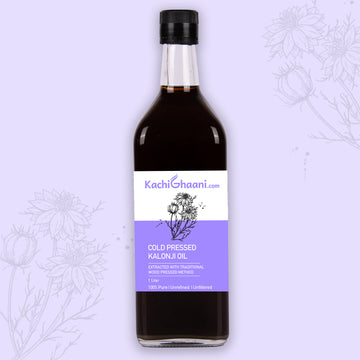
Kalonji oil: what it actually is, and how to use it
Kalonji, nigella and black seed oil are the same thing — and it is not black sesame, cumin or onion seed. The plain guide to a strong, badly overclaimed oil.

Turn the cap on a bottle of real kalonji oil and you know within a second whether you have bought the right thing. It comes up at you — pepper, something like oregano, a faint bite of onion underneath, and a bitterness at the back. People who have only met the pale, faintly smelling oil sold in capsules are usually startled.
That smell is the honest place to start, because it is the one thing about kalonji oil that nobody exaggerates. Almost everything else written about it online is inflated. This is the plain version: what the seed is, what the oil is, what the research does and does not show, and the four ways it is genuinely used in Indian and West Asian homes.
The name tangle, cleared up
Kalonji, nigella, black seed, black cumin, habbat al-barakah, habbatus sauda, mangrail, karunjeeragam — all of these are the same thing: the seed of Nigella sativa, a small flowering plant of the buttercup family. It grows across South and West Asia and it sits in every kirana shop in India.
What it is not:
- Not black sesame. Different plant, different oil, different use. Black til is a cooking oil; kalonji is not.
- Not cumin. "Black cumin" is a translation accident that has stuck. Real cumin is Cuminum cyminum.
- Not onion seed. This is the mislabel you will see most often on packets and menus. Kalonji has nothing to do with onions; the smell is simply suggestive.
If a bottle says black seed oil and another says kalonji oil, you are looking at the same oil under two names. The differences that matter are how it was pressed, not what it is called.
What it tastes and smells like, honestly
Peppery first, then herby, then bitter. It is assertive in a way that catches most people out on the first spoon, and it does not mellow the way a nutty oil does. A quarter teaspoon is a real presence in a bowl of food. Half a teaspoon neat is a lot.
Colour is a fair test. Cold pressed kalonji oil is dark — near-black in the bottle, deep amber against a light — because nothing has been bleached out of it. Pale, thin, watery oil that smells of very little has almost certainly been solvent-extracted and refined, and the aroma compounds you are paying for do not survive that. Sediment at the base of an unfiltered bottle is settled seed, not a fault.
Thymoquinone: what is real, and what is not
The compound behind most of the interest in this seed is thymoquinone. It is genuinely there, it is a real subject of published research, and it is largely responsible for that sharp smell.
Here is the part the selling pages leave out. The overwhelming majority of that research is laboratory work — cells in a dish — and animal studies. Human trials exist but they are few, small, and often of modest quality; reviews that have looked at areas such as body weight and blood pressure say so explicitly and report conflicting results. There is also a straightforward pharmacological problem: thymoquinone is poorly absorbed when swallowed, which is precisely why so much research effort goes into engineering better delivery for it.
So the honest register is: studied, interesting, unsettled. A finding in a petri dish is not a benefit for you, and we are not going to translate one into the other. Nothing on this page says kalonji oil supports immunity, helps with diabetes, aids weight loss, or does anything to cancer. Those are the claims that sell the oil, and they are the reason most kalonji pages should not be trusted.
The four ways it is actually used at home
1. As a raw finishing oil
This is the use we would put first. A thin drizzle — quarter to half a teaspoon — over hummus, raita, chaat, a salad, a bowl of dal or khichdi once it is served. It behaves like a strong olive oil or a chilli oil: a seasoning rather than a fat you cook in.
2. Half a teaspoon in warm honey
The most common household way of taking it in South Asia and the Middle East, and a practice with deep roots in the Unani tradition and in prophetic medicine. We describe it as tradition, not as treatment, and there are people who should not do it at all — including anyone on regular medication and, absolutely, any child under one year, because honey is unsafe for infants. The full explanation is in kalonji oil with honey: the tradition, and who should not take it.
3. On the scalp
Diluted — one part kalonji to three or four parts almond or black sesame — massaged into the scalp, left an hour, then washed out. Neat kalonji on a whole head is expensive, pungent and unnecessary. Method and honest expectations in kalonji oil for hair and scalp.
4. On skin
Also diluted, also patch tested first, and not as the nightly face oil that half the internet recommends. See kalonji oil on skin.
Why it never goes in the pan
Heat drives off exactly what you bought. The volatile compounds that give kalonji its smell and its sharpness are the first things to leave when oil meets a hot tava, and once they are gone you are left with an expensive, ordinary fat. Use the seeds in your tadka and panch phoron by all means — that is their proper place, and it always has been. Keep the oil off the flame.
Storage
Cool, dark, tightly capped. The fridge keeps it at its sharpest. Ours holds four to six months from the pressing date printed on the bottle, which is short because there is no preservative in it and nothing has been stripped out to make it last. If it starts smelling flat rather than peppery, it has aged past its best. More on all of this in how to store cold pressed oil.
What kalonji oil will not do
- It is not medicine. It does not treat, prevent or cure any condition, and we will not imply otherwise.
- It is not a cooking oil. No frying, no tadka, no baking.
- It is not a daily supplement we are recommending. We do not prescribe a quantity of any oil.
- It is not risk-free on skin. Allergic contact dermatitis from topical nigella oil is documented in the medical literature, including at least one severe published reaction. Patch test on the inner forearm and wait a day.
- It is not for everyone by mouth. It has reported effects on blood clotting, blood sugar and blood pressure, and it can affect how the liver handles some medicines. If you take regular medication, are pregnant or breastfeeding, or have surgery coming up, ask your doctor before you take it internally.
What is left after all that subtraction is still a good bottle: a strong, distinctive, genuinely useful seasoning oil with a long place in Indian kitchens, and a scalp oil worth trying once you have diluted it. That is what we sell it as.