Rava Kesari
Glossy orange, soft enough to fall off the spoon, with fried cashews on top and ghee sitting in a thin shine on the surface.

Ingredients
Serves 6
- 1 cup (170 g) fine rava (semolina), unroasted
- 2.5 cups (600 ml) water
- 1 cup (200 g) sugar
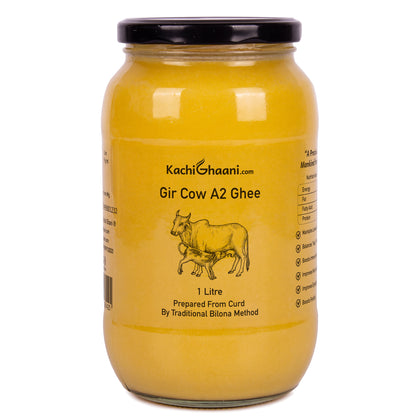
- 6 tbsp (85 g) Gir Cow's A2 Ghee
- 2 generous pinches saffron, soaked in 2 tbsp warm milk
- 1/2 tsp cardamom powder, freshly crushed from about 6 pods
- 15 cashew nuts, broken in half
- 1 tbsp raisins
- 1 pinch salt
- 1 pinch edible orange colour, optional, only if you want the tiffin-room colour
Quantities are scaled up. Taste as you go and adjust the salt and spice.
Shop this recipe
Everything you need, from our press house
A tiffin room in Bangalore at five in the evening. The chow chow bath arrives on one plate: khara bath on one side and a bright orange wedge of kesari on the other, holding its shape only just, with ghee glinting on the surface and two golden cashews pressed into the top. You break off a corner with the spoon and it gives way instantly, soft, warm, sweet. The saffron and cardamom come through together, and then the ghee coats everything and stays. Half the plate is gone before you notice. This is also the sweet that appears at every South Indian wedding, made in a vessel the size of a bathtub, and somehow it always tastes exactly like this.
Kesari is really only rava, sugar, water and ghee, so the ghee is not a supporting ingredient; it is a main one. Gir Cow's A2 Ghee is made the bilona way by churning cultured curd, which leaves it grainy and nutty rather than flat. That matters here because there is nothing else to hide behind. Ghee also takes heat well, up to around 250 degrees, so you can roast the rava properly in it without any burnt-butter smell. Use six tablespoons for one cup of rava and add most of it at the end, off the boil, which is when the kesari turns glossy and stops sticking to the vessel.
The one step that decides this dish is how the water goes in. It must be at a rolling boil, and it must go in slowly, in a thin stream, while you stir without stopping. Cold water or a fast pour gives you lumps of dry rava inside a wet mass, and once they form you cannot get rid of them. Two and a half cups of boiling water to one cup of rava, poured over about thirty seconds.
How to make it
- Soak the saffron in 2 tbsp of warm milk and leave it. In ten minutes it will bleed a strong orange.
- Heat 2 tbsp of the ghee in a heavy kadhai. Fry the cashews on medium until they are evenly golden, about 2 minutes, then the raisins for 20 seconds until they swell up. Lift both out onto a plate.
- In the same ghee, add the rava and roast on low to medium heat for 4 to 5 minutes, stirring the whole time. Do not let it brown. It is ready when the grains look separate and dry and smell faintly like toasted bread.
- While the rava roasts, bring the 2.5 cups of water to a rolling boil in a separate pot. It must be boiling when it goes in, not warm.
- Turn the rava down to low. Pour the boiling water in a thin steady stream with one hand while stirring hard with the other. Take about thirty seconds over it. Add the pinch of salt.
- It will bubble and thicken quickly. Keep stirring for 2 to 3 minutes until all the water is taken up and the rava looks like a thick soft porridge with no dry patches. Cover and cook on the lowest flame for 2 minutes.
- Add the sugar all at once. The mixture will go loose and watery again immediately, which is normal. Keep stirring on medium.
- In 4 to 5 minutes it will thicken back up, turn glossy, and start pulling away from the sides of the kadhai as you stir. That is your sign.
- Stir in the saffron milk, the cardamom powder and the remaining 4 tbsp of ghee, one spoon at a time. Each spoon will be absorbed and the kesari will get shinier. Add the colour now if you are using it.
- Fold in the fried cashews and raisins, keeping a few back for the top. Cook one more minute, then switch off.
- Serve warm in a bowl, or press it into a greased steel plate, smooth the top, cool for 20 minutes and cut into diamonds.
Tips
- Fine rava, not coarse. Bombay rava or fine chiroti rava gives the soft texture. Coarse rava stays gritty however long you cook it.
- Keep the water boiling right till the moment you pour. If it has gone off the boil, put it back. This single detail is the difference between smooth kesari and lumpy kesari.
- Add the ghee at the end, not the start. Ghee stirred in after the sugar is what makes the surface shine and stops the kesari sticking to your teeth.
- For pineapple kesari, cook 1/2 cup of finely chopped pineapple in a spoon of ghee for 5 minutes and add it along with the sugar. Reduce the water to 2 cups.
- It sets as it cools. Serve it warm and loose, or let it cool fully and cut it. The awkward in-between stage is where it looks sticky.
- We do not sell rava, sugar or saffron. Buy good saffron with long dark red threads, and crush your cardamom fresh; the powder in packets loses its smell fast.