Best oil for baby massage: is mustard oil a good choice?
The best oil for baby massage is plain, unscented and mild. Here is what newborn studies found on mustard, sunflower, coconut and sesame oil, the truth about darker skin and strong bones, and what to ask.

The best oil for baby massage is a plain, unscented, non-pungent oil, used sparingly after a patch test. Sunflower seed oil is the most studied in newborns, and coconut and sesame oils are widely used for older babies. Mustard oil is not the gentlest choice, especially for a newborn: research suggests it is harsh on the skin barrier.
Grandmothers across North India, Bengal, Bangladesh, Nepal and Pakistan have massaged babies with warm mustard oil for generations, often in the winter sun. The massage itself is a lovely tradition, and the UK's NHS notes that massage can help babies relax and sleep. This article looks at the oil, because a newborn's skin is thinner and more delicate than ours.
At a glance
- The best oil for baby massage is plain, unscented and non-pungent; sunflower seed oil is the most studied in newborns.
- In animal studies, mustard oil delayed skin-barrier repair, while sunflower seed oil sped it up.
- In a Nepal trial of 995 newborns, sunflower seed oil helped the skin's protective acid layer form a little faster than mustard oil; rash, dryness and water loss were similar.
- In a trial of more than 26,000 babies in Uttar Pradesh, switching to sunflower oil did not change newborn deaths overall, with signs of benefit in very small babies.
- Mustard oil does not darken skin or strengthen bones.
What is the best oil for baby massage?
A plain, unscented oil that does not sting. For a newborn, the best-studied choice is sunflower seed oil. Olive oil, often suggested abroad, is high in oleic acid, which increased water loss through adult skin in a small study. Coconut and sesame oils are non-pungent and widely used for older babies, but they have been studied less in newborns. The NHS simply advises checking that any oil or lotion is suitable for babies. For a newborn, especially one born early or with eczema in the family, ask your paediatrician whether to use oil at all.
| Oil | What research suggests | Practical note |
|---|---|---|
| Sunflower seed | The most studied oil in newborns | Plain, unscented; we do not make it |
| Coconut | Non-pungent; studied less in newborns | Patch test; ask your paediatrician |
| Sesame | Non-pungent; little newborn research | Sesame allergy is possible |
| Almond | Non-pungent; little newborn research | A tree nut; ask first if allergies run in the family |
| Olive | Oleic-rich; increased water loss through adult skin | Not a first choice for newborns |
| Mustard | Delayed barrier repair in animals; slower acid-mantle formation in newborns | Pungent; can sting delicate skin |
Why do families use mustard oil for malish?
Because it is in every kitchen and it feels warming. Its sharp compound, allyl isothiocyanate, creates a tingling warmth on the skin, which made it the winter oil of the North. Many families also believe it keeps babies warm, strengthens bones and gives the skin a good colour.
The habit is remarkably widespread: researchers describe it as nearly universal in rural Nepal, and in a large Uttar Pradesh trial, usual care meant massage typically with mustard oil. Abroad, families often meet mustard oil labelled for external use only, which adds to the idea that it is a massage oil; here is why it carries that label in America.
What do studies say about mustard oil on a baby's skin?
The research points one way: mustard oil is harder on young skin than milder oils, although the large field trials found smaller differences in everyday outcomes than the lab work suggested.
Animal studies
In 2002, a team led by the paediatrician Gary Darmstadt tested common massage oils on the skin barrier. Mustard oil delayed the barrier's recovery, while sunflower seed oil, rich in linoleic acid, sped it up.
The Nepal trial
In Sarlahi, Nepal, 995 newborns were massaged regularly through the first month with mustard oil or sunflower seed oil (BMC Pediatrics, 2019). Skin pH fell faster with sunflower oil in the first week, meaning the acid mantle, the skin's slightly acidic protective layer, formed sooner. Redness, rash, dryness and water loss were similar. The authors concluded that oil type may matter for skin integrity.
The Uttar Pradesh trial
In Shivgarh, Uttar Pradesh, families in half of 276 village clusters were asked to apply sunflower seed oil three times a day through the first month; the rest followed usual care, typically mustard oil (PLOS Medicine, 2021). Overall, newborn deaths did not differ. Only about 30% of families used sunflower oil alone, and among them deaths were 58% lower, though that analysis is weaker evidence. The authors saw signs of benefit in very small babies and stressed that the two oils were not shown to be equal.
So is mustard oil good for baby massage? Put simply, for a healthy full-term baby, mustard oil malish has not been shown to cause dramatic harm in these large trials. But a milder oil is at least as good, may be kinder to the skin barrier, and matters most for babies born small or early.
Does mustard oil make a baby's skin dark?
No. Skin colour is set by genes, not by oil. Many babies' skin deepens naturally over the first months, so mustard oil gets the blame and other oils get credit for "fairness". If malish happens in the sun, it is sunlight that can tan, and young babies should be kept out of strong direct sun anyway. Every shade of baby skin is healthy skin.
Does massage with mustard oil make bones strong?
There is no evidence that any oil rubbed on the skin strengthens bones. Bones grow with good feeding, vitamin D and movement, and many paediatricians advise vitamin D drops for breastfed babies, so ask yours. Massage does give gentle movement and a calm, close time together, which is reason enough to keep it.
How to keep baby massage safe
- For a newborn, a baby born early or one with eczema in the family, ask your paediatrician first.
- Patch test on a small area of the thigh and wait 24 hours.
- Use lukewarm oil, never hot; test a drop on your inner wrist.
- Keep oil away from the eyes, nose and mouth, and never drop it into the nose or ears.
- Skip broken skin, rashes and an unhealed cord stump, and massage on a soft, low surface.
- Buy mustard oil from a trusted source: oil adulterated with argemone oil has poisoned people.
For the full routine, see baby malish, step by step, and the safety rules that matter.
Where our oils fit
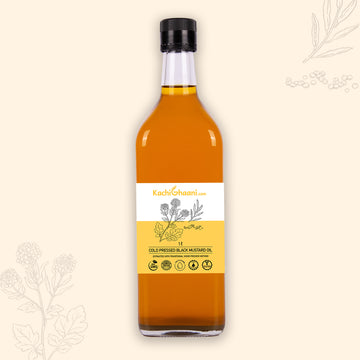
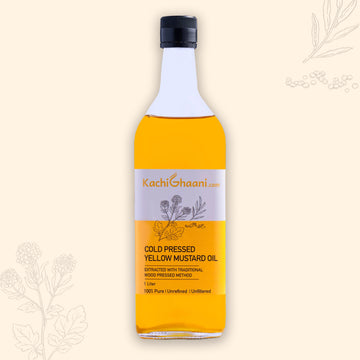
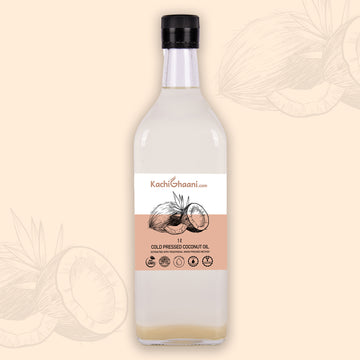
Our Truly Cold Pressed black mustard oil and yellow mustard oil keep their full pungency, which makes them right for tadka, achaar and an adult's winter massage, and is why we would not reach for them for a newborn. For an older baby, if your paediatrician is happy with oil, a non-pungent oil such as our coconut oil or white sesame oil, used sparingly after a patch test, is a softer place to start.
The bottom line
The malish is worth keeping; for a newborn, the mustard oil is worth rethinking. The best oil for baby massage is a plain, non-pungent one used sparingly, with sunflower seed oil the most studied for newborns. Mustard oil neither darkens skin nor builds bones, and the right oil and the right age to start are questions for your paediatrician.
Frequently asked questions
At what age can I massage my baby with mustard oil?
No age is backed by research as right for mustard oil. If your family prefers it, wait until your baby is past the newborn weeks, patch test first, use a little and stop at any redness. For a baby born early or with eczema in the family, ask your paediatrician before using any oil.
Can mustard oil cause a rash on a baby?
Yes, it can. Mustard oil contains a pungent compound that can sting and redden delicate skin, and thick oil can also block sweat glands and cause prickly heat in warm weather. If you see redness, bumps or dry patches, stop the oil, keep the skin clean and cool, and show your paediatrician if it does not settle.
Is warm mustard oil with garlic or ajwain safe for a baby's cold?
It is a popular home remedy, but there is no good evidence that it clears a cold, and garlic can irritate or even burn delicate skin. Never use hot oil on a baby. Fast or noisy breathing, fever in a young baby or poor feeding needs a doctor promptly, not a rub.
Is coconut oil better than mustard oil for baby massage?
For a baby's skin, a non-pungent oil such as coconut is milder than mustard oil, and many families use it. It has been studied less in newborns than sunflower seed oil, so for a newborn or a baby born early, ask your paediatrician. For older babies, patch test and use only a thin layer.
Should I bathe my baby after an oil massage?
Many families follow malish with a warm bath, which lifts off extra oil. Use lukewarm water and a mild, fragrance-free baby cleanser, or plain water for young babies, then pat the skin dry. Leaving thick oil on all day in hot weather can block sweat glands and cause prickly heat.
Sources
- Summers et al., Sunflower seed oil versus mustard seed oil on newborn skin barrier function, BMC Pediatrics, 2019
- Kumar et al., Sunflower seed oil emollient therapy and newborn survival in Uttar Pradesh, PLOS Medicine, 2021
- Visscher et al., Newborn skin after natural oil massage in rural Nepal, Journal of Global Health Reports, 2020
- Lin, Zhong and Santiago, Skin barrier effects of topical plant oils, International Journal of Molecular Sciences, 2018
- NHS, Washing and bathing your baby, reviewed 2024