Milk with ghee at night: the benefits, honestly weighed
A teaspoon of ghee in warm milk is a classic Indian bedtime drink. Here are the milk with ghee benefits tradition describes, what the evidence supports, the calories, and who should skip it.

The real milk with ghee benefits are comfort and nourishment: a teaspoon of ghee in warm milk at night is a soothing Ayurvedic tradition, valued as nourishing and calming. There is no good evidence that it relieves constipation, joint pain or poor sleep, as many websites promise. It adds about 40 calories and 3 g of saturated fat, so one teaspoon is plenty.
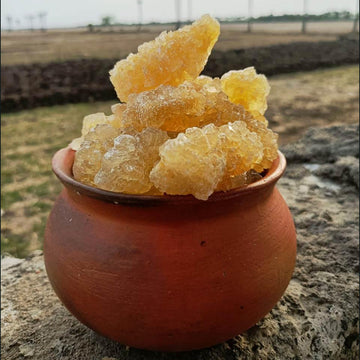
Milk with ghee, often with a pinch of turmeric or a crystal of mishri (thread-crystallised sugar), is one of the most searched ghee habits in India, and it has been part of family bedtimes for generations. Here is what the tradition says it is for, what the numbers look like, and who should skip or adjust it.
At a glance
- A level teaspoon of ghee (4 to 5 g) adds roughly 40 calories and about 3 g of saturated fat to your glass.
- Ayurveda counts warm milk and ghee among the most nourishing foods, especially in cold, dry seasons.
- There are no good human studies of milk with ghee for sleep, constipation or joints.
- Turmeric's curcumin dissolves in fat, and black pepper is a better-studied way to help its absorption.
- Skip or adjust it if you are lactose intolerant, watching calories or saturated fat, or your doctor advises against it.
Milk with ghee benefits: what happens if you drink it at night?
You get a warm, filling drink with protein, milk sugar and fat. For many people that feels soothing at the end of the day; for others, a rich drink close to bedtime feels heavy, or brings on heartburn when they lie down.
Online, the habit is credited with everything from better sleep and softer stools to stronger joints and glowing skin. None of these has been tested in good human studies of milk with ghee. That does not make the habit bad. It means its value is comfort and nourishment, not medicine.
What does Ayurveda say milk with ghee is for?
In Ayurveda, milk and ghee are both counted among the most nourishing foods, and ghee is prized as a carrier that helps spices and herbs do their work. Warm milk at bedtime is a classic habit for vata, the dosha linked with dryness, cold and restlessness, which is why the drink is especially popular in winter, and for older people and growing children.
Our article on ghee in Ayurveda explores what the tradition actually holds. These ideas are best read as a careful, food-based way of living, rather than as proof that the drink does any one thing.
Does milk with ghee help you sleep?
Only in the way any calm, warm bedtime ritual can. There is no good evidence that ghee makes you sleepy, and although milk is often credited with sleep-friendly tryptophan, there is little strong evidence that a glass of milk, with or without ghee, helps people fall asleep faster.
If sleep is the goal, the basics matter more: a regular bedtime, a dark and cool room, less caffeine after noon, and screens off before bed. Have the milk an hour or so before lying down if rich drinks give you heartburn. Some people pair it with padabhyanga, oiling the feet before sleep, as part of a slow evening routine.
How much ghee should you add to a glass of milk?
Half to one level teaspoon (2.5 to 5 ml) in a glass of about 200 ml (a little under a cup) is the traditional amount, and plenty. More adds calories quickly.
| What goes in | Amount | Approx. calories | Saturated fat |
|---|---|---|---|
| Milk, toned to full cream | 200 ml | 115 to 175 | About 4 to 7.5 g |
| Ghee | 1 level teaspoon (4 to 5 g) | About 40 | About 3 g |
| Mishri (optional) | 1 level teaspoon (4 g) | About 16 | None |
| Turmeric (optional) | A pinch to 1/4 teaspoon | Negligible | None |
| Whole glass | About 170 to 230 | About 7 to 10.5 g |
For perspective, the American Heart Association suggests keeping saturated fat under 6% of daily calories, about 13 g on a 2,000-calorie diet, while the latest US Dietary Guidelines set the ceiling at 10%. A full-cream glass with a teaspoon of ghee can use most of the AHA's daily allowance on its own.
Can you add turmeric to milk with ghee?
Yes. Turmeric milk (haldi doodh) with a little ghee is a classic pairing. Curcumin, the compound behind turmeric's colour, dissolves far better in fat than in water, which is one reason turmeric is traditionally cooked in ghee or milk. Black pepper does more: the US National Center for Complementary and Integrative Health (NCCIH) notes that combining curcumin with piperine, from black pepper, is one way to improve how much the body absorbs.
Keep expectations modest. NCCIH says there is not enough evidence to conclude that turmeric or curcumin is beneficial for any health purpose, and it warns that liver damage has been reported with some concentrated turmeric supplements, which may also be unsafe in pregnancy. A pinch in milk is food; a high-dose capsule is something to discuss with your doctor.
How to make it
- Warm 200 ml of milk until it steams, without letting it boil over.
- If you like, whisk in a pinch to 1/4 teaspoon of turmeric and a pinch of black pepper, and simmer for 2 minutes.
- Take it off the heat and stir in half to one teaspoon of ghee.
- Sweeten with a crystal of mishri if you wish, remembering that it counts as sugar.
- Let it cool until comfortably warm, and drink it an hour or so before bed.
A pinch of nutmeg is traditional too. Keep it to a pinch, since large amounts of nutmeg can be toxic.
Who should skip it or adjust it?
- Lactose intolerance: ghee has only traces of lactose, but milk has plenty. Use lactose-free milk, or skip the drink.
- Milk allergy: ghee and milk both come from milk, so avoid both.
- High cholesterol, heart disease or weight goals: the drink is rich in calories and saturated fat. Ask your doctor whether it fits your plan; if it does, use toned milk and half a teaspoon of ghee.
- Heartburn or reflux: have it earlier in the evening, not right before lying down.
- Diabetes: milk has natural sugar and mishri adds more, so leave out the mishri and ask your doctor.
- Babies: cow's milk is not recommended as a main drink before 12 months; ask your paediatrician about milk and ghee for young children.
Our A2 ghee and mishri for bedtime milk
If you want to try it, our A2 Gir cow ghee is made the bilona way: milk from Gir cows is set as curd, hand-churned into makkhan (white butter) and simmered slowly, which takes roughly 25 to 30 litres of milk for each litre of ghee. It is naturally golden and grainy. A crystal of our Desi Dhaga Mishri sweetens the glass gently, and half a teaspoon of ghee is enough to taste it.
The bottom line
Milk with ghee at night is a warm, nourishing habit with deep roots in Ayurveda. Enjoy it for comfort, keep the ghee to a teaspoon, count the calories and saturated fat, and do not expect it to fix sleep, digestion or joints on its own.
Frequently asked questions
Is it good to drink milk with ghee every day?
For most healthy adults, a daily glass with half to one teaspoon of ghee can fit into a balanced diet, as long as you count its calories and saturated fat. If you have high cholesterol, heart disease or diabetes, or are trying to lose weight, ask your doctor first.
Can milk with ghee help with constipation?
There are no good human studies showing that it does. Fibre from vegetables, fruit, dal and whole grains, enough water and daily movement are the well-supported basics. See a doctor if constipation lasts more than a few weeks, or comes with pain, blood or weight loss.
Does milk with ghee make you gain weight?
Only if it adds more calories than you use. A glass made with full-cream milk, a teaspoon of ghee and a teaspoon of mishri comes to about 230 calories, so as a nightly habit it adds up. Toned milk with half a teaspoon of ghee makes a lighter version.
Should milk with ghee be drunk hot or warm?
Warm. Let the milk cool until it is comfortable to sip, because very hot drinks can scald the mouth and throat. Stir the ghee in off the heat and drink slowly, ideally an hour or so before bed if rich drinks give you heartburn.
Are ghee with milk benefits greater with A2 ghee?
There is no evidence that they are. A2 describes the type of beta-casein protein in the milk, and ghee is almost pure fat, with only traces of protein left. People choose A2 Gir cow ghee for its taste, its grainy texture and the traditional bilona method, not for proven extra health effects.