Refined vs unrefined coconut oil: smell, smoke point, uses
Refined vs unrefined coconut oil: RBD oil is neutral and smokes higher; unrefined keeps its coconut aroma and natural traces. How each is made, and which to use for frying, baking, hair and skin.

Refined vs unrefined coconut oil comes down to processing. Refined coconut oil, often labelled RBD, is pressed from dried coconut (copra) and then refined, bleached and deodorised, so it tastes neutral and smokes at about 204°C (400°F). Unrefined coconut oil skips those steps, keeping its coconut aroma, and smokes at about 177°C (350°F). Their fatty acids are almost identical.
So the choice is mostly about flavour, cooking temperature and how much processing you are comfortable with. One note first: oil pressed from fresh coconut kernel and sold as 'virgin' is a separate category; this article is about what happens after copra is pressed.
At a glance
- RBD means refined, bleached and deodorised. Refined coconut oil tastes and smells of almost nothing.
- Smoke points: refined about 204°C (400°F) or a little higher; unrefined about 177°C (350°F).
- Both are mostly saturated fat, and both turn solid below about 24°C (75°F).
- Refining removes free fatty acids and odours, but also nearly all vitamin E and over a third of the plant sterols.
- Choose refined for neutral high-heat frying and baking, unrefined for Kerala-style cooking, hair and skin.
Refined vs unrefined coconut oil: what is the difference?
Processing after pressing. Both start as oil pressed from copra; refined oil then goes through several cleaning steps that strip out colour, flavour and some natural compounds.
| Feature | Refined (RBD) | Unrefined (copra oil) |
|---|---|---|
| After pressing | Degummed, neutralised, bleached, deodorised | Nothing added or removed beyond basic settling or filtering |
| Smell and taste | Neutral | Clearly coconut, slightly toasty |
| Smoke point | About 204°C (400°F), up to 232°C (450°F) | About 177°C (350°F) |
| Vitamin E (tocopherols) | Almost all removed | Kept |
| Fatty acids | Mostly saturated, lauric acid leading | Almost the same |
| Best for | Deep frying, neutral baking | Tadka, curries, hair and skin |
How is refined (RBD) coconut oil made?
In four main steps after pressing. Each removes something, and the last, deodorising, does most of the work on flavour.
- Degumming: gums are separated out with a degumming agent and washed away with water.
- Neutralising: sodium hydroxide (lye) turns free fatty acids into soap, which is washed out.
- Bleaching: the oil is filtered through activated clay, called bleaching earth. Despite the name, no household bleach is used.
- Deodorising: steam is passed through the oil at around 230°C under vacuum, carrying off aroma compounds.
A 2019 study that tracked each step in coconut oil showed both sides. Free fatty acids, which cause off-flavours, fell from 5.7 per cent to 0.12 per cent, and the peroxide value, a measure of early oxidation, dropped too. But total vitamin E fell from about 12.4 mg/kg to almost nothing, plant sterols dropped by about 37 per cent, and two process contaminants, 3-MCPD esters and glycidyl esters, rose sharply during deodorising. Our guide to how refined oil is made walks through the same steps for other oils.
Does refined coconut oil taste of coconut?
Hardly at all. Deodorising strips out the aroma compounds, so refined coconut oil is close to neutral in taste and smell.
That makes it useful when you want coconut oil's texture without its flavour: in cakes, biscuits, vegan baking or a neutral stir-fry. Unrefined copra oil, by contrast, smells and tastes clearly of coconut, and Kerala cooks rely on that aroma; it is the backbone of a good Kerala thoran.
What is the smoke point of unrefined coconut oil?
About 177°C (350°F). Refined coconut oil smokes at about 204°C (400°F), and some sources put it as high as 232°C (450°F).
The smoke point is the temperature at which an oil starts to give off visible smoke, a sign it is beginning to break down. Unrefined coconut oil handles tadka, sautéing and shallow frying at medium heat well. Deep frying usually runs at 170 to 190°C (340 to 375°F), too close to its limit, so use refined coconut oil or an oil with a higher smoke point, such as mustard oil, instead. Our chart of smoke points of Indian cooking oils compares them side by side.
Which coconut oil is better for cooking?
It depends on the dish: refined for neutral, high-heat frying and baking, unrefined wherever coconut flavour belongs.
- Tadka, thoran, avial, sautéing: unrefined.
- Deep frying: refined, or another high-smoke-point oil.
- Cakes and biscuits without a coconut taste: refined.
- Coconut-forward sweets and curries: unrefined.
Either way, coconut oil is mostly saturated fat, which raises LDL cholesterol compared with unsaturated oils, so it works best as one of several oils in your kitchen, not the only one.
Is refined coconut oil bad for you?
No. It is a safe, regulated food, and its effect on cholesterol is much the same as unrefined coconut oil's. It is simply a more processed product, with trade-offs.
On the plus side, refining cleans up oil pressed from poorly dried copra, which can be high in free fatty acids and smell rancid. On the minus side, it removes most of the small amount of vitamin E and some plant sterols, and it forms process contaminants that food regulators, including in the European Union, monitor and limit. One thing to check on any label: avoid coconut oil described as hydrogenated or partially hydrogenated, which can contain trans fats.
Unrefined oil has its own condition: it is only as good as the copra it comes from. Good unrefined coconut oil smells clean and coconutty, never sour, cheesy or rancid. Our guide to cold pressed coconut oil and how to use it covers more.
Who should be careful?
- People with high LDL cholesterol or heart disease should keep any coconut oil to small amounts and follow their doctor's advice.
- People allergic to coconut should avoid both kinds, in food and on skin.
- If you have acne-prone skin, either kind may feel too heavy on the face.
- Never heat any oil until it smokes, and do not reuse smoked oil.
Our coconut oil
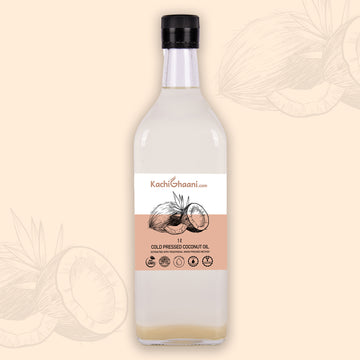
Our Truly Cold Pressed coconut oil is unrefined: cold pressed from dried copra in a wooden ghaani and bottled unfiltered, with no refining, bleaching or deodorising and no preservatives. It is not fresh-kernel oil, and we do not sell it as virgin. It smells clearly of coconut, turns solid in cool weather and is best used within about six months, stored away from light and heat.
The bottom line
Refined and unrefined coconut oil share the same fats; the difference is flavour, smoke point and how much has been stripped out. Reach for refined when you need neutral, high-heat frying or baking, and unrefined when you want coconut's aroma in your cooking, hair or skin. Use either in moderation.
Frequently asked questions
Is copra oil the same as unrefined coconut oil?
Copra oil simply means oil pressed from copra, the dried coconut kernel. It can be sold unrefined, as ours is, or refined into RBD coconut oil. Much of the coconut oil sold worldwide starts as copra oil; the label tells you whether it was refined afterwards.
Why does coconut oil turn solid?
Coconut oil is mostly saturated fat, which sets at cool temperatures. Both refined and unrefined coconut oil turn solid below about 24°C (75°F) and melt again when warmed. Setting does no harm; stand the bottle in warm water to melt it.
Can I deep-fry with unrefined coconut oil?
It is not ideal. Deep frying usually runs at 170 to 190°C (340 to 375°F), close to or above unrefined coconut oil's smoke point of about 177°C (350°F). Use refined coconut oil or another high-smoke-point oil for deep frying, and keep unrefined for medium-heat cooking.
Is RBD coconut oil hydrogenated?
Not usually. RBD only means refined, bleached and deodorised. Some coconut oil products are also hydrogenated to make them firmer, which can create trans fats, and the label should say so. If you see 'hydrogenated' or 'partially hydrogenated' in the ingredients, choose another oil.
Which lasts longer, refined or unrefined coconut oil?
Refined coconut oil usually keeps longer, because refining removes free fatty acids and other compounds that help oil go stale. Unrefined coconut oil keeps well too, as it is mostly saturated; ours is best used within about six months, stored away from heat and light.