Winter foods in Ayurveda: ghee, gur, til and mustard for Hemant ritu
The winter foods Ayurveda recommends for Hemant ritu and Shishira, how India's winter classics follow them, from sarson da saag to til laddoo, and an honest note on portions for a mostly indoor winter.

The winter foods Ayurveda favours are warm, freshly cooked, slightly oily and nourishing: ghee, jaggery (gur), sesame (til), mustard oil, millets, milk and seasonal greens. Classical texts say digestion is strongest in early winter, Hemant ritu, so heavier food is traditional. The honest modern view is that these foods are energy-dense, so portions still matter.
Across North and West India, winter kitchens already follow this logic without naming it: sarson da saag with makki di roti in Punjab, bajra roti with ghee and gur in Rajasthan, undhiyu and chikki in Gujarat, til laddoo in Maharashtra. Here is what the classical texts actually say about the foods to eat in winter, how the regional classics fit, and how to eat this way in a modern, mostly indoor winter, whether you live in Delhi or Toronto.
At a glance
- Ayurveda splits winter into two seasons: Hemant ritu, or Hemanta (about mid-November to mid-January), and Shishira (about mid-January to mid-March).
- The Charaka Samhita recommends rich, unctuous food for early winter: milk and its products, sugarcane products such as jaggery, fats and oils, new rice and warm water.
- India's winter classics follow this pattern: sarson da saag, bajra roti with ghee and gur, alsi pinni, chikki and til laddoo.
- There is no special winter metabolism that uses up extra ghee and sweets. ICMR-NIN's 2024 guidelines still suggest about 25 to 30 g of cooking oil and no more than 20 to 25 g of sugar a day.
Which winter foods does Ayurveda recommend?
Warm, freshly cooked, unctuous food with sweet, sour and salty tastes, built around ghee, oils, milk, jaggery and whole grains, with warm water to drink.
Ayurveda's seasonal routine is called ritucharya. In the Charaka Samhita's chapter on the seasons (Sutrasthana, chapter 6), Hemant ritu calls for milk and its products, sugarcane products such as jaggery, fats and oils, new rice and, for those who eat meat, meat soups, along with warm water. The same chapter pairs the diet with an oil massage, sunshine, warm rooms and heavy, warm clothing; our guide to abhyanga at home covers the massage. Late winter, Shishira, follows the same plan, with even more shelter from cold wind, as cold and dryness deepen. What the text discourages is light, cold food that aggravates vata, meals that are too small and, in late winter, pungent, bitter and astringent tastes.
| Region | Winter classics | Fat | Sweet |
|---|---|---|---|
| Punjab and Haryana | Sarson da saag with makki di roti, alsi pinni, panjiri | Mustard oil, ghee, white butter | Gur, gajak |
| Rajasthan | Bajra roti with ghee and gur, bajre ki khichdi | Ghee | Gur |
| Gujarat | Undhiyu, bajra rotla, adadiya pak | Groundnut oil, ghee | Chikki, gur |
| Maharashtra | Bhogichi bhaji with bajra bhakri topped with til | Groundnut oil, sesame | Tilgul |
| Bengal | Winter greens and fish cooked in mustard oil | Mustard oil | Nolen gur sweets |
Why does Ayurveda say digestion is stronger in winter?
Because, in the classical view, the cold outside holds the body's heat inside, so the digestive fire, agni, burns brighter.
The Charaka Samhita describes agni growing powerful in early winter in people of good strength. If it is not given enough nourishing food, the text says, it turns on the body's own tissues and aggravates vata, the dosha of dryness and movement. That is why the tradition discourages fasting and very light meals in the cold months.
The modern picture is more modest. There is no strong evidence of a large seasonal change in digestion. Some people do feel hungrier in cold weather, and cold exposure can raise energy use a little, but most of us now live and work in heated or sheltered spaces and move less in winter. So hearty food is traditional and comforting, not a licence for unlimited ghee and sweets.
Why is jaggery eaten more in winter?
Because it is in season, and because tradition calls it warming.
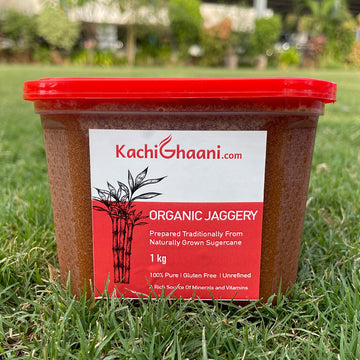
In North India, cane is crushed and gur is made through the winter months, so fresh jaggery arrives when it is coldest. The Charaka Samhita lists sugarcane products among early-winter foods, and folk wisdom calls gur 'garam', heating. In nutrition terms, though, jaggery is 65 to 85% sucrose and carries about 383 kcal per 100 g, almost the same as sugar. A small piece with a meal fits the tradition; handfuls do not. We explain more in Is jaggery just sugar? An honest answer.
Is ghee good to eat in winter?
In Ayurveda, ghee is the classic winter fat, and a little goes a long way.
A teaspoon on a hot roti or stirred into dal is the traditional way, and ghee binds winter sweets such as pinni and laddoo. Ghee is mostly saturated fat, and ICMR-NIN's 2024 guidelines list ghee and butter among the saturated fats to limit. Think of it as a flavour fat: about a teaspoon (5 g) a meal, inside your total fat for the day. Its high smoke point, about 250°C (482°F), makes it ideal for a final tadka. For the wider tradition, read ghee in Ayurveda: what the tradition actually holds.
Which oil is best for winter cooking?
The one your region has always used, rotated with one or two others.
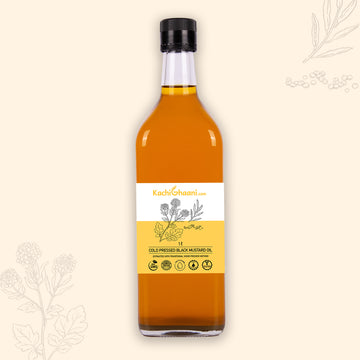
- Mustard oil: the winter oil of the North and East, for the saag tadka, fish and achaar. It handles high heat, about 250°C (480°F), and its sharpness mellows as it warms. Because it is high in erucic acid, use it alongside other oils.
- Groundnut oil: the everyday oil of Gujarat and Maharashtra, generous in undhiyu and on thepla. Unrefined, it smokes at about 180°C (356°F), so keep the heat medium.
- Sesame (til) oil: described as warming in Ayurveda and the traditional oil for winter massage. Untoasted, it smokes at about 177°C (350°F) and suits gentle cooking.
- Flaxseed (alsi): eaten as roasted seeds in Punjabi pinni. The oil must never be heated: drizzle it over warm, not hot, dal or stir it into raita, as in these four real ways to use flaxseed oil.
Whatever the mix, ICMR-NIN suggests keeping cooking oil to about 25 to 30 g per person a day, winter included.
Who should be careful with a rich winter diet?
- Diabetes or prediabetes: count jaggery, chikki and laddoos as sugar, and agree portions with your doctor or dietitian.
- Heart disease or high cholesterol: keep ghee and white butter modest and follow your doctor's advice.
- Weight: winter sweets are dense. One til laddoo or one piece of chikki a day is plenty.
- Babies: ICMR-NIN advises no added sugar, including gur, for children under two.
- Allergies: sesame, mustard and peanuts are common allergens, so check before serving guests.
Stocking a winter kitchen
If you cook this way, our A2 Gir cow ghee is made by the bilona method: curd hand-churned into makkhan, then slowly simmered. Our jaggery is cane juice reduced in open pans, with no chemical clarifiers. Our Truly Cold Pressed black mustard oil is pressed slowly in a wooden ghaani for the saag tadka, and our Truly Cold Pressed white sesame oil is untoasted and unrefined for winter massage. A little of each, used deliberately, is what the tradition intends.
The bottom line
Ayurveda's winter foods are warm, cooked and gently rich: ghee on bajra roti, mustard oil in the saag, a piece of gur and a til laddoo. The classical texts give the reasons and modern life sets the limits, so enjoy these foods in small, deliberate amounts and keep moving through the cold months.
Frequently asked questions
Is it good to eat jaggery every day in winter?
A small piece, about 5 to 10 g, is fine for most healthy adults if it fits within your sugar for the day. ICMR-NIN suggests keeping sugar to about 20 to 25 g a day, and that includes jaggery, chikki and laddoos. People with diabetes should count it exactly like sugar.
What is Hemant ritu?
Hemant ritu is early winter in the traditional Indian calendar of six seasons, covering the months of Margashirsha (also called Agrahayana) and Pausha, roughly mid-November to mid-January. In ritucharya, Ayurveda's seasonal routine, it is the time when digestion is said to be strongest and warm, rich food most welcome. Shishira, late winter, follows it.
What are good winter foods for vata?
Ayurveda suggests warm, moist, gently oily and grounding food for vata in winter: khichdi with ghee, soups and stews, root vegetables, cooked greens, sesame and soaked nuts, with warm water or herbal tea to drink. Cold, dry and mostly raw meals are the ones traditionally kept to a minimum.
Should you drink warm water in winter, according to Ayurveda?
Yes, the classical texts recommend warm water in winter, and many people find it comforting. There is no evidence that cool water harms a healthy person, so drink whatever helps you stay well hydrated, which can be harder in winter, when many people feel less thirsty.
Can I follow an Ayurvedic winter diet outside India?
Easily. Keep the principles and use local produce: pumpkin, squash, carrots, beetroot, spinach and kale can stand in for Indian winter vegetables, and oats or barley for millets. Ghee, jaggery, sesame and mustard oil travel well, and a warm, cooked lunch matters more than any single ingredient.
Is ghee better than butter in winter?
They are close cousins: ghee is butter with the water and milk solids cooked out. Ghee keeps longer and handles higher heat, about 250°C (482°F), which suits tadka. Both are mostly saturated fat, so either way a teaspoon is a sensible portion.