Aloo Pitika
Hot mashed potato with raw mustard oil worked through it, sharp enough to catch the back of your nose, with raw onion and green chilli still crunching in it.

Ingredients
Serves 4
- 500 g potatoes (4 medium), floury variety, whole and unpeeled
- 1.5 tbsp (22 ml) wooden cold pressed black mustard oil, raw
- 1 medium onion (100 g), chopped very fine
- 3 green chillies, chopped fine, or to taste
- 4 tbsp coriander leaves, chopped
- 1 tsp salt, or to taste
- 1 tbsp (10 g) spring onion greens, chopped (optional)
- 1/2 tsp lemon juice (optional)
Quantities are scaled up. Taste as you go and adjust the salt and spice.
Shop this recipe
Everything you need, from our press house
A winter morning in Guwahati. Rice from the night before has been sitting in water since bedtime, and that poita bhat is now cold and slightly sour. Next to it on the plate is a small mound of aloo pitika, still warm, pressed into a rough dome with the back of a hand. Someone has worked raw mustard oil into it and you can smell it from across the table, sharp enough to catch high up in your nose. There is raw onion in it that still crunches, green chilli cut into little rings, and coriander. You take a pinch of the sour rice and a pinch of the pitika together, and the cold, the warm, the sharp and the salt all land at once. There is nothing complicated about it and there is nothing better.
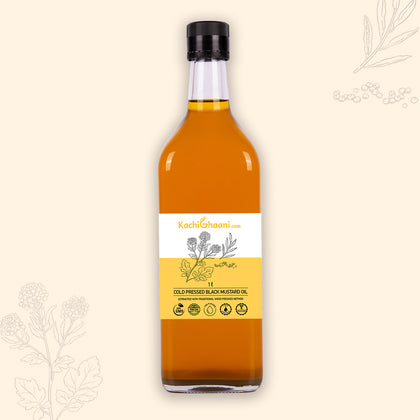
This is the one dish where mustard oil is not cooked at all. In Assam it goes into the potato raw, straight from the bottle, and its pungency is the entire flavour of the dish. That only works if the oil is honest. Our wooden cold pressed black mustard oil is pressed in a wooden ghaani without heat and is not refined, so nothing has been stripped out of it. Refined mustard oil has had exactly the quality this dish needs taken away from it. Note that this is the opposite of Bengali cooking, where the oil is heated to smoking point first to soften the raw bite. Here the raw bite is the point.
Mash the potatoes while they are hot and mash them properly, no lumps at all. A hot potato takes the oil in and holds it; a cold one turns gluey and refuses. Use a floury potato, not a waxy one. And add the oil a little at a time, tasting as you go, because a tablespoon and a half in half a kilo of potato is sharp, and if you are new to raw mustard oil you may want to start at one.
How to make it
- Boil the potatoes whole and unpeeled in salted water for 20 to 25 minutes, or pressure cook for 3 whistles, until a knife slides into the middle with no resistance. Boiling them whole keeps them from turning watery.
- Drain and peel them while they are still hot enough to only just handle. Hold each one in a cloth if it helps. The skin should come away in strips.
- Mash them in a wide bowl with a masher or the back of a heavy spoon while they are hot, until there is not one lump left. Do not use a mixer or blender, which turns potato into glue in seconds.
- Add the salt and mix it in first, so it dissolves evenly into the warm potato.
- Pour in the mustard oil a little at a time, working it in with your fingers or the back of a spoon after each addition. Stop and taste. It should be clearly sharp at the back of your nose but not burning.
- Add the chopped onion, green chillies and coriander and fold them through lightly. Do not overwork them, because the onion should still crunch against the soft potato.
- Taste again for salt and heat. Add the lemon juice and spring onion greens if you like a sharper, fresher pitika.
- Shape it into a rough mound on the plate with your palm, the way it is served in Assam, and eat it warm with rice and dal, or with poita bhat on a hot day.
Tips
- Mash hot, mix warm. A hot potato absorbs the oil. A cold one sits there and the pitika ends up heavy and greasy instead of soft and light.
- Start with less oil. Raw cold pressed mustard oil is much stronger than the refined kind. One tablespoon in 500 g is a gentle start; a tablespoon and a half is how it is eaten in Assam.
- Do not cook the oil for this dish. Heating it destroys the raw sharpness that pitika is built on. Save the smoking-point technique for curries and frying.
- Try bengena pitika too. Roast a brinjal on an open flame until the skin blackens, peel it, and mash it into the potato with the same oil, onion and chilli. Aloo aru bengena pitika is a classic Assamese plate.
- Eat it the day it is made. Raw onion turns sour overnight and the oil loses its edge in the fridge. This is a ten minute dish; make it fresh.