Bel ka Sharbat
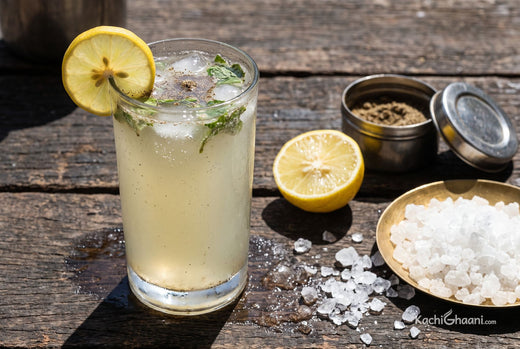
The colour of milky tea, thick enough to cling to the glass, tasting of dates and old wood with a pinch of black salt cutting across the sweetness.

Ingredients
Serves 3
- 1 ripe bel / wood apple (about 500 g)
- 2 cups (500 ml) warm water, for mashing
- 3 tbsp (30 g) Organic Dhaga Mishri, crushed fine
- ¼ tsp black salt (kala namak)
- ¼ tsp roasted cumin (jeera) powder (optional)
- 1 cup (250 ml) chilled water, to thin
- 4 to 5 ice cubes per glass, to serve
- 4 to 6 mint leaves, to garnish
Quantities are scaled up. Taste as you go and adjust the salt and spice.
Shop this recipe
Everything you need, from our press house
Varanasi in May is forty-four degrees by eleven in the morning and the lanes behind Dashashwamedh smell of hot stone and marigold. The sharbat stalls there keep a pile of cracked bel shells on the counter — brown, round, hard as coconuts — and a steel bucket of pulp underneath, covered with a wet cloth. What comes over the counter is the colour of milky tea, thick enough to cling to the sides of the glass, and it tastes of dates and old wood with something faintly resinous under it. A pinch of black salt goes on top. It is the one drink on that lane that does not fizz.
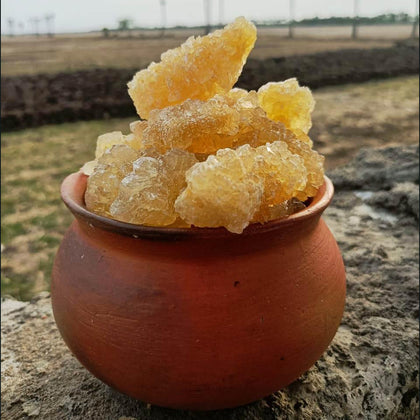
Bel is a quiet fruit. Its sweetness is already there, low and soft, and its flavour is easily buried — put anything sharp near it and the bel disappears. This is why mishri suits it so well. Our Organic Dhaga Mishri is grown on cotton thread over eight to ten days and carries no molasses taste whatsoever, so it adds sweetness and nothing else. Crushed fine and stirred into the strained pulp it goes in within a minute, and because it sweetens evenly rather than in a hit, the bel is still the only thing you taste from the first sip to the last.
Everything depends on picking a ripe fruit. A ripe bel is yellowish-brown rather than green, feels surprisingly light for its size, and gives a hollow knock when you tap it — sometimes you can hear the pulp move inside. An unripe one is heavy and green, the pulp inside is pale and tight, and it will taste woody and bitter no matter how much mishri you add. Buy it heavy on smell and light in the hand.
How to make it
- Hold the bel on a hard surface and give it one firm knock with a pestle or the back of a heavy knife. The shell cracks in two like an egg. Do not hammer it — you only want it open.
- Scoop out everything inside into a wide bowl, sticky orange-brown pulp, seeds, fibre and all. Scrape the shell clean.
- Pour in the warm water and mash hard with your hand or a potato masher for 3 to 4 minutes. The pulp will loosen off the fibre and the water will turn thick and tan.
- Leave it to sit for 15 minutes. This softens the last of the pulp still clinging to the seeds.
- Mash again for a minute, then pour the whole thing through a coarse steel sieve set over another bowl. Press hard with the back of a ladle and keep working until only dry fibre and clean seeds are left. Discard those.
- Add the crushed mishri to the strained pulp and stir for about a minute, until you can no longer feel grains against the bottom of the bowl. Stir in the black salt and the jeera powder.
- Add the chilled water a little at a time until it pours the way you like — the stalls keep it thick enough to coat the glass. Chill for at least an hour.
- Stir well, pour over ice, garnish with mint and serve very cold. Stir again between glasses, as it settles.
Tips
- Pick it light. A ripe bel is yellowish-brown, light for its size and knocks hollow. Green, heavy fruit will be tight and bitter inside.
- Never blend it. A mixer breaks the seeds and the drink turns bitter within minutes. Mash by hand and strain — that is the whole technique.
- Warm water, not hot. Warm water loosens the pulp off the fibre far faster than cold. Boiling water dulls the flavour.
- Black salt is not optional. Bel is soft and slightly flat on its own. A quarter teaspoon of kala namak lifts the whole glass and makes the sweetness read properly.
- It keeps. Strained, sweetened pulp keeps 3 to 4 days in a covered jar in the fridge. Thin each glass with cold water as you pour it.
- A milk version. In Bengal the same pulp is loosened with chilled milk instead of water and a pinch of salt — thicker, and closer to a light shake.