Bisi Bele Bath
Thick, hot, tamarind-sour rice and dal in one pot, with a spoon of ghee melting a slow yellow hole in the middle and khara boondi on the side.

Ingredients
Serves 4
- For the bisi bele bath masala:
- 2 tbsp coriander seeds
- 1 tbsp chana dal
- 1 tbsp urad dal
- 1 tsp cumin seeds
- 1/2 tsp fenugreek seeds
- 6 dry red chillies, byadagi
- 1 inch cinnamon
- 4 cloves
- 2 marathi moggu (kapok buds), optional but traditional
- 1/4 tsp asafoetida (hing)
- 3 tbsp dry coconut (copra), grated
- 1 tsp Gir Cow's A2 Ghee, for roasting
- For the rice and dal:
- 1 cup (200 g) sona masuri rice
- 3/4 cup (150 g) toor dal
- 4.5 cups (1.1 litre) water, plus more as needed
- 1/2 tsp turmeric powder
- For the vegetables:
- 1 carrot (80 g), cut into 1 cm cubes
- 10 French beans (80 g), cut into 1 cm pieces
- 1/4 cup (40 g) green peas
- 2 small brinjals (80 g), quartered
- 1 small potato (80 g), cubed
- 1 medium onion (80 g), cut into thick slices
- For finishing:
- 1 lemon-sized ball tamarind (25 g), soaked in 3/4 cup (180 ml) hot water
- 1/2 tsp Stone Ground Red Chilli Powder
- 2 tsp salt, or to taste
- 1 tsp jaggery, grated
- For the tempering:
- 3 tbsp Gir Cow's A2 Ghee
- 1 tsp mustard seeds
- 20 cashew nuts
- 2 dry red chillies, broken
- 15 curry leaves
- 1/4 tsp asafoetida (hing)
Quantities are scaled up. Taste as you go and adjust the salt and spice.
Shop this recipe
Everything you need, from our press house
A Bangalore Sunday, around one o clock. The vessel comes off the stove still muttering to itself and a ladle drops a thick, soft, brick-orange mound onto the plate. It is not rice and it is not sambar; it is one thing. Somebody presses a spoon of ghee into the middle and it goes clear and yellow and sinks in. On the side, khara boondi and a couple of thick potato chips. You eat it very hot, and the tamarind sourness and the cinnamon-clove sweetness of the masala arrive together, with the dal underneath holding it all up. Then a chip, for the crunch, and back in again.
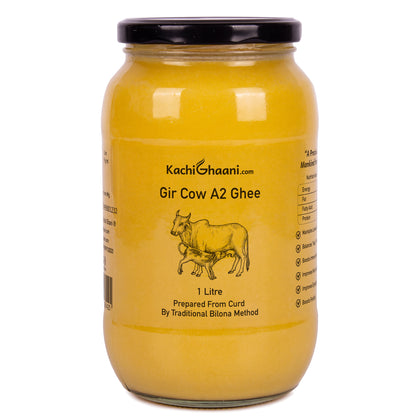
Ghee is the correct fat for this dish, and Gir Cow's A2 Ghee suits it especially well. Bisi bele bath is heavy with tamarind and a masala full of dry spices, and it needs a fat that can stand up to that without disappearing. Ghee handles high heat comfortably, up to around 250 degrees, so the cashews go properly golden and the mustard seeds actually pop. Because ours is made the bilona way from cultured curd, it leaves a nutty, slightly caramel taste that softens the sourness. A last spoon stirred in off the heat is what turns a good bisi bele bath into the one people remember.
The thing that decides this dish is the consistency, and it changes as it sits. Cook it looser than you think it should be, because rice and dal keep drinking liquid for the next twenty minutes. If your first plate is perfect, the second one will be a solid block. Aim for a thick porridge that just falls off the ladle, and keep a cup of hot water beside the stove.
How to make it
- Make the masala. Heat 1 tsp ghee in a kadhai and roast the coriander seeds, both dals, cumin, fenugreek, red chillies, cinnamon, cloves and marathi moggu on low heat for 6 to 7 minutes, until the dals are golden and the coriander smells sweet. Add the copra for the last minute only, stirring, until it turns light brown. Cool completely and grind to a fine powder with the asafoetida.
- Pressure cook the toor dal with 2 cups water and the turmeric for 5 whistles. Mash it smooth. In a separate pot, cook the rice with 2.5 cups water until very soft, softer than you would eat plain. Both should be almost falling apart.
- Squeeze the tamarind in its soaking water, strain, and keep the liquid. Throw away the fibre.
- In a wide, heavy pot, boil the carrot, beans, potato and onion in 1.5 cups water with a little salt for 6 minutes. Add the brinjal and peas and cook 4 minutes more. The vegetables should hold their shape and not turn to mush.
- Pour in the tamarind water and cook uncovered for 6 to 8 minutes on medium. The raw tamarind smell must go completely, and the liquid will lose its cloudiness. This step cannot be hurried.
- Stir in 4 tbsp of the ground masala, the chilli powder, salt and jaggery. Simmer 3 minutes so the masala loses its raw edge.
- Add the mashed dal, then the cooked rice, a little at a time, mixing with a flat ladle so nothing sticks. Add 1 cup of hot water. It should look loose, like a thin porridge.
- Simmer uncovered on low for 12 to 15 minutes, stirring every minute or so, scraping the bottom. It will thicken and darken and the top will start to look glossy. Add hot water whenever it gets stiff.
- Heat 3 tbsp ghee in a small pan. Fry the cashews until golden, lift them out, then add the mustard seeds and let them crackle. Add the broken chillies and curry leaves, wait 2 seconds for the leaves to crisp, switch off and stir in the asafoetida.
- Pour the tempering and the cashews over the bisi bele bath. Cover for 5 minutes without stirring, then mix.
- Serve immediately with a spoon of ghee on top, khara boondi, potato chips or fried papad, and a bowl of plain curd.
Tips
- Make it looser than looks right. Bisi bele bath thickens sharply as it cools. Keep a kettle of hot water at hand and loosen it again just before serving.
- Marathi moggu is the flavour people cannot place. These dried kapok buds smell of mustard and cardamom together and are what makes the masala taste like Karnataka rather than sambar. Ask for them at a South Indian provision store.
- Cook the vegetables separately. Boiled along with the dal, carrot and beans go to pulp. Cook them just to fork-tender and add them at the end.
- Grind the copra last. Coconut browns much faster than the dals. Adding it in the final minute of roasting keeps it sweet instead of bitter.
- Leftovers reheat well. Add a splash of hot water, warm on low, and finish with fresh ghee. Do not microwave it dry.
- We do not sell rice, dals, spices or cashews. Buy those separately. Fresh coriander seeds make a real difference to this masala.