Dhaniya Panjiri
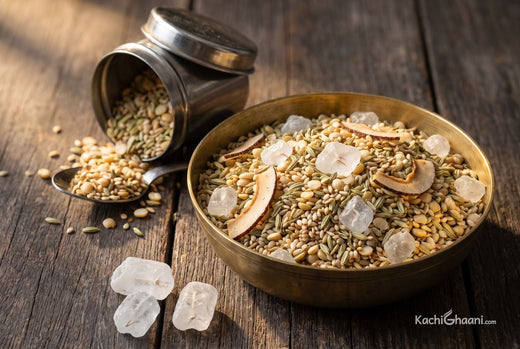
Dry, crumbly and eaten by the spoon straight off the thali. Roasted coriander, ghee, crushed makhana and small hard grains of mishri in every mouthful.

Ingredients
Serves 8
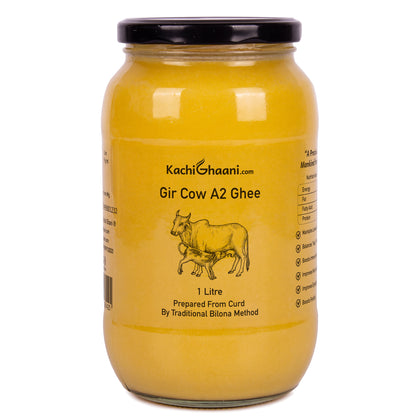
- ¼ cup (55 g) Gir Cow's A2 Ghee, divided
- 2 cups (180 g) coriander (dhaniya) powder
- ½ cup (12 g) makhana (foxnuts)
- 12 cashews, broken
- 12 almonds, slivered
- 2 tbsp (20 g) melon seeds (magaz)
- ½ cup (40 g) dried coconut (khopra), grated
- ¾ cup (110 g) Organic Dhaga Mishri, crushed coarse
- ½ tsp green cardamom powder
Quantities are scaled up. Taste as you go and adjust the salt and spice.
Shop this recipe
Everything you need, from our press house
On Janmashtami the house smells of coriander long before midnight. Two cups of dhaniya powder go into hot ghee on a low flame and for the next ten minutes you do nothing but stir. The powder shifts from dusty khaki to the colour of wet sand, then darker again, and somewhere in there the smell changes completely — the raw grassy edge disappears and something toasted, almost sweet, takes its place. Cooled and mixed with crushed makhana, slivered almonds, coconut and mishri, it is dry, crumbly and slightly rough, and it is eaten by the spoon straight from the thali after the aarti.
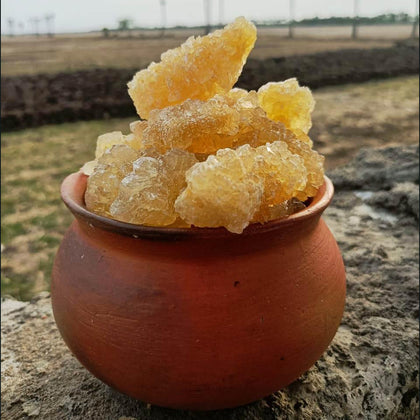
Panjiri is a dry sweet, which changes what the sweetener has to do. It never dissolves; it just gets distributed. Mishri crushed to a coarse powder leaves small hard grains scattered right through the mixture, so the sweetness arrives in flashes rather than all at once — which is exactly what you want against something as strong as roasted coriander. Fine sugar goes damp against the ghee-warm powder and cakes into lumps; boora is sweeter and flatter and blurs everything together. Crush our Organic Dhaga Mishri fresh, just before you need it, and leave a few slightly larger pieces in for the crunch.
The whole dish turns on two things: the coriander roast and letting it cool. Roast on a low flame and judge by colour and smell rather than the clock — under-roasted dhaniya tastes raw and leaves a bitter scratch at the back of the throat, and burnt dhaniya is worse. Then let the pan go completely cold before the mishri and the coconut go in. Add them while it is still warm and the mishri begins to melt into the ghee and the panjiri sets into clumps.
How to make it
- Heat 1 tbsp of the ghee in a heavy kadhai on a low flame. Fry the makhana for 4 to 5 minutes, stirring often, until they feel light and crisp and snap cleanly when pressed. Lift them out onto a plate.
- In the same ghee fry the cashews and almonds for about a minute until pale gold, then the melon seeds for 30 seconds until they puff. Take them out.
- Add the grated coconut to the pan and roast for 2 minutes on low until it just turns colour and smells nutty. Take it out onto a separate plate.
- Add the remaining ghee to the kadhai and let it melt. Tip in the coriander powder and stir it through so every bit is coated.
- Roast the coriander on a low flame for 10 to 12 minutes, stirring almost continuously and scraping the base. It will go from khaki to the colour of wet sand, then a shade darker, and the raw smell will give way to a toasted one. Do not walk away from it.
- Switch off, stir in the cardamom powder, and tip the coriander onto a wide plate or thali to spread out and cool. Leave it until the plate is cold to the touch, about 30 minutes.
- While it cools, crush the makhana into coarse crumbs with your hands or a rolling pin, and crush the mishri to a coarse powder between two steel katoris, pulling the threads out first.
- When the coriander is completely cold, add the makhana, fried nuts, melon seeds and roasted coconut and mix well.
- Add the crushed mishri last and mix thoroughly with a dry spoon. Taste and add a little more if you want it sweeter. Store in a dry airtight jar; it keeps 15 days.
Tips
- Go by colour and smell, not time. Under-roasted coriander tastes raw and bitter at the back of the throat. Wet sand is the colour you are looking for, and the smell should turn toasted.
- Cool it completely. This is the step people skip. Mishri added to warm panjiri starts melting into the ghee and the whole thing sets into a solid block.
- Use fresh coriander powder. Old dhaniya powder from the back of the shelf has lost its oils and tastes of nothing but dust. Grind it fresh if you can.
- A2 ghee is doing real work here. It carries the roast, holds the mixture together and gives panjiri its smell. Do not cut the quantity.
- Leave a few big pieces of mishri. Coarse crushing with a few larger crystals left in gives the panjiri its crunch. Powdered mishri makes it taste flat.
- Roll it into laddoos. Add 2 tbsp of warm ghee to the finished mix and press into small balls while it is still loose. They hold for a week.