Dhokar Dalna
Golden diamonds of fried chana dal, crisp at the corners, sitting in a ginger and tomato gravy that they slowly drink up while nobody is looking.

Ingredients
Serves 4
- 1 cup (200 g) chana dal, soaked 6 hours or overnight
- 2 green chillies and 1 inch (15 g) ginger, for the paste
- 1/2 tsp turmeric, 1 tsp cumin powder, 1/2 tsp hing, 1 tsp salt, 1 tsp sugar, for the dhoka
- 2 tbsp (20 g) grated fresh coconut (optional but traditional)
- 6 tbsp (90 ml) wooden cold pressed black mustard oil, plus 400 ml more for deep frying
- 2 medium potatoes (250 g), peeled and quartered
- 1 tsp cumin seeds, 2 bay leaves, 2 dried red chillies
- 1/2 tsp hing, for the gravy
- 2 tbsp (30 g) ginger paste
- 1 large tomato (150 g), chopped fine
- 1/2 tsp turmeric, 1 tsp cumin powder, 1.5 tsp coriander powder, 1 tsp red chilli powder
- 1.5 tsp salt and 1.5 tsp sugar, for the gravy
- 2 cups (500 ml) hot water
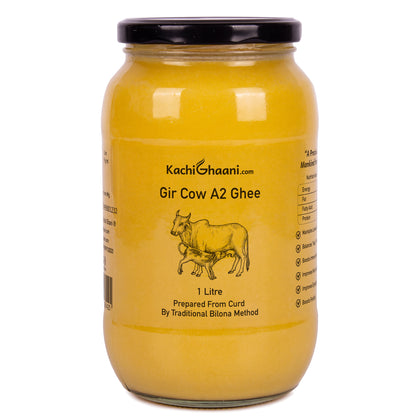
- 1 tbsp (15 g) Gir Cow's A2 Ghee and 1/2 tsp Bengali garam masala, to finish
Quantities are scaled up. Taste as you go and adjust the salt and spice.
Shop this recipe
Everything you need, from our press house
A Bengali kitchen on a wedding-season afternoon. The ground dal has been stirred until it leaves the sides of the pan in one lump, then slapped onto an oiled plate and flattened with the back of a steel bowl while it is still hot. Half an hour later it is firm enough to cut, and someone runs a knife across it in long diagonals to make diamonds. Those diamonds go into hot oil and come out with a thin crisp shell and a soft, faintly grainy inside. They rest in the gravy just long enough to soften at the edges. You break one against your rice and the gravy has gone right into the middle of it.
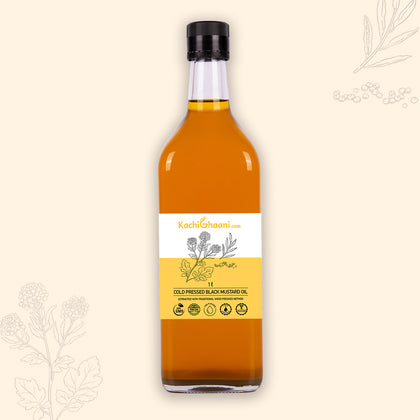
This is a niramish dish, cooked without onion or garlic, so almost everything it tastes of comes from the fat and the ginger. Wooden cold pressed black mustard oil is unrefined, which is why it still carries its full pungency. Bengali cooks heat it to smoking point and then let it sit off the flame for half a minute, which softens the raw sting and leaves behind a warm, nose-tingling sharpness. That sharpness is what carries a gravy with no onion in it. Fry the dhoka in the same oil and the crust picks it up as well.
Everything hinges on one thing: the dal paste must be dry. Grind with as little water as you can, then keep cooking and stirring until the mass pulls away from the pan cleanly and holds a ball. Spread it while it is hot, because cold paste cracks the moment you press it. A soft, wet dhoka will fall apart in the oil, and no gravy can fix that.
How to make it
- Drain the soaked chana dal well and grind it with the green chillies and ginger to a thick, coarse paste, using no more than 2 tbsp water. It should feel like wet sand and hold a peak, not pour.
- Heat 3 tbsp of the mustard oil in a heavy kadhai until it smokes, then take it off for 30 seconds. Return to low heat, add the hing, then the dal paste with the turmeric, cumin powder, salt, sugar and coconut.
- Stir without stopping for 10 to 12 minutes. It will loosen first, then tighten, and finally come away from the sides of the pan in one mass that does not stick to your finger. That is the stage. Do not stop early.
- Tip it straight onto an oiled steel plate or tray while it is hot. Flatten it to an even 1.5 cm thickness with the back of an oiled bowl, pressing out any air pockets. Leave to cool and firm for 30 minutes.
- Cut into diamonds about 4 cm across, running the knife in straight lines and then diagonals. Lift them with a flat spatula so they do not tear.
- Heat the frying oil to 175C. Fry the diamonds in batches for 3 to 4 minutes, turning once, until they are deep gold and firm to the tap of a spoon. Lift onto a rack. Fry the potato quarters in the same oil until their edges brown, then set aside.
- Pour off all but 3 tbsp of the oil. Add the cumin seeds, bay leaves, dried chillies and hing. When they crackle, add the ginger paste and fry one minute, then the tomato and cook 5 minutes until it collapses and the oil separates.
- Mix the turmeric, cumin, coriander and chilli powders with 3 tbsp water and add. Fry on low for 2 minutes until it darkens and stops smelling dusty. Add the fried potatoes, salt and sugar, and turn them through.
- Pour in the hot water and simmer uncovered for 12 minutes, until the potatoes are done and the gravy has body without being thick.
- Slide in the fried dhoka. Simmer no more than 3 minutes, spooning gravy over them. Any longer and they turn to mush. Switch off, add the ghee and garam masala, cover for 5 minutes, and serve with plain rice.
Tips
- Test the paste before you spread it. Roll a little between your palms. If it makes a smooth ball that does not stick, it is ready. If it sticks, cook it two minutes more.
- Fry the day before if you like. The dhoka can be cut and fried a day ahead and kept in the fridge. Warm them in the gravy for three minutes at the end and they hold their shape better.
- Three minutes in the gravy, no more. The dhoka is meant to stay a little firm in the middle. Long simmering turns a good dhokar dalna into dal soup with lumps.
- Sugar is not optional here. A teaspoon and a half in the gravy is the Bengali balance, and it rounds off the sharpness of the mustard oil rather than making the dish sweet.
- Coarse, not smooth. A slightly grainy grind gives the dhoka its texture. Ground to a silky batter, it sets dense and rubbery.