Gulab Sharbat
A syrup so dark it looks almost brown in the bottle, until a spoon of it opens into a clear pink glass that smells of the flower before you reach it.

Ingredients
Serves 12
- 100 g fresh desi rose petals, from about 15 to 18 unsprayed roses
- 3 cups (750 ml) water, for steeping
- 400 g Organic Dhaga Mishri, crushed
- 1 cup (250 ml) water, for the syrup
- 1 tsp lemon juice
- ½ tsp green cardamom powder
- 200 ml chilled water or chilled milk per glass, plus ice, to serve
- A few fresh rose petals, to garnish
Quantities are scaled up. Taste as you go and adjust the salt and spice.
Shop this recipe
Everything you need, from our press house
Between March and May the rose fields around Pushkar are picked before sunrise, while the petals are still cold and heavy with dew, because once the sun is properly up the scent goes out of them. In houses across Rajasthan those petals go straight into a matka of water and sit overnight under a plate. By morning the water has turned faintly pink and smells like the inside of a rose. Boiled down with mishri it becomes a syrup so dark it looks almost brown in the bottle — until a spoon of it hits cold water and opens into a clear pink glass you can smell before it reaches your mouth.
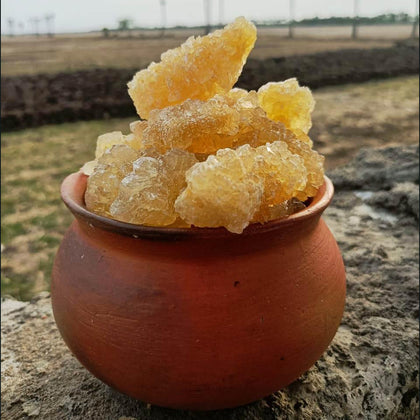
The syrup is where the choice of sweetener really shows. Rose is a delicate scent sitting on top of a very light flavour, and sugar boiled hard picks up a faint caramel edge that quietly competes with it. Mishri is plain crystallised cane with no molasses in it at all, so the syrup stays clean-tasting and the rose is left standing on its own. It also cooks down to a clear syrup rather than a cloudy one, which is why the finished glass holds that transparent pink instead of going murky.
Everything here depends on the roses. Use fragrant desi gulab — the small, loose, deep pink kind sold by weight for puja and for gulkand — and make sure they have not been sprayed. Florist roses are bred for long stems and long life, not for scent. Steep a bowl of those overnight and you will get pink water that smells of very little. Smell the flowers before you buy them; if you cannot smell them from a foot away, walk on.
How to make it
- Pull the petals off the roses and discard the green base of each petal, which is bitter. Rinse them gently in cold water and drain in a colander.
- Put the petals in a glass or steel bowl with 3 cups water. Press them down under the water, cover, and leave for 8 to 12 hours or overnight. Press them with a spoon three or four times whenever you pass.
- Next morning strain, squeezing the petals well. Keep the pink water and set the petals aside.
- Put the crushed mishri and 1 cup water into a heavy pan. Bring to a boil, stirring until it dissolves, then simmer for 8 to 10 minutes until the syrup is sticky and a drop pulled between finger and thumb makes a single short thread.
- Add the lemon juice. Any scum will lift to the surface — skim it off with a spoon and discard it.
- Pour in the strained rose water. Bring it back to a boil, let it bubble for 2 minutes only, then switch off. Do not reduce it further; the scent goes with the steam.
- Stir in the cardamom powder and drop the reserved petals back in. Cover and leave to cool completely, then rest overnight.
- Strain out the petals and pour the syrup into clean, dry glass bottles. It keeps 3 months in the fridge.
- To serve, put 3 tbsp of syrup in a glass, add ice, top with about 200 ml chilled water or milk, and stir. Float a petal on top.
Tips
- Smell before you buy. Desi gulab from a puja flower stall will scent your whole bag. Long-stemmed florist roses have almost no smell and are usually sprayed.
- Never boil the petals in water. Cold steeping pulls out the scent; boiling drives it off and leaves you with pink, flat-tasting water.
- Trim the white heel. The pale base where the petal joins the flower is bitter. Thirty seconds of pinching it off makes a noticeably cleaner syrup.
- Check the thread. Cool a drop of syrup on a plate, press it between finger and thumb and pull apart. One short thread is right. No thread and it will ferment; two and it will crystallise in the bottle.
- Dry bottles only. A drop of water left inside a bottle will spoil the batch. Rinse, then dry them upside down in the sun or a warm oven.
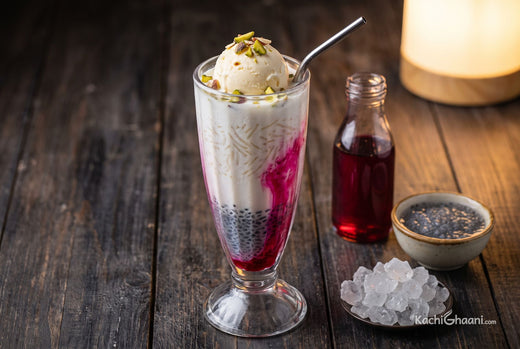
- With milk it becomes another drink. Three spoons of this syrup in cold milk is the rose milk sold outside South Indian temples, and it is the base for a falooda.