Kokum Sharbat
A magenta so deep it stains the water in minutes. Soft round sourness rather than a sharp one, with roasted jeera arriving right at the finish.

Ingredients
Serves 12
- 1 cup (60 g) dried kokum rinds (aamsul)
- 2 cups (500 ml) warm water, for soaking
- 400 g Organic Dhaga Mishri, crushed
- 1 cup (250 ml) water, for the syrup
- 1 tsp roasted cumin (jeera) powder
- ½ tsp black salt (kala namak)
- ½ tsp green cardamom powder
- 200 ml chilled water and 4 to 5 ice cubes per glass, to serve
- A few mint leaves, to garnish
Quantities are scaled up. Taste as you go and adjust the salt and spice.
Shop this recipe
Everything you need, from our press house
All along the Konkan coast, kokum is dried on mats through the hot months until the rinds go black and leathery and slightly tacky with salt. Sacks of it sit in every Malvan and Ratnagiri kitchen. Drop a handful into warm water and within minutes it gives back a colour that is hard to believe from something that looks like old leather — a deep magenta that stains the water and stains the spoon. The glass is served very cold with a dusting of roasted jeera on top. The first mouthful is sour in a soft, round way, nothing like the sharp jab of lemon, and the cumin only arrives on the finish.
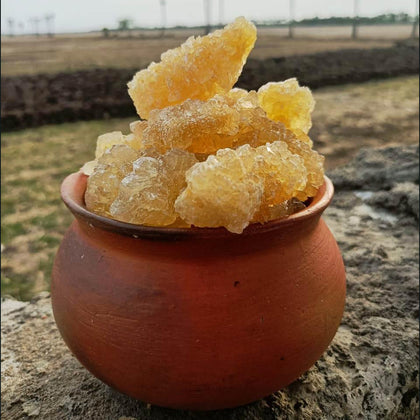
Kokum's sourness is the whole point of the drink and it is surprisingly easy to kill. Sugar boiled hard into a heavy syrup dulls both the colour and the tang and the sharbat ends up tasting like a cordial. Mishri makes a lighter, cleaner syrup, and because there is no molasses in it, it does not brown the drink or muddy that magenta. Crushed into the syrup it dissolves in a minute or two of stirring, and in the finished glass it sits underneath the sourness rather than covering it, so the kokum still comes through first.
The one rule is never to boil the kokum. Make the mishri syrup on its own, take it off the flame and let it cool right down to room temperature before the strained kokum extract goes in. Boil the two together and you lose that magenta to a dull brownish red and the sourness goes flat and cooked-tasting. Cold in, colour kept.
How to make it
- Rinse the kokum rinds quickly under running water to wash off surface salt and grit. Put them in a glass or steel bowl with 2 cups warm water and leave for 4 hours. They will swell and the water will turn deep red.
- Tip the kokum and its soaking water into a mixer and grind to a coarse pulp, about a minute.
- Strain through a fine steel sieve set over a bowl, pressing hard with the back of a ladle until only dry pulp is left. Discard the pulp. You should have a thick, dark magenta extract.
- Put the crushed mishri and 1 cup water in a heavy pan. Bring to a boil, stirring until it dissolves, then simmer 8 to 10 minutes until it is a light syrup that coats the back of a spoon.
- Switch off and leave the syrup to cool completely, until it is no warmer than the room. This takes about 30 minutes.
- Stir the kokum extract into the cooled syrup. The colour will jump.
- Add the roasted jeera powder, black salt and cardamom powder. Stir well and taste — it should be sharply sour, since it is a concentrate.
- Pour into clean, dry glass bottles and refrigerate. It keeps 2 months in the fridge.
- To serve, put 2 tbsp of concentrate in a glass, add ice, top with about 200 ml chilled water and stir. Garnish with mint and a small extra pinch of jeera.
Tips
- Cool the syrup before mixing. This is the one step that keeps the colour. Hot syrup poured onto kokum extract turns the whole batch a dull brown.
- Buy soft, sticky rinds. Good aamsul is dark purple-black, pliable and slightly oily. Dry, brittle, brown pieces have lost most of their colour and sourness.
- Rinse but do not soak in salt water. Kokum is dried with salt. A quick rinse takes the surface salt off; long washing pulls out colour.
- Sourness varies a lot. Mix one glass and taste before you bottle. If it is too fierce, add a little more mishri syrup; if it is flat, a squeeze of lemon in the glass fixes it.
- Kokum saar for the table. Thin the same concentrate with water, add a tadka of jeera, curry leaves and a slit green chilli, and serve it as a thin sour drink alongside rice.