Luchi with Aloor Dom
The luchi swells into a white balloon in eight seconds. Beside it, small potatoes sit dented and dark in a mustard oil gravy, waiting to be wrapped in a torn piece.

Ingredients
Serves 4
- 2 cups (240 g) maida, for the luchi
- 3 tbsp (45 ml) wooden cold pressed groundnut oil, for the moyan
- 1/2 tsp salt and about 1/2 cup (120 ml) lukewarm water, to knead
- 500 ml wooden cold pressed groundnut oil, for deep frying
- 500 g baby potatoes (about 20), boiled and peeled
- 4 tbsp (60 ml) wooden cold pressed black mustard oil, for the aloor dom
- 1 tsp cumin seeds, 2 bay leaves and 2 dried red chillies
- 1/2 tsp hing (asafoetida)
- 2 tbsp (30 g) ginger paste and 2 green chillies, slit
- 1 medium tomato (100 g), pureed
- 1 tsp stone-ground red chilli powder
- 1/2 tsp turmeric, 1 tsp cumin powder, 1.5 tsp coriander powder
- 1 tsp (5 g) sugar and 1.5 tsp salt, or to taste
- 1/2 tsp Bengali garam masala, to finish
- 1 cup (250 ml) hot water, for the gravy
Quantities are scaled up. Taste as you go and adjust the salt and spice.
Shop this recipe
Everything you need, from our press house
Sunday morning in a Kolkata flat. The dough was kneaded an hour ago and is resting under a damp cloth. Someone rolls small discs on the back of a steel plate while the kadhai heats. A luchi goes in flat, sinks, comes straight back up, and in about eight seconds it swells into a white balloon. It is lifted out still pale, never brown, and stacked under a cloth. Next to it the aloor dom sits thick and dark red, the small potatoes dented where they have drunk the gravy. You tear off a piece of luchi, wrap a potato in it, and the steam comes up into your face.
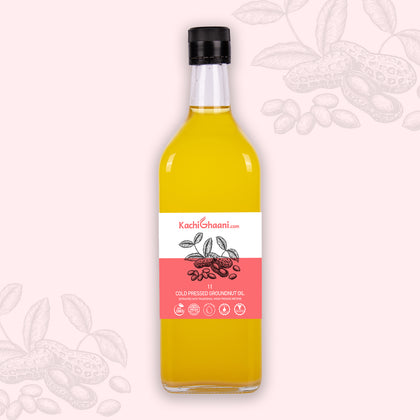
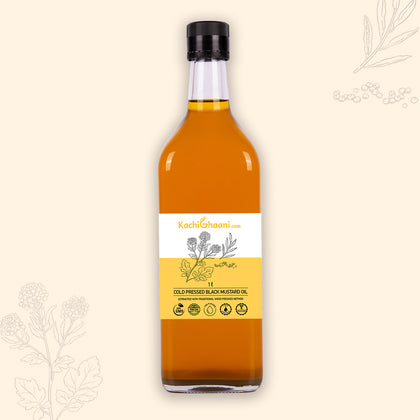
Bengali kitchens call the frying medium for luchi sada tel, white oil, because mustard oil would stain the luchi and shout over it. Our wooden cold pressed groundnut oil is exactly that white oil. It holds 180C steadily, it does not foam or darken in the first few luchi, and it leaves the bread tasting of flour rather than of oil. The aloor dom asks for the opposite. There the wooden cold pressed black mustard oil goes in first, heated until it smokes and then cooled for half a minute so the raw bite settles, and it lays down the sharp base note that makes Bengali dum aloo taste Bengali and not Punjabi.
The luchi decides whether this is a good breakfast. Roll them small, about four inches across, and even in thickness, and roll on a film of oil rather than dry flour, because loose flour burns black in the kadhai and clouds the oil for every luchi after. The oil must be hot enough that the luchi rises within two seconds. Press it once under the back of the ladle as it comes up and it will puff every single time.
How to make it
- Rub the 3 tbsp groundnut oil into the maida and salt for two minutes, until a squeezed fistful holds its shape. Add the lukewarm water a little at a time and knead 6 to 7 minutes to a soft, smooth dough that springs back slowly. Cover and rest 30 minutes.
- Boil the baby potatoes in well salted water for about 15 minutes, until a knife slides in without pushing. Drain, peel while still warm, and prick each one twice with a fork so the gravy can get in.
- Heat the mustard oil in a kadhai until it smokes and turns pale, then take it off the flame for 30 seconds. This is what tames the raw bite. Return it to medium heat, add the peeled potatoes with 1/4 tsp turmeric and a pinch of salt, and fry 5 to 6 minutes, rolling them about, until the skins blister and go gold.
- Lift the potatoes out. To the same oil add the hing, cumin seeds, bay leaves and dried chillies. They will crackle in about 15 seconds. Add the ginger paste and green chillies and fry one minute, then the tomato puree and cook 4 to 5 minutes until the oil rises red at the edges of the pan.
- Mix the turmeric, cumin powder, coriander powder and stone-ground red chilli powder with 2 tbsp water into a slurry and add it in. Fry on low for 2 minutes, scraping the pan, until it thickens and smells toasted rather than raw.
- Return the potatoes, add the sugar and salt, and turn them in the masala for 2 minutes so every one is coated. Pour in the hot water, cover, and keep on a low flame for 12 to 15 minutes. That covered stretch is the dum. The gravy should reduce until it clings to the potatoes.
- Sprinkle over the garam masala, cover, and switch off. Leave it alone for 10 minutes while you fry the luchi.
- Divide the rested dough into 16 balls. Smear a drop of oil on the rolling board and roll each ball to a 4 inch disc of even thickness. Do not use dry flour. Roll them all before you start frying.
- Heat the frying oil to 180C. A pinch of dough dropped in should rise steadily to the top in about two seconds. Slide in one luchi, and as it lifts, press it once under the back of a slotted ladle for two seconds. It will balloon. Flip, give it 5 seconds on the second side, and lift it out while it is still white.
- Drain on a rack, not on paper, so the bottom stays crisp. Serve four hot luchi to a plate with the aloor dom in a bowl beside them.
Tips
- Pale, not golden. A luchi that browns has been in the oil too long or the oil was too cool. Ten to twelve seconds total is the whole life of a luchi. Keep the flame high between batches so the oil recovers.
- Never dust with dry flour. The flour falls off, burns, and turns the oil dark within four or five luchi. A smear of oil on the board gives cleaner oil and a smoother luchi.
- Smoke the mustard oil, then wait. Heat it until it goes pale and gives off that sharp catch at the back of the throat, then rest it off the flame for half a minute. Skip this and the gravy tastes raw and bitter.
- Aloor dom is better the next day. The potatoes keep pulling in gravy overnight in the fridge. Warm it with a splash of water. Luchi, on the other hand, must be eaten within the hour.
- Keep it niramish. The Durga Puja version has no onion or garlic at all, and hing does the work instead. Do not be shy with it.