Flaxseed oil vs fish oil: ALA, EPA and DHA explained
Flaxseed oil vs fish oil, compared: flaxseed gives plant omega-3 (ALA), fish oil gives EPA and DHA. How much of each you get, why the body converts so little ALA, and the best vegetarian options.

Flaxseed oil vs fish oil is really a comparison of two different omega-3s. A tablespoon of flaxseed oil gives about 7.3 g of ALA (alpha-linolenic acid), the plant omega-3, while fish oil supplies EPA and DHA directly. The body turns only a small share of ALA into EPA and very little into DHA, so the two are not interchangeable.
This matters most in vegetarian homes, which are common across India and among Indian families abroad. If you never eat fish, the useful questions are how much ALA you actually get, what conversion means in practice, and whether you need anything else. Here is the plain answer, with the numbers.
At a glance
- Flaxseed oil is about 53% ALA by weight (USDA), the richest everyday oil source: 7.26 g per tablespoon.
- A typical 1,000 mg fish oil capsule has about 180 mg EPA and 120 mg DHA, according to the NIH Office of Dietary Supplements.
- Conversion of ALA to EPA and DHA is very limited, with reported rates of less than 15%.
- The adequate intake of ALA is 1.6 g a day for men and 1.1 g for women. A teaspoon of flaxseed oil covers it.
- Flaxseed oil must never be heated. Use it raw.
What is the difference between ALA, EPA and DHA?
All three are omega-3 fats, but ALA comes from plants, while EPA and DHA come mainly from fish, seafood and algae.
ALA omega-3 is the shorter, 18-carbon kind, found in flaxseed, chia, walnuts and oils such as mustard, canola and soybean. It is essential, which means the body cannot make it, and it is the only omega-3 with an official adequate intake for that reason. EPA (eicosapentaenoic acid) and DHA (docosahexaenoic acid) are longer-chain omega-3s. DHA is a major building block of the brain and the retina of the eye. Our guide to MUFA, PUFA, omega-3 and omega-6 in plain language explains the wider family of fats.
How much ALA is in a tablespoon of flaxseed oil?
About 7.26 g in a tablespoon (13.6 g), or roughly 2.4 g in a teaspoon. No other everyday oil comes close.
| Food | Serving | ALA |
|---|---|---|
| Flaxseed oil | 1 tablespoon | 7.26 g |
| Chia seeds | 1 oz (28 g) | 5.06 g |
| Walnuts | 1 oz (28 g) | 2.57 g |
| Flaxseed, whole | 1 tablespoon | 2.35 g |
| Canola oil | 1 tablespoon | 1.28 g |
| Soybean oil | 1 tablespoon | 0.92 g |
| Mustard oil | 1 tablespoon | About 0.83 g |
| Olive oil | 1 tablespoon | About 0.10 g |
| Sesame oil | 1 tablespoon | About 0.04 g |
| Groundnut or coconut oil | 1 tablespoon | Almost none |
Figures from the NIH Office of Dietary Supplements and USDA FoodData Central. For comparison, 3 oz (85 g) of cooked farmed Atlantic salmon provides about 1.24 g of DHA and 0.59 g of EPA.
Does the body convert ALA into EPA and DHA?
Yes, but only a little. The NIH Office of Dietary Supplements describes conversion as very limited, with reported rates of less than 15%, and the step to DHA is the smallest.
The same fact sheet concludes that eating EPA and DHA directly, from foods or supplements, is the only practical way to raise their levels in the body. Some researchers think a diet very high in omega-6 fats, from oils such as sunflower or soybean, may reduce conversion further, though the evidence is mixed. In short, ALA is valuable in its own right, but it is not a shortcut to fish-level EPA and DHA.
Flaxseed oil vs fish oil: which is better?
Neither wins outright. Fish oil is the better source of EPA and DHA; flaxseed oil is the better source of ALA. They do different jobs.
| Flaxseed oil | Fish oil | |
|---|---|---|
| Main omega-3 | ALA | EPA and DHA |
| Typical amount | About 7.3 g ALA per tablespoon | About 300 mg EPA plus DHA per 1,000 mg capsule |
| Needs conversion? | Yes, and very little is converted | No |
| Vegetarian? | Yes | No |
| In the kitchen | Raw only, never heated | A supplement, not a cooking oil |
| Taste | Nutty and slightly grassy | Fishy |
The American Heart Association recommends 2 servings of fish a week, particularly fatty fish such as salmon, sardines and mackerel, with a serving being 3 oz (about 85 g) cooked. For people who do not eat fish, algae-based oils provide DHA, and some also provide EPA, without any fish at all.
What are the best vegetarian omega-3 sources?
For ALA: flaxseed (as oil or freshly ground seeds), chia seeds, walnuts, and mustard or canola oil for cooking. For EPA and DHA without fish: an algae-based supplement, if your doctor agrees you need one.
- Stir a teaspoon of flaxseed oil into dahi, raita or chutney.
- Make Maharashtrian javas (flaxseed) chutney with roasted seeds, garlic and chilli.
- Keep a handful of walnuts for a snack.
- Use mustard oil for some of your everyday cooking.
More ideas are in four real ways to use flaxseed oil without heating it. In pregnancy and while breastfeeding, ask your doctor whether a DHA supplement is right for you.
Who should be careful?
- Flaxseed oil: never heat it, because its fragile omega-3 fats break down quickly. Keep it away from light and heat, refrigerate it once opened, and discard it if it smells sharp, bitter or like paint; here is how to store cold pressed oil.
- Fish oil: avoid it with a fish allergy, and ask your doctor first if you take blood thinners such as warfarin.
- Any omega-3 supplement: check with your doctor if you take regular medicines, are pregnant or have surgery coming up.
Using our flaxseed and mustard oils
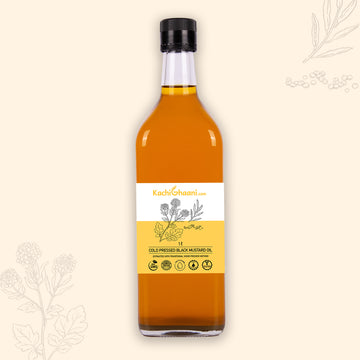
Our Truly Cold Pressed flaxseed oil is pressed slowly in a wooden ghaani and left unrefined. Stir a teaspoon into dahi, raita or chutney, or over a warm (not hot) bowl of dal just before eating, and keep the bottle in the fridge once opened. For cooking, our Truly Cold Pressed black mustard oil adds a little ALA to everyday tadka and sabzi.
The bottom line
Flaxseed oil is the richest everyday source of plant omega-3, and a teaspoon covers a day's adequate intake of ALA. It is not a substitute for the EPA and DHA in fish or fish oil, because the body converts very little ALA. Vegetarians who want EPA and DHA can ask their doctor about an algae-based supplement.
Frequently asked questions
Can I take flaxseed oil and fish oil together?
Yes, many people do, since they supply different omega-3s: ALA from flaxseed, and EPA and DHA from fish. If you take blood thinners or other regular medicines, are pregnant or have surgery coming up, check with your doctor before adding any omega-3 supplement.
Is ground flaxseed better than flaxseed oil?
They do different jobs. A tablespoon of whole flaxseed gives about 2.35 g of ALA plus fibre, while a tablespoon of the oil gives about 7.26 g of ALA and no fibre. Grind seeds just before eating, because whole flaxseeds often pass through the gut undigested.
Does flaxseed oil contain DHA?
No. Flaxseed oil contains ALA, the plant omega-3, along with some omega-6 and omega-9 fats, but no EPA or DHA. Your body can turn a small share of ALA into EPA and even less into DHA, so flaxseed oil should not be counted as a DHA source.
Can you cook with flaxseed oil?
No. Flaxseed oil is rich in fragile omega-3 fats that break down quickly with heat and turn bitter and stale-smelling. Use it raw: stir it into dahi, chutney or a salad dressing, or drizzle it over warm, not hot, food just before serving.
How much flaxseed oil a day is reasonable?
A teaspoon (5 ml) to a tablespoon (15 ml) is a common food amount. One teaspoon gives about 2.4 g of ALA, already more than the adult adequate intake of 1.1 to 1.6 g. It still carries about 40 kcal per teaspoon, so count it within your daily fats.