Carrier oils explained: which oil to mix with essential oils
A carrier oil is the plain plant oil you dilute essential oils in. Here is how many drops to add, which base suits face, body, hair and massage, and how to keep blends fresh and safe.

A carrier oil is a plain plant oil, such as sweet almond, coconut or sesame, used to dilute essential oils before they touch your skin. A common guide is about 1% for the face and 2% for the body, roughly 6 and 12 drops of essential oil in 30 ml (2 tablespoons) of carrier.
Essential oils are distilled or pressed plant extracts, and they are very concentrated. Used neat, many can irritate the skin or set off an allergy that may stay with you for life. A good carrier spreads them thinly and adds its own softening touch. The carrier you choose also changes the feel, the scent and how long your blend stays fresh.
At a glance
- A carrier oil is a fixed (non-evaporating) plant oil used to dilute essential oils for skin, hair and massage.
- A rough guide: 1% for the face (about 6 drops in 30 ml) and 2% for the body (about 12 drops).
- For children, guidance from the National Association for Holistic Aromatherapy (NAHA) is 0.5 to 2.5%, and some oils should not be used on young children at all.
- Sweet almond is the all-rounder, untoasted sesame the classic massage base, and castor works only as a small share.
- Carrier oils go stale: buy small, store them dark and cool, and patch test every new blend.
What is a carrier oil, and why do essential oils need one?
A carrier oil is a fatty oil pressed from seeds, nuts or kernels that "carries" an essential oil onto the skin. Unlike an essential oil, it does not evaporate, which is why it is also called a fixed oil.
Essential oils are a different thing altogether: the volatile, fragrant part of a plant, concentrated many times over. NAHA, a US aromatherapy body, advises against putting undiluted essential oils on the skin and recommends diluting them in a vegetable oil or another suitable carrier. Dilution also makes a blend easy to spread, so a few drops go a long way. And essential oils belong on the outside of the body: NAHA advises against taking them internally unless a qualified practitioner directs it.
How to dilute essential oils in a carrier oil
Add about 6 drops of essential oil to 30 ml (2 tablespoons) of carrier oil for a 1% blend, or 12 drops for a 2% blend. These figures assume roughly 20 drops to a millilitre, so take them as approximate, because droppers vary.
| Strength | Typical use | Per 10 ml | Per 30 ml (2 tablespoons) |
|---|---|---|---|
| 0.5% | Children (with care), very sensitive skin | 1 drop | 3 drops |
| 1% | Face, daily use, older or sensitive skin | 2 drops | 6 drops |
| 2% | Body oil and massage | 4 drops | 12 drops |
| 3% | Small areas, short-term use | 6 drops | 18 drops |
One aromatherapy safety handout puts it simply: 1% is one drop of essential oil in a teaspoon (5 ml) of carrier. NAHA notes that most oil-based blends fall between 1 and 5%, gives 0.5 to 2.5% for infants, toddlers and young children, and suggests weaker blends for older people with sensitive skin.
How to mix a 2% body oil
- Pour 30 ml (2 tablespoons) of carrier oil into a clean, dry, dark glass bottle.
- Add 12 drops of essential oil, or fewer if the oil is new to you.
- Close the cap and roll the bottle between your palms to mix.
- Label it with the oils used and the date.
- Patch test: rub a little on the inside of your forearm and wait 24 hours before using it more widely.
What is the best carrier oil for essential oils?
The best carrier is the one that suits your skin and the job. Here is how five common choices compare.
| Carrier oil | Feel | Scent | Best for | Keeps | Take care |
|---|---|---|---|---|---|
| Sweet almond | Smooth, medium, absorbs steadily | Very faint | Face, body and massage; the all-rounder | Fairly well | Tree-nut allergy |
| Coconut (from copra) | Light once melted; solid below about 24°C (75°F) | Mild coconut | Body, hair, pre-wash oiling | Very well | Can clog pores on acne-prone faces |
| Sesame (untoasted) | Richer, slightly heavier | Mild, nutty | Full-body massage, feet | Well | Sesame allergy; never use toasted sesame oil |
| Safflower | Light, absorbs quickly | Almost none | Face, oily skin, light body oils | Shortest; buy small | Rich in linoleic acid, so it goes stale sooner |
| Castor | Very thick and sticky | Faint | Hair and nail blends, as 10 to 20% of the mix | Very well | External use only; patch test |
Castor oil is thick because of ricinoleic acid, the fatty acid that makes up close to 90% of it (87% in Indian samples, in one 2021 review). That is why it works best as a small share, one part castor to four to nine parts of a lighter oil. For more on choosing between almond and others for skin and hair, see almond oil for skin and hair, honestly assessed.
Can coconut oil be used as a carrier oil?
Yes, and for the body and hair it is a good one. It feels light once melted and keeps well, because about four-fifths of it is saturated fat, which resists going stale.
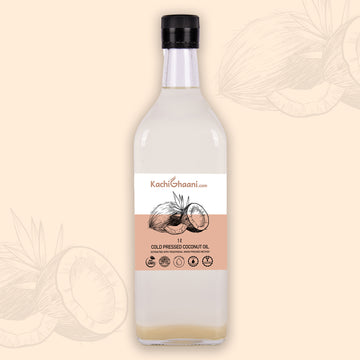
Two things to know. Coconut oil turns solid below about 24°C (75°F), so in winter stand the bottle in warm water before you mix. And on acne-prone faces it can clog pores, so many people keep it for the body. Our coconut oil is pressed from dried copra; it is not virgin coconut oil. The clear "fractionated coconut oil" sold for aromatherapy is a different, processed product that stays liquid.
Is sesame oil a good carrier oil for massage?
Yes. Untoasted sesame oil is the classic base for Ayurvedic oil massage (abhyanga), and many traditional herbal massage oils are cooked in it.
Use only untoasted, cold pressed sesame oil on skin. Toasted sesame oil, the dark kind used in East Asian cooking, smells strongly of roasted seeds. Warm your blend gently by standing the bottle in hot water for a few minutes. Our guide to massage oils for Vata, Pitta and Kapha explains the Ayurvedic view of which oil suits whom, and abhyanga at home shows the method.
Who should be careful with essential oils?
- Pregnancy and breastfeeding: some essential oils are best avoided, so ask your doctor or midwife before using any.
- Babies and young children: use much weaker blends and keep oils away from their faces. One safety handout lists birch, wintergreen and peppermint as oils not to use on young children.
- Allergies: choose a carrier you are not allergic to. Almond is a tree nut, and sesame is a common allergen too.
- Eyes: keep essential oils well away. If a drop gets in, NAHA advises flushing the eye with cool water at once.
- Sun: expressed lemon, lime and bergamot oils make skin burn more easily; NAHA advises avoiding sun and sunbeds for at least 24 hours after use.
- Health conditions: people with epilepsy, asthma or very sensitive skin should check with a doctor first. Rosemary oil, for example, is rich in camphor.
- Never swallow essential oils, keep them out of reach of children and pets, and keep them away from flames.
Our oils as carrier oils
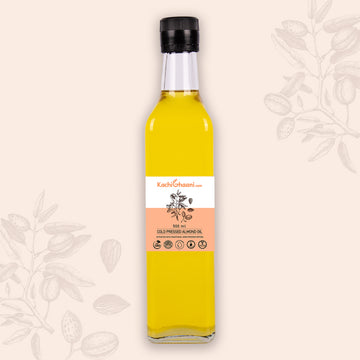
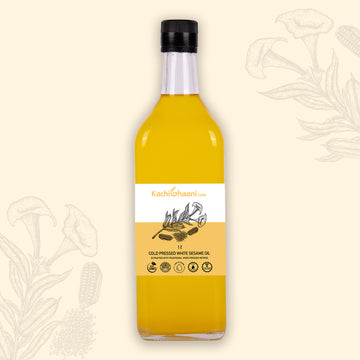
If you want a plain, single-ingredient base, our Truly Cold Pressed almond oil, Truly Cold Pressed coconut oil and Truly Cold Pressed white sesame oil are pressed slowly in wooden ghaanis and left unrefined, with no preservatives. Being unfiltered, they may show a little sediment or turn cloudy in the cold, which is normal. They are best used within four to six months, so mix small batches and store them away from light and heat.
The bottom line
A carrier oil is simply the plain oil that makes an essential oil gentle enough for skin. Keep blends weak, about 1% for the face and 2% for the body, pick the carrier that suits your skin, and patch test every new mix.
Frequently asked questions
What is the best carrier oil for sensitive skin?
There is no single best one, but light, low-scent oils such as safflower, or sweet almond if you have no nut allergy, suit many people. Keep the essential oil at 1% or less, patch test on your inner forearm for 24 hours, and stop if you notice redness, itching or bumps.
Can I use olive oil as a carrier oil?
You can, but it is not ideal for everyone. A 2018 review of plant oils on skin notes that olive oil applied to the skin weakened the skin barrier in adult volunteers, while sunflower seed oil did not. If your skin is dry or easily irritated, a lighter oil may suit you better.
How long do carrier oils last once opened?
It depends on the oil. Coconut and castor keep longest, almond and sesame keep well, and oils rich in polyunsaturated fat, such as safflower or flaxseed, go stale sooner. Store them cool and dark with the cap tight, and throw out any oil that smells of crayons or old paint.
Can I put essential oils directly on my skin?
It is best not to. NAHA advises against using undiluted essential oils on the skin and recommends diluting them in a carrier oil first. Neat oils can burn or irritate, and repeated use can lead to a lasting skin allergy. Even mild oils such as lavender are kinder to skin when diluted.
Is a carrier oil the same as a massage oil?
Often, yes. A plain carrier oil on its own makes a perfectly good massage oil. A massage oil bought from a shop may be a carrier with essential oils or herbs already added, so read the label carefully if fragrance tends to bother your skin.
Sources
- Safety information, National Association for Holistic Aromatherapy, accessed 2026
- Essential oils: aromatherapy safety, patient handout, mayo.edu, 2018
- Yeboah A. et al., Castor oil: a review of its chemical composition, Food Science and Technology, 2021
- Lin T.K., Zhong L., Santiago J.L., plant oils and skin barrier repair, International Journal of Molecular Sciences, 2018
- Rosemary, Drugs.com natural product monograph, 2026