Does black seed oil kill parasites? The cleanse trend
Does black seed oil kill parasites, as parasite cleanse videos claim? What the studies actually show, how real infections are diagnosed, and how to enjoy black seed oil safely as a food.

Does black seed oil kill parasites? There is no good evidence that it does in people. Lab and animal studies show that Nigella sativa extracts can harm some parasites, and one small 1991 trial in children reported fewer tapeworm eggs, but no solid human trials show it can clear an infection. Real infections need a stool test and prescribed medicine.
The claim spreads through 'parasite cleanse' videos that blame tiredness, bloating and sugar cravings on hidden worms, then sell an oil or a box of herbal drops as the fix. The story is persuasive and mostly wrong, and believing it can delay a proper diagnosis. Here is what the research says, and how to enjoy black seed oil (kalonji oil) sensibly as a food.
At a glance
- Lab and animal studies show anti-parasitic activity in black seed extracts. Human evidence is thin and decades old.
- Cleveland Clinic says there is no scientific evidence that parasite cleanse diets work.
- Intestinal parasites are diagnosed with a stool test, often several samples over several days, and usually cleared with prescription medicine.
- Tiredness, bloating, cravings or teeth grinding are not, on their own, signs of parasites.
- Black seed oil is best enjoyed as a food in small amounts, and it may interact with some medicines.
Does black seed oil kill parasites?
In a lab dish and in animals, extracts sometimes do. In people, it has not been shown.
Black seed oil for parasites: what lab and animal studies show
Black seed and thymoquinone, its best-known active compound, have shown activity against several parasites in preclinical studies, meaning in lab dishes and in animals. Memorial Sloan Kettering's herb database lists anti-parasitic effects among these early findings, including studies on schistosomes (blood flukes).
The one human study people quote
In 1991, researchers in Faisalabad, Pakistan, gave single doses of powdered black seed (20 to 40 mg per kg of body weight) to 36 children with tapeworm infections, in groups of six, alongside an untreated group. Tapeworm egg counts in stool fell, and at the highest dose the drop was similar to that seen with the standard drug niclosamide. But the study was small, the report does not describe random allocation or blinding, and it used powdered seed, not oil. We could find no large modern trial that confirms it.
Why lab results do not transfer
A lab dish is not a gut. Animal studies often use doses far higher than anyone would eat, and harming a parasite in a dish says nothing about reaching it inside the body at a safe dose.
What is a parasite cleanse?
A programme of herbal supplements and diet rules sold to 'flush out' parasites, usually without any test showing that you have one.
Cleanses typically combine herbal drops or capsules, often with wormwood, clove, black walnut or black seed, with rules such as avoiding sugar, gluten or greasy food. In a 2025 Cleveland Clinic article, registered dietitian Beth Czerwony was blunt: no scientific evidence shows that these parasite cleanse diets actually work. The article also lists the risks: diarrhoea that can lead to dehydration, nutrient shortfalls and low energy. Supplements are not regulated like medicines, so you cannot be sure what dose you are taking. The loose stools a cleanse causes can look dramatic, but they prove nothing about parasites.
How do you know if you have a parasite?
You cannot tell from vague symptoms. A doctor can, usually with a stool test.
| Worth a doctor's visit | Common cleanse-video claims (not reliable signs on their own) |
|---|---|
| Diarrhoea lasting more than a few days | Tiredness or 'brain fog' |
| Blood or mucus in the stool | Sugar cravings |
| Greasy, foul-smelling stools that float | Bloating after meals |
| Unexplained weight loss, fever or vomiting | Teeth grinding at night |
| Itching around the bottom at night, or worms seen in the stool | Skin breakouts |
Risk is higher after travel to places with poor sanitation, or after drinking untreated water or swimming in contaminated water. The usual test is an ova and parasite (O&P) examination of a stool sample under a microscope. According to MedlinePlus, your doctor may ask for several samples collected over several days, because parasites do not show up in every sample. Most infections clear with prescription antiparasitic medicine, often a single dose, and your doctor may retest afterwards.
How do you take black seed oil?
As a food, in small amounts.
- Stir a few drops to half a teaspoon (about 1 to 2.5 ml) into a spoon of honey.
- Drizzle it over warm (not hot) dal or a salad, or mix it into a yoghurt dip.
- Do not fry with it. It is best raw, and its peppery, slightly bitter taste is strong.
- Skip any 'protocol' that asks for several spoonfuls a day.
For more ideas, see what kalonji oil is and how to use it and kalonji oil with honey, and who should not take it.
Is black seed oil safe to take daily? Who should skip it
In food amounts, most healthy adults tolerate it well. Larger, supplement-style doses carry more risk, and the oil is never a substitute for medical care.
Memorial Sloan Kettering notes that contact dermatitis has been reported after using the oil on skin, so patch test first (our guide to kalonji oil on skin explains how). It may increase the side effects of drugs processed by certain liver enzymes, thymoquinone inhibited warfarin activity in one study, and high doses caused liver and kidney damage in rats, though human data are lacking. In animal studies, the oil also lowered blood sugar.
- People on blood thinners such as warfarin should ask their doctor first.
- So should anyone on diabetes, blood-pressure or other regular medicines.
- In pregnancy and while breastfeeding, keep to food amounts and check with your doctor.
- Children should only ever have food amounts, and never a cleanse.
- If you have symptoms of an infection, see a doctor before trying anything else.
Using our kalonji oil
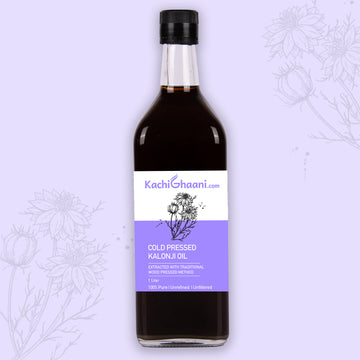
If you enjoy the taste, our Truly Cold Pressed kalonji oil is pressed slowly in a wooden ghaani from black seed and left unrefined, with no preservatives. Use it as a food, a few drops in honey or over warm dal, not as a cleanse. Keep it away from heat and light, and use it within its best-before of about four to six months.
The bottom line
Black seed oil has interesting anti-parasitic results in lab and animal studies, but there is no good evidence that it kills parasites in people, and parasite cleanses have no scientific support. If you have symptoms, see a doctor and ask about a stool test. If you simply enjoy kalonji oil, keep it in the kitchen, in small amounts.
Frequently asked questions
Can black seed oil get rid of worms in children?
There is no good evidence that it can, and children should never be given a parasite cleanse. If a child has itching around the bottom at night, tummy pain or worms in the stool, see a doctor. Common infections such as pinworm usually clear with simple prescription medicine, often given to the whole family.
Should I do a parasite cleanse after travel?
No. If you develop diarrhoea, stomach pain, fever or weight loss after travelling, see a doctor and ask whether a stool test is needed. Infections picked up abroad usually clear with the right medicine, while a cleanse can cause diarrhoea and dehydration and may delay a proper diagnosis.
How long does black seed oil take to work?
For parasites, there is no proven effect to wait for. As a food, black seed oil works the way any seasoning does, by adding flavour from the first spoonful. Be wary of products that promise results by a set day; a claim like that is marketing, not evidence.
Can I take black seed oil on an empty stomach?
Many people take a few drops with honey first thing, and most tolerate it. Some find the strong oil unsettles the stomach when taken alone, so having it with food is gentler. Keep to food amounts, and speak to your doctor first if you take regular medicines.
Is black seed oil the same as kalonji oil?
Yes. Black seed, kalonji, nigella and habbatus sauda are names for the same seed, Nigella sativa, and for the oil pressed from it. It is not related to cumin, onion or black sesame, despite names such as 'black cumin' and 'onion seed' on some packets.
Sources
- Cleveland Clinic, No, you don't need a parasite cleanse, 2025
- MedlinePlus (US National Library of Medicine), Ova and parasite test, 2023
- Memorial Sloan Kettering Cancer Center, About Herbs: Nigella sativa, 2023
- Akhtar and Riffat, Field trial of Nigella sativa seeds against cestodes in children, Journal of the Pakistan Medical Association, 1991