Kalonji in English: black seed, nigella or black cumin?
Kalonji in English is black seed or nigella, often sold as black cumin: one seed, Nigella sativa. Here are its names around the world, and how to tell it from three common look-alikes.

Kalonji in English is black seed or nigella, and it is often sold as black cumin. Its botanical name is Nigella sativa. Arabic speakers call it habbat al-barakah, the seed of blessing. It is not the same as shahi jeera, black sesame or true onion seed, though all three are often mixed up with it.
The mix-ups are not only about words. A recipe, a spice jar or a bottle of "black cumin oil" can point to two different plants, depending on who wrote the label. Here is how to know which seed, and which oil, you are really buying.
At a glance
- Kalonji, black seed and nigella are all Nigella sativa, a small flowering plant of the buttercup family.
- "Black cumin" is used for kalonji and also for shahi jeera, a different plant from the cumin family.
- Kalonji seeds are small, matt black and angular; black sesame seeds are flat, smooth and teardrop-shaped.
- "Onion seed" is a misleading shop name for kalonji. True onion seeds are sold for planting.
- Kalonji oil and black seed oil are the same oil. Check the label for Nigella sativa.
What is kalonji called in English?
Kalonji is most often called black seed or nigella in English. You will also see black cumin, black caraway, fennel flower and Roman coriander, and, wrongly, onion seed. Nigella comes from the Latin niger, meaning black.
The plant is a small annual with pale blue or white flowers. Its seeds are tiny, only a few millimetres long, black outside and white inside, with an angular shape and a slightly bitter taste. Toasted, they smell peppery, with a faint hint of onion, which may be how the onion name began.
What is kalonji called in other languages?
The same seed travels under many names. Here are the ones you are most likely to meet on labels and in recipes.
| Language | Name |
|---|---|
| Hindi and Urdu | Kalonji (कलौंजी, کلونجی) |
| Gujarati, Marathi, Punjabi | Kalonji |
| Bengali | Kalo jeera (কালোজিরা) |
| Tamil | Karunjeeragam (கருஞ்சீரகம்) |
| Telugu | Nalla jeelakarra (నల్ల జీలకర్ర) |
| Kannada | Kari jeerige (ಕರಿ ಜೀರಿಗೆ) |
| Malayalam | Karinjeerakam (കരിഞ്ചീരകം) |
| Sanskrit | Upakunchika |
| Arabic | Habbat al-barakah (حبة البركة), al-habba al-sawda (الحبة السوداء) |
| Persian | Siyah daneh (سیاهدانه) |
| Turkish | Çörek otu |
| Malay and Indonesian | Habbatus sauda, jintan hitam |
| Amharic (Ethiopia) | Tikur azmud |
| Russian | Chernushka |
| German and French | Schwarzkümmel, nigelle |
Notice how many names mean "black cumin" or "black seed": the South Indian names and the Malay jintan hitam all say black cumin, and the German Schwarzkümmel means black caraway. That is exactly where the confusion starts.
Is black seed the same as black cumin?
Usually, but not always. Most of the time, "black cumin" means kalonji. But the same English name is also used for shahi jeera, Bunium persicum, a different plant from the cumin and carrot family that is often confused with kalonji.
Kalonji vs shahi jeera
India adds a twist. In Hindi, kala jeera, "black cumin", usually means shahi jeera. In Bengali, kalo jeera means kalonji. So a Bengali recipe and a Delhi recipe can use the same words for two different seeds.
| Kalonji (Nigella sativa) | Shahi jeera (Bunium persicum) | |
|---|---|---|
| Plant family | Buttercup family | Cumin and carrot family |
| Seed shape | Small, angular, with sharp edges | Slender, curved and ribbed, like thin cumin |
| Colour | Matt jet black | Very dark brown to black |
| Taste | Slightly bitter, peppery, a hint of onion | Smoky, earthy, sweeter than cumin |
| Typical uses | Naan, pickles, panch phoron, kalonji oil | Biryani, pulao, garam masala |
How do you tell kalonji from onion seed and black sesame?
Look at the shape and feel the surface. Kalonji is angular and matt; black sesame is flat and smooth; shahi jeera is long and ribbed.
- Black sesame (Sesamum indicum): flat, oval or teardrop-shaped, smooth and slightly glossy. It tastes nutty, not bitter. Its oil is black sesame oil, a different oil altogether; our guide to sesame oil and its names covers it.
- Onion seed (Allium cepa): true onion seeds are also black and angular, but they are sold in seed packets for planting, not as a spice. Never eat garden seeds, which may be coated with chemicals for sowing.
- Love-in-a-mist (Nigella damascena): a garden flower and a cousin of kalonji. Its seeds are not the culinary spice.
A simple kitchen test helps too: crush a few seeds between your fingers. Kalonji smells sharp and peppery, black sesame mild and nutty, and shahi jeera smoky, like a deeper cumin.
The name "onion seed" on a spice jar, common in UK and Indian grocers, almost always means kalonji. If in doubt, look for Nigella sativa on the label.
How is kalonji used around the world?
Almost everywhere it is used as a small, strong accent, toasted or scattered on top.
- India: pressed into naan and kulcha, stirred into mango and lime pickles, and part of panch phoron, the Bengali five-spice mix of fenugreek, nigella, cumin, black mustard and fennel seeds.
- Iran: scattered over flatbreads such as nan-e barbari.
- Turkey: sprinkled on pide and savoury pastries as çörek otu.
- The Levant: worked into braided string cheese, and ground into qizha, a bitter Palestinian paste.
Black seed oil vs black cumin oil: are they the same as kalonji oil?
Usually, yes. Black seed oil, kalonji oil and nigella oil are all pressed from Nigella sativa, and "black cumin oil" or "black cumin seed oil" usually means the same oil too. But because shahi jeera is also called black cumin, read the botanical name on the label to be sure.
Real kalonji oil is dark amber, strongly aromatic, peppery and a little bitter, so it is used by the drop or diluted. Our guide to what kalonji oil actually is explains how it is used in food and on the skin.
Who should be careful with kalonji?
- As a spice in food: kalonji seeds are a normal kitchen spice and fine for most people in cooking amounts.
- Taking the oil by mouth: if you are pregnant or breastfeeding, take blood-thinning, blood sugar or blood pressure medicines, or have surgery coming up, speak to your doctor first. Our article on kalonji oil with honey covers who should not take it.
- On the skin: kalonji oil is strong and can irritate. Dilute it, patch-test it on the inner arm first, and keep it away from the eyes.
- Babies and young children: do not give them kalonji oil or apply it to their skin without your paediatrician's advice.
How to use our kalonji oil
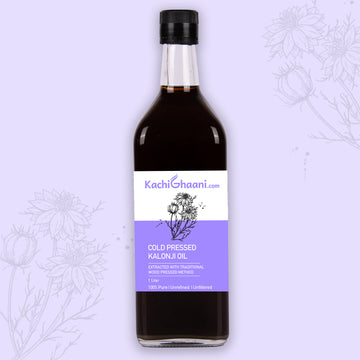
Our Truly Cold Pressed kalonji oil is pressed from Nigella sativa seeds, the true black seed, slowly in a wooden ghaani and left unrefined. It is best used raw: a few drops in food after cooking, or diluted in a lighter oil for the scalp and skin.
The bottom line
Kalonji in English is black seed or nigella, and often black cumin: one seed, Nigella sativa. Just remember that shahi jeera shares the name black cumin, that black sesame and onion seed are different seeds, and that the Latin name on the label settles any doubt.
Frequently asked questions
What is kalonji called in Arabic?
In Arabic, kalonji is called habbat al-barakah, meaning the seed of blessing, or al-habba al-sawda, meaning the black seed. Both names are common on labels in the UAE and across the Gulf. The Malay and Indonesian name, habbatus sauda, comes from the second Arabic name.
Is kalonji the same as kala jeera?
It depends on who is speaking. In Bengali, kalo jeera means kalonji. In Hindi and in North Indian recipes, kala jeera usually means shahi jeera, a different seed that looks like thin, dark cumin. Check the seed: kalonji is small and angular, shahi jeera is long and ribbed.
What is habbatus sauda?
Habbatus sauda is the Malay and Indonesian name for kalonji, taken from the Arabic al-habba al-sawda, the black seed. It is widely used on labels in Malaysia, Indonesia, Singapore and Brunei, for both the seeds and the oil. It is the same plant, Nigella sativa.
What does kalonji taste like?
Kalonji tastes slightly bitter and peppery, with a faint onion-like note that grows when the seeds are toasted or fried in oil. It is used on naan, in pickles and in panch phoron, the Bengali five-spice mix, and in the Middle East it flavours breads and braided string cheese.
Is nigella the same as love-in-a-mist?
They are close cousins, not the same plant. Love-in-a-mist, Nigella damascena, is a garden flower grown for its blue blooms. The culinary seed, kalonji, comes from Nigella sativa. Do not eat seeds from garden flowers or seed packets; buy kalonji sold as a food spice.