Yellow mustard oil vs black mustard oil: taste and uses
What yellow mustard oil is, how it differs from black mustard oil in seed, sharpness, colour and use, the chemistry behind mustard's bite, and which bottle to reach for in an Indian kitchen.

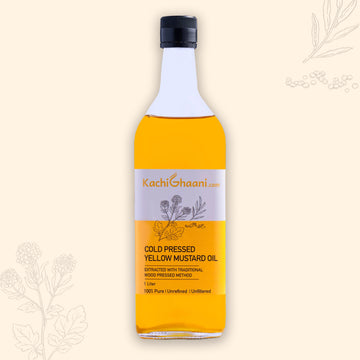
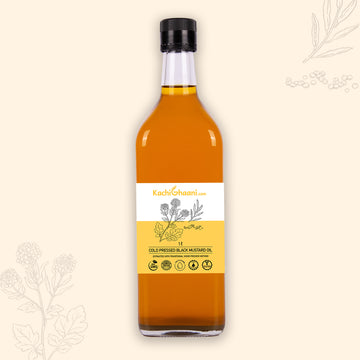
Yellow mustard oil is pressed from yellow sarson (Brassica rapa), and it is generally the milder, lighter-tasting of the two mustard oils. Black mustard oil, from small dark seeds (usually Brassica juncea, the Indian or brown mustard called rai), is sharp and pungent. Use yellow for gentle everyday cooking, and black for achaar and bold Bengali or Punjabi dishes.
Stand in front of two bottles of sarson ka tel and the difference is not obvious from the colour alone. It shows the moment you open them: one usually makes your eyes water, the other is gentler. Knowing why helps you pick the right oil for each dish, and it solves a puzzle for readers abroad, where 'yellow mustard' means something else entirely.
At a glance
- Black mustard oil usually comes from Brassica juncea (rai or raya); yellow mustard oil comes from yellow sarson, a type of Brassica rapa.
- Mustard's bite comes mainly from allyl isothiocyanate, formed when the enzyme myrosinase meets sinigrin in crushed, moist seed.
- Black mustard oil is usually more pungent; yellow mustard oil is generally milder and lighter in colour.
- Both handle high heat, about 250°C (480°F), and traditional Indian varieties of both are usually high in erucic acid, so use them alongside other oils.
- Black suits achaar, fish curries and bold tadka; yellow suits everyday dal, sabzi and light frying.
Yellow mustard oil vs black mustard oil: what is the difference?
The seed. Everything else, from colour to pungency to the dishes each suits, follows from that.
Difference between yellow and black mustard seeds
In Indian shops, 'black' mustard usually means the small dark-brown to black seeds of Brassica juncea, also called brown or Indian mustard, rai or raya. True black mustard, Brassica nigra, is a related plant. Yellow sarson is Brassica rapa subsp. trilocularis, a yellow-seeded cousin of the turnip and Chinese cabbage, and its oil is sold as peeli sarson ka tel, yellow mustard oil.
Readers in the UK, US and Canada should note that Western 'yellow' or white mustard, the mild seed behind American-style mustard, is mostly Sinapis alba, a different plant again. Its seeds hold a different compound, sinalbin, which breaks down into a milder, less volatile one, so they taste gentler.
| Black mustard oil | Yellow mustard oil | |
|---|---|---|
| Seed | Small, dark brown to black (Brassica juncea, rai) | Yellow sarson (Brassica rapa) |
| Pungency | High, nose-tingling | Generally milder |
| Colour | Usually deeper amber | Usually lighter gold |
| Flavour | Sharp, peppery, horseradish-like | Softer, gentler mustard flavour |
| Smoke point | About 250°C (480°F) | About 250°C (480°F) |
| Best for | Achaar, fish curries, saag tadka, raw in mashes | Everyday dal and sabzi, parathas, light frying |
Which mustard oil is more pungent?
Black mustard oil, as a rule.
Mustard seeds store sulphur compounds called glucosinolates. When the seed is crushed in the presence of moisture, an enzyme called myrosinase turns sinigrin, plentiful in brown and black mustard, into allyl isothiocyanate. That is the same sharp compound behind the kick of horseradish and wasabi. It stimulates the receptors in the nose and eyes that sense irritation, which is why a good black mustard oil can make your eyes water. Yellow mustard oil is generally gentler, though the sharpness of any mustard oil varies with the seed, the crop and the press.
Allyl isothiocyanate is volatile, so heating mustard oil until it shimmers softens the bite. That is why so many recipes warm the oil first, and why raw mustard oil in jhal muri or aloo bhaate (mashed potato) tastes so fiery. Bengali cooks have a word for that nose-tingling sharpness: jhanjh.
Which mustard oil is better for pickles?
Black mustard oil, by tradition.
North and East Indian achaar, from mango and lime to green chilli and cauliflower, is built on sharp black mustard oil, often heated and cooled before it goes into the jar and poured to cover the pickle. Its strong flavour stands up to months of maturing. Yellow mustard oil usually makes a milder pickle for anyone who finds the classic too sharp. We explain the tradition in why achaar is made with cold pressed mustard oil and the method in preparing mustard oil for achaar the traditional way.
Is yellow mustard oil good for everyday cooking?
Yes. It suits daily dal tadka, sabzi, parathas and light frying, especially for anyone new to mustard oil, and for children or guests who find the black kind too sharp.
It handles the same high heat as black mustard oil, and its flavour stays in the background rather than leading the dish. Many kitchens keep both: black for fish, saag and achaar, where mustard should announce itself, and yellow for the everyday pot. Our guide to 5 everyday tadka combinations shows where each fits.
How can you tell them apart in the kitchen?
By smell first, then colour and taste.
- Smell: rub a drop between your palms and sniff. Black mustard oil is sharp enough to sting; yellow is usually milder.
- Colour: black mustard oil is usually a deeper amber, yellow a lighter gold, though this varies with the crop.
- Taste: dip a piece of bread. Black bites; yellow is usually softer.
- Label: a good label names the seed.
Both unrefined oils may turn cloudy in the cold and show a little sediment, which is normal. Store them away from light and heat and use them within four to six months.
Who should be careful with mustard oil?
- Mustard allergy: mustard is a recognised major allergen in the EU, UK and Canada.
- Erucic acid: traditional mustard oils are high in erucic acid, and Europe sets a tolerable intake of 7 mg per kg of body weight a day, so rotate mustard oil with other oils, especially in children's food. Our article on mustard oil and the 'banned in America' story explains the background.
- Skin and eyes: pungent oil can sting. Patch test before a massage, keep it away from the eyes and ask your paediatrician before using it on a baby.
- In the kitchen: keep the room ventilated and never let the oil smoke.
Using our two mustard oils
Our Truly Cold Pressed yellow mustard oil is pressed slowly in a wooden ghaani from yellow mustard seeds and left unrefined, for a gentler everyday oil. Our Truly Cold Pressed black mustard oil is pressed the same way and keeps its full bite for achaar, fish and saag.
The bottom line
Yellow mustard oil is generally the milder one and suits everyday cooking; black mustard oil is the sharp, pungent one, made for achaar, fish curries and bold tadka. Both handle high heat and both carry the erucic acid caveat, so choose by taste and use them alongside other oils.
Frequently asked questions
Is peeli sarson oil the same as yellow mustard oil?
Yes. 'Peeli' means yellow in Hindi, and peeli sarson ka tel is oil pressed from yellow sarson, a yellow-seeded type of Brassica rapa. It is generally milder than oil from the small dark mustard seeds, and it is sold in English as yellow mustard oil.
Is black mustard oil healthier than yellow?
Not in any clear way. Both are mustard oils with low saturated fat and useful omega-3, and traditional Indian varieties of both are usually high in erucic acid. The practical difference is flavour, so choose by the dish and rotate with other oils.
Can I use yellow mustard oil for achaar?
Yes, if you prefer a milder pickle. Traditional North and East Indian recipes call for the sharper black mustard oil, which gives achaar its familiar bite, but yellow mustard oil works well for gentler pickles. Use clean, dry jars and keep the pickle covered with oil.
Why does mustard oil make my eyes water?
Its sharpness comes from allyl isothiocyanate, a volatile compound that rises from the oil and stimulates irritation receptors in the nose and eyes, much like wasabi does. Heating the oil until it shimmers drives much of it off. Keep the kitchen ventilated and never let the oil smoke.
Can I use mustard oil for massage?
Mustard oil is a traditional massage oil in North and East India, especially in winter. Patch test on the inner arm first, because its pungency can irritate sensitive skin, keep it away from the eyes and ask your paediatrician before using it on a baby. There is no strong evidence that it does more than moisturise.