Groundnut oil uses in China, West Africa, the US and Gujarat
Groundnut oil uses in China, West Africa, the United States and Gujarat, why refined and unrefined peanut oil behave so differently, and the allergy rule every cook should know.

The main groundnut oil uses are stir-frying, frying, everyday cooking and flavour, and groundnut oil is simply another name for peanut oil. Refined peanut oil is the neutral, high-heat frying oil of American kitchens. Pressed, unrefined peanut oil keeps a nutty aroma and suits medium-heat cooking, from Chinese stir-fries to West African stews and Gujarati thepla.
The same nut ends up in very different kitchens. China grows more peanuts than any other country, India comes second, and West Africa has lived on the groundnut for generations. Seeing how each cooks with it explains the one difference that matters most at home: refined versus unrefined oil, and why only one belongs in a turkey fryer.
At a glance
- China grew about a third of the world's peanuts in 2022, and India about a fifth.
- Gujarat produces roughly two-fifths of India's groundnuts, which is why groundnut oil (singtel) is its everyday oil.
- Refined peanut oil is neutral and smokes at about 232°C (450°F), which suits deep frying. Unrefined groundnut oil smokes at about 180°C (356°F) and suits medium heat.
- Unrefined, cold pressed peanut oil keeps peanut protein. Anyone with a peanut allergy must avoid it.
Groundnut oil uses around the world
What is peanut oil used for? Almost anything that needs a cooking oil, but each kitchen chooses a different style of it.
| Kitchen | Usual oil | Signature uses | Heat |
|---|---|---|---|
| China | Refined oil, and 'fragrant' oil pressed from roasted peanuts | Stir-fries, scallion oil noodles | Medium to high |
| Nigeria and Senegal | Locally pressed groundnut oil | Frying, groundnut stews such as mafé, kuli-kuli | Medium to high |
| United States | Highly refined peanut oil | Deep-fried turkey, fried chicken, fries | High |
| Gujarat and Saurashtra | Groundnut oil (singtel) | Vaghar (tadka), thepla, farsan, undhiyu | Medium |
How is peanut oil used in Chinese cooking?
As an everyday wok oil, especially in the peanut-growing provinces from Shandong to Guangdong. China produced about 18.4 million tonnes of peanuts in 2022, some 34% of the world total.
Chinese kitchens use two styles. Refined peanut oil handles fierce wok heat without adding flavour. 'Fragrant' peanut oil, pressed from roasted nuts, carries a deep, toasty aroma and is used where the oil itself should be tasted. A good example is scallion oil, a Shanghai favourite: spring onions cooked slowly in oil until golden and crisp, then the perfumed oil tossed through noodles with soy sauce.
Is peanut oil good for stir frying? Yes. Refined oil suits the hottest, fastest stir-fries; unrefined oil suits gentler ones over medium-high heat. Either way, never let the oil smoke.
How is groundnut oil used in West Africa?
As a staple oil and a cash crop. In Senegal's 'groundnut basin', groundnuts still support a large share of rural households. In colonial times, trading companies bought the crop to press into oil; today much of it leaves raw, and China alone imported more than 323,000 tonnes of Senegalese peanuts in 2020. At home, groundnut paste thickens stews such as mafé.
In northern Nigeria, and in Benin, Ghana and northern Cameroon, the groundnut gives two foods at once. Roasted peanuts are ground into a paste and worked with water to release their oil, and the remaining paste is shaped and fried until crisp. The result, kuli-kuli, is eaten as a crunchy snack, with garri (toasted cassava granules), or ground into the spice rubs for suya and kilishi, the region's grilled and dried meats.
Why do Americans fry turkeys in peanut oil?
Because highly refined peanut oil is neutral in taste and tolerates the high, steady heat of a deep fryer. It is a long-standing choice for Thanksgiving fried turkey, Southern fried chicken and fries.
Refining also removes most of the protein. US law exempts highly refined oils from allergen labelling for that reason, and allergist Dr Scott Sicherer told Allergic Living that highly refined peanut oil "should be tolerated by most people with peanut allergy". Europe's food safety authority is more cautious and has not concluded that it is necessarily safe.
Unrefined oil does not belong in the turkey fryer. Deep frying runs at about 175°C (350°F), uncomfortably close to its smoke point, and its aroma would be wasted on several litres of oil.
Why do Gujarati kitchens use groundnut oil?
Because Gujarat grows it. In 2023-24, Gujarat produced about 36.7 lakh tonnes of India's 86.5 lakh tonnes of groundnuts, roughly 42%, most of it in Saurashtra; Rajasthan came second at about a quarter.
So singtel (from 'sing', groundnut, and 'tel', oil) is the default. It goes into the vaghar of mustard seeds, hing and curry leaves for dal and kadhi, onto thepla on the tawa, into crisp farsan such as fafda and gathiya, and generously into undhiyu, the slow-cooked winter vegetable dish. Our guides to everyday tadka combinations and which oil to deep-fry in show where it fits alongside other oils.
What is the difference between refined and unrefined peanut oil?
Refined oil is processed for neutrality and heat; unrefined oil is simply pressed and settled, so it keeps flavour and protein.
| Refined peanut oil | Unrefined (cold pressed) groundnut oil | |
|---|---|---|
| How it is made | Pressed or solvent-extracted, then degummed, neutralised, bleached and deodorised | Pressed, then left to settle |
| Taste | Neutral | Nutty and aromatic |
| Smoke point | About 232°C (450°F) | About 180°C (356°F) |
| Peanut protein | Largely removed | Retained |
| Best for | Deep frying | Tadka, shallow frying, gentle stir-fries |
By USDA figures, peanut oil is about 16% saturated, 57% monounsaturated and 20% polyunsaturated fat, mostly omega-6, with almost no omega-3. Read more on how refined oil is made.
Peanut oil smoke point, refined and unrefined
Refined peanut oil smokes at about 232°C (450°F) and unrefined groundnut oil at about 180°C (356°F). The gap comes from what refining strips out: free fatty acids and traces of protein start to smoke sooner. Keep unrefined oil at medium heat, and compare other oils in our table of smoke points of Indian cooking oils.
Is peanut oil safe for people with a peanut allergy?
Unrefined peanut oil is not. As Dr Sicherer puts it, "Consuming unrefined peanut oil is essentially like eating peanut." Cold pressed, expeller pressed or 'gourmet' oils keep the protein that causes reactions.
- Anyone with a peanut allergy should avoid unrefined groundnut oil completely, including ours.
- Whether highly refined oil is safe for a particular person is a question for their allergist.
- Tell guests which oil you cooked with, and ask restaurants the same question.
- Keep pans and spoons used with groundnut oil separate when cooking for someone allergic.
Using our groundnut oil
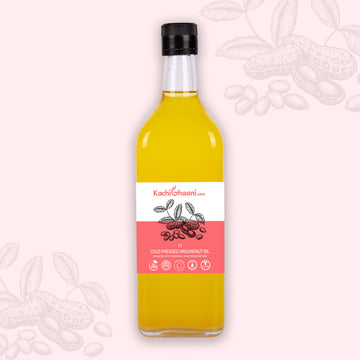
Our Truly Cold Pressed groundnut oil is pressed slowly in a wooden ghaani and left unrefined and unfiltered, so it keeps the nutty aroma of the seed. Use it the Gujarati way, for vaghar, thepla and shallow frying at medium heat, or for a gentle stir-fry. For a big deep fry at full heat, a refined oil is more practical, and if anyone at your table has a peanut allergy, choose a different oil altogether.
The bottom line
Peanut oil is a global kitchen staple, but there are really two oils: refined peanut oil for neutral, high-heat deep frying, and unrefined groundnut oil for flavour at medium heat, as Chinese, West African and Gujarati cooks use it. Choose by the dish, keep it below smoking, and never serve unrefined peanut oil to someone with a peanut allergy.
Frequently asked questions
Is groundnut oil the same as peanut oil?
Yes. Groundnut and peanut are two names for the same plant, Arachis hypogaea, whose pods ripen underground. 'Groundnut' is the usual word in India, Britain and Africa, and 'peanut' in North America. What matters more than the name is whether the oil is refined or unrefined.
Does peanut oil taste of peanuts?
Refined peanut oil tastes of almost nothing, which is why it is used for frying. Unrefined groundnut oil has a gentle nutty aroma, and Chinese fragrant peanut oil, pressed from roasted nuts, tastes distinctly toasty. In a cooked dish, the nuttiness of unrefined oil reads as warmth rather than peanut butter.
Can you reuse peanut oil after frying?
Refined peanut oil can be strained and reused once or twice for similar foods if it is stored somewhere cool and dark. Throw it out once it darkens, foams, smokes early or smells stale. Unrefined oil is better used fresh for medium-heat cooking than kept for repeated deep frying.
Is peanut oil healthy?
It is mostly unsaturated fat: USDA figures show about 57% monounsaturated and 20% polyunsaturated, with about 16% saturated. Like every oil it carries about 9 kcal per gram, so amounts matter. India's ICMR-NIN suggests keeping cooking oil to about 25 to 30 g a day and choosing a variety of oilseeds.
Sources
- Professor Jayashankar Telangana State Agricultural University, Groundnut outlook, May 2024
- Stiftung Wissenschaft und Politik, Senegal: booming groundnuts export to China poses long-term risks, 2023
- Allergic Living, Peanut oil and allergy: when is it safe to eat?, 2022
- National Peanut Board, Refined vs unrefined peanut oil and allergy, 2024
- ICMR-National Institute of Nutrition, Dietary Guidelines for Indians, 2024