What is black seed oil good for? Big claims, checked
What is black seed oil good for? It comes with a famous promise. Here is where the saying comes from, what human studies show, how to use the oil sensibly, and who should be careful.

What is black seed oil good for? Above all, it is a strong-tasting food oil, pressed from Nigella sativa (kalonji) seeds, with deep roots in Islamic, Unani and Indian tradition. Small, short human studies suggest modest changes in a few markers, such as blood sugar, but the evidence is limited and it is not a medicine. If you take medicines, ask your doctor first.
Few foods carry a bigger promise. A saying of the Prophet Muhammad, recorded in Sahih al-Bukhari, describes black seed as a remedy for every disease except death, and online it is often shortened to "a cure for everything except death". This article respects that tradition and looks separately at what human research shows, which is a different kind of question.
At a glance
- Black seed oil comes from Nigella sativa: kalonji in India, al-habbah as-sawda ("the black seed") in Arabic. It is not black sesame, onion seed or cumin.
- A hadith in Sahih al-Bukhari (5688) describes black seed as a remedy for all diseases except death. It is a matter of faith, not a clinical finding.
- Human studies are small and short, and they suggest modest effects on a few markers, not wide-ranging ones.
- Applied neat, the oil can cause allergic skin reactions in some people.
- Ask a doctor first if you take medicines, especially for diabetes, blood pressure or blood thinning, or if you are pregnant.
Where does the "everything except death" saying come from?
From a hadith, a recorded saying of the Prophet Muhammad. The Arabic names the seed al-habbah as-sawda, "the black seed", and the narrator explains that the word used for death is as-sam. In the English translation of Sahih al-Bukhari 5688 it reads:
"There is healing in black cumin for all diseases except death."
For many Muslims this saying is precious, and black seed, also called habbat al-barakah, "the seed of blessing", is part of daily life from Cairo and Dubai to Hyderabad and Kuala Lumpur. It has a long place in Unani medicine too, and in Indian kitchens, where kalonji is tempered into pickles and pressed onto naan.
Faith and research answer different questions. The hadith speaks to believers. A clinical trial asks what a measured amount does to a measured marker in a group of people. The rest of this article is about that second question.
Black seed oil benefits: what does research show?
What does black seed oil do in the body? Less than the online claims suggest, but not nothing. Much of the research is in lab dishes and animals, centred on thymoquinone, the seed's best-known active compound. In people, the studies are small and short, and they use different products and amounts, which makes them hard to compare. The herb database of Memorial Sloan Kettering Cancer Center (MSKCC), last updated in 2023, sums up the human evidence like this:
| Claim | What human studies show | Verdict |
|---|---|---|
| Lowers blood sugar | Small studies show benefits in people with diabetes | Possible, small; not a replacement for medicine |
| Lowers blood pressure | Results conflict | Unclear |
| Eases asthma | Studies suggest it may help with symptoms | Early |
| Eases rheumatoid arthritis | One study suggests the oil, taken by mouth, may reduce symptoms | Very early |
| Calms radiotherapy skin reactions | A gel lessened skin reactions in breast cancer patients; larger studies needed | Early |
| Works against cancer | Not shown in people | No |
| Everything except death | Not something a trial can test | A matter of faith |
In short, black seed may nudge a few numbers a little in some people. That is interesting, and it is a long way from replacing medicine.
How much black seed oil should you take daily?
There is no official daily amount, and MSKCC gives no dosing advice. Trials have used different products in different amounts, so they do not add up to a proven, safe dose.
If you enjoy it as a food, keep to small, food-sized amounts, such as half a teaspoon (2.5 ml) with honey or stirred into food, and do not go beyond what the label suggests. More is not better. In rats, high doses damaged the liver and kidneys; MSKCC notes that human data are lacking, which is a reason for caution rather than comfort.
Morning or night?
Whichever suits you; no study shows that timing matters. Tradition often pairs it with honey in the morning, as our article on kalonji oil with honey explains. If it upsets your stomach, take it with a meal.
What is black seed oil good for in food and on skin?
As a food, use it raw. Its taste is strong, peppery and a little bitter, so a few drops go a long way. Drizzle it over dal, raita, salads or hummus, or mix a little with honey. It is not an oil for cooking.
On skin and scalp, dilute it in a milder oil and patch test first. MSKCC notes that the neat oil has caused allergic skin reactions, including one case serious enough to need steroid medicine. Our guides to kalonji oil on skin and what kalonji oil is and how to use it go into more detail.
Who should be careful with black seed oil?
- People taking medicines: black seed may affect liver enzymes that process many drugs, and thymoquinone affected warfarin's action in a study. How much this matters in people is unknown, so ask your doctor or pharmacist.
- People with diabetes or high blood pressure: if black seed lowers blood sugar even a little, it could add to your medicine's effect. Monitor your levels and talk to your doctor.
- Pregnancy and breastfeeding: safety beyond food amounts is not established, so ask your doctor.
- Liver or kidney disease: ask first, given the animal findings at high doses.
- Sensitive skin: always dilute, patch test, and stop if a rash appears.
- Tell all your doctors about any supplement you take, including before surgery.
Our kalonji oil
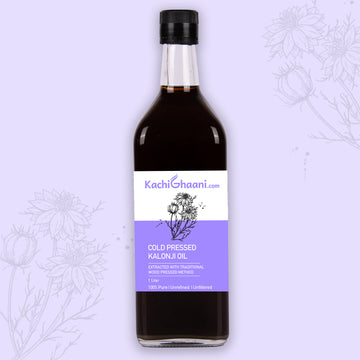
Our Truly Cold Pressed kalonji oil is pressed slowly in a wooden ghaani from black seed alone and left unrefined, with nothing added. It is a food oil with a bold, peppery taste, best used raw in small amounts. It is not a medicine, and we would rather you enjoyed it for what it is than expected it to do everything.
The bottom line
Black seed oil is a flavourful food oil with deep roots in faith and tradition. Human research shows small, uncertain effects in a few areas, far short of the famous saying, so use it in food-sized amounts, dilute it on skin, and talk to your doctor if you take medicines.
Frequently asked questions
Is black seed oil good for you?
In small, food-sized amounts it can be part of a varied diet for most healthy adults, but there is no proof that a daily spoonful does you good, and high doses damaged the liver and kidneys in rats. Keep amounts small, and ask your doctor first if you take medicines, are pregnant or have liver or kidney disease.
Is black seed oil the same as kalonji oil?
Yes. Both names describe oil pressed from Nigella sativa seeds, which is also sold as black cumin seed oil. It is not related to black sesame or to ordinary cumin, and kalonji is sometimes wrongly called onion seed. When buying, check that Nigella sativa is the only ingredient on the label.
Can I take black seed oil with honey?
Many people do, following tradition, often mixing a little oil into a spoon of honey. It is a pleasant way to take a strong-tasting oil. Remember that honey is still sugar, and that honey should never be given to babies under one year old. Ask your doctor first if you take regular medicines.
Does black seed oil interact with medicines?
It may. MSKCC notes that black seed can affect liver enzymes that break down many medicines, and that thymoquinone affected warfarin in a study, though the importance in real life is unknown. If you take any regular medicine, especially for diabetes, blood pressure or blood thinning, ask your doctor before using it.
Is black seed oil good for hair?
Diluted in a milder oil, kalonji oil can be a pleasant part of a scalp-oiling routine, and many people enjoy it. Good evidence that it stops hair fall or greying is lacking. Our guide to kalonji oil for hair and scalp explains how to use it and what it will not do.