Gujarati Kadhi
Pale gold, thin enough to drink, sweet then sour in the same spoonful, with curry leaves and a slick of ghee floating on top.

Ingredients
Serves 4
- 1 cup (250 g) sour curd, whisked smooth
- 3 tbsp (25 g) besan (gram flour)
- 3 cups (750 ml) water
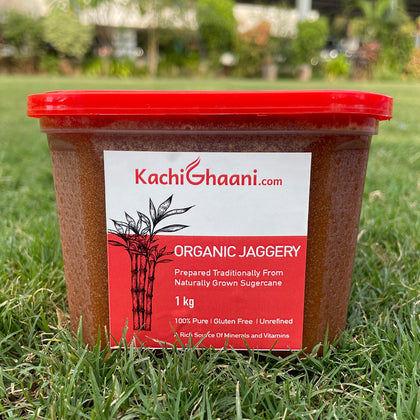
- 1.5 tbsp (20 g) Organic Jaggery, grated
- 1 tbsp ginger-green chilli paste (1 inch ginger, 2 green chillies)
- 1 tsp salt, or to taste
- 1.5 tbsp Gir Cow's A2 Ghee, for the tempering
- 1/2 tsp mustard seeds
- 1/2 tsp cumin seeds
- 1/4 tsp methi seeds (fenugreek)
- 1/4 tsp hing (asafoetida)
- 2 cloves and a 1 inch piece of cinnamon
- 2 dry red chillies, broken and deseeded
- 12 to 15 curry leaves
- 3 tbsp coriander leaves, chopped, to finish
Quantities are scaled up. Taste as you go and adjust the salt and spice.
Shop this recipe
Everything you need, from our press house
A Gujarati thali arrives and the kadhi is already there, in a small steel bowl at the top right, pale gold and steaming, thin enough that you could drink it. Someone tips it over a mound of khichdi and it soaks straight in. The first spoon is sweet, then sour a second later, then the ginger comes through. There are curry leaves stuck to the side of the bowl and a thin slick of ghee sitting on the surface with two cloves floating in it.
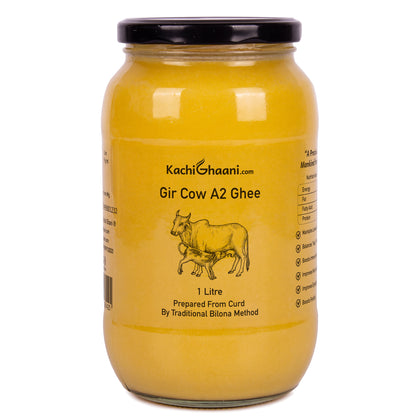
Kadhi lives and dies by its vaghar, the tempering, because that is the only fat in the whole bowl. Gir Cow's A2 Ghee is the right one here. It takes the mustard and methi seeds up to popping without smoking, it carries the smell of curry leaf and clove out of the pan and into the kadhi, and it leaves a soft milky roundness behind that oil simply cannot give. The sweetness comes from organic jaggery, which brings a faint smoky, mineral note along with it instead of the flat hit of white sugar.
One rule decides whether you get kadhi or a bowl of split curd. Whisk the curd and besan smooth while everything is still cold, then bring it up slowly, stirring in one direction without stopping until it comes to a boil the first time. Once it has boiled once, it is stable and you can leave it. Stop stirring before that, or cover the pan while it is heating, and the curd separates into grains and there is no fixing it.
How to make it
- Put the besan in a bowl and add the curd 2 tbsp at a time, whisking after each addition. Doing it this way gives you a lump-free paste in under a minute. Then whisk in the rest of the curd and all 3 cups of water.
- Add the jaggery, ginger-chilli paste and salt to the cold mixture. Whisk again and pass the whole thing through a strainer into your pan. Any lump you leave in now will still be there at the end.
- Put the pan on medium-low. Stir slowly and continuously in one direction with a ladle. Do not cover it and do not walk away.
- After 7 to 8 minutes it will start to steam, thicken slightly and rise. Keep stirring until it comes to a full boil once, with bubbles breaking across the whole surface. Now it is safe.
- Turn the flame to low and simmer 10 to 12 minutes, stirring every minute or so, until the raw smell of besan has gone and the kadhi coats the back of the ladle very thinly. It should still be pourable, closer to buttermilk than to soup.
- Taste and correct. Gujarati kadhi should read sweet first, sour close behind, with salt holding the two together. Add jaggery half a teaspoon at a time, and if your curd was not sour enough, a squeeze of lemon at the end.
- For the vaghar, heat the ghee in a small pan on medium. Add the mustard seeds and wait for them to pop, about 20 seconds. Add the cumin, methi seeds, cloves and cinnamon and let them sizzle 10 seconds. Methi burns fast and turns the whole pot bitter, so keep your eyes on it.
- Add the hing, dry red chillies and curry leaves. They will crackle and spit for 5 seconds. Pour the whole tempering straight into the kadhi and stir once, so a ring of ghee sits on the surface.
- Scatter the coriander and serve hot, with plain khichdi or steamed rice, and a spoon of ghee on the rice.
Tips
- Sour curd makes better kadhi. Leave fresh curd out of the fridge for 5 to 6 hours before you start. Fresh sweet curd gives a flat kadhi that tastes only of besan.
- If it splits anyway, take it off the heat, cool it slightly and blend for 10 seconds with a hand blender. It will come back smooth. The real fix is next time: stir without stopping until the first boil.
- Gujarati kadhi is thin on purpose. It is meant to be poured over khichdi, not eaten as a thick curry. Three cups of water to one cup of curd is not a mistake.
- Jaggery amount is a family matter. Kathiawadi kadhi runs sweeter, Surti a shade less. Start at 1.5 tbsp and adjust once the kadhi has simmered, never before.
- Never boil it hard after the tempering goes in. Reheat leftovers gently on low with a splash of water, stirring, and the texture holds.