Oil for joint pain in winter: what warm oil massage can and cannot do
There is no magic oil for joint pain, but warm oil massage is a much-loved winter comfort. Here is what the tradition holds, what massage studies show, how to do it safely, and when to see a doctor.

No oil for joint pain has been shown to repair a painful joint, but a gentle massage with warm oil is a much-loved winter comfort. Warm mustard oil is the North Indian favourite and sesame oil the Ayurvedic one, and small studies of massage for knee osteoarthritis found short-term pain relief. A hot, swollen or red joint needs a doctor, not a rub.
On a cold afternoon in Punjab, Haryana or Uttar Pradesh, you will still see a grandparent on a charpai in the sun, pyjama rolled to the knee, while a grandchild works warm oil into the joint. It is a tender ritual and a practical one. This guide to oil massage for joint pain covers what the tradition holds, what research shows, and how to do it safely for the people we love most.
At a glance
- North Indian tradition favours warm mustard oil, sometimes heated with garlic or ajwain; Ayurveda prefers sesame oil for cold, stiff joints.
- In five of six studies reviewed by the US National Center for Complementary and Integrative Health, massage gave short-term pain relief in knee osteoarthritis.
- No joint pain oil, kitchen or Ayurvedic, has been shown to repair cartilage; the comfort comes from warmth, touch and gentle movement.
- Use oil warm, not hot. Mustard oil can irritate skin and garlic can burn it, so strain the garlic out completely.
- A hot, swollen or injured joint, a fever, or morning stiffness over 30 minutes needs a doctor.
Why do Indians massage warm oil into joints in winter?
Because cold weather makes stiff joints feel stiffer, and warmth, touch and sunlight feel good. Mustard oil's pungent compound, allyl isothiocyanate, creates a tingling sense of heat on the skin, so it became the winter rub of the North. Families often warm it with a few cloves of garlic or a pinch of ajwain (carom seeds) for aroma.
Ayurveda frames it differently. Cold, dry winter is said to increase vata, the dosha of movement and dryness, and stiff, cracking joints are a classic vata complaint. Warm sesame oil is the traditional answer, used in daily abhyanga and in classical medicated oils. Our guide to massage oils for vata, pitta and kapha explains the logic.
Does oil massage for knee pain help?
A little, for a while. The US National Center for Complementary and Integrative Health (NCCIH) says the small amount of research on massage for knee osteoarthritis suggests possible benefit: of six studies, five found short-term pain relief, and two of those used aromatherapy massage with essential oils. The relief is short-term, and no study shows that massage repairs the joint.
Research also rarely compares one oil with another. Whether a bottle is sold as a knee pain oil or a plain massage oil, the oil's main job is to let the hands glide, while warmth, pressure and gentle movement do much of the work. A 2018 review describes one clinical study in which sesame oil applied to the skin eased pain in people with limb injuries, but that is a long way from proof for arthritis.
The NHS adds that keeping a painful joint moving matters: rest it when you need to, but do not stop moving it completely, and keep to a healthy weight. Massage fits best alongside exercise, not instead of it.
Is there a best oil for joint pain?
There is no single best oil, and none treats the joint itself. Choose by how your skin reacts and how warming you want it to feel.
| Oil | Feel | Tradition | Keep in mind |
|---|---|---|---|
| Black or yellow mustard | Pungent, warming tingle | The North Indian winter favourite | Can irritate or redden skin; avoid thin or broken skin |
| White sesame | Warm, smooth, slow to absorb | Ayurveda's classic oil for vata and stiff joints | Sesame allergy is possible |
| Castor | Very thick and sticky | Used in folk packs and blends; see our myth check on castor oil packs | External use only; mix 1 part with 3 parts sesame oil so it spreads |
| Coconut | Light, cooling | A summer oil in Ayurveda | Solid below about 24°C (75°F); warm it gently first |
Is warm mustard oil with garlic good for joint pain?
It is a beloved home remedy, but there is no good evidence that garlic adds anything beyond aroma, and it brings risks. Raw or crushed garlic left on the skin can cause chemical burns, and oil heated until the garlic browns must cool right down before it touches skin. If you keep the tradition, do it safely:
- Warm 2 tablespoons (30 ml) of mustard or sesame oil gently with 2 peeled garlic cloves or a pinch of ajwain, until the garlic turns light golden. Do not let the oil smoke.
- Take it off the heat and let it cool until it is just warm.
- Strain out every piece of garlic or ajwain.
- Test a few drops on your inner wrist before it touches the knee.
- Make a fresh small batch each time rather than storing garlic oil.
Should the oil be hot or just warm?
Just warm, close to body temperature. Hot oil can scald, and older skin is thinner and burns more easily. People with diabetes or nerve damage in the legs may not feel heat properly, so always test the oil on your own wrist first.
The safest way to warm it is indirect: stand a small steel or brass katori of oil in a bowl of hot water for a few minutes. Avoid heating the bottle directly or in a microwave, where hot spots can form.
How do you massage a stiff knee at home?
- Sit with the leg supported on a cushion, knee slightly bent, in a warm room or the sun.
- Pour 1 to 2 teaspoons (5 to 10 ml) of warm oil into your palm.
- Spread it over the knee, the lower thigh and the upper calf.
- Use long strokes from the shin up towards the thigh for two to three minutes.
- Circle around the kneecap with a flat palm, gently; never press hard on the kneecap itself.
- Squeeze and release the thigh muscles above the knee for a minute.
- Finish by slowly bending and straightening the knee ten times, if that is comfortable.
Ten to fifteen minutes is plenty. Wipe away the excess and put on socks or slippers with grip before standing, because oily feet on stone floors are a real fall risk. For a soothing end to the day, our guide to oiling the feet before sleep pairs well.
When should joint pain be checked by a doctor?
Massage a joint at home only when you know what the pain is, such as long-standing arthritis that a doctor has already seen. The NHS advises:
- Urgent help if the skin around a painful joint is swollen and feels hot, or if joint pain comes with feeling unwell, a high temperature or shivers.
- Emergency care for very bad pain after a fall or injury, if you cannot walk or put weight on the joint, if it looks out of place, or if there is tingling or no feeling around it after an injury.
- A GP visit if pain stops normal activities or sleep, keeps getting worse or coming back, has not improved after two weeks of home care, or if joints stay stiff for more than 30 minutes after waking.
Who should skip it
- Never massage a calf that is suddenly swollen, red, warm or painful, especially after a long journey or time in bed. It can be a blood clot; see a doctor straight away.
- Skip broken skin, rashes, burns and infections over the joint, and recent injuries or surgery until your doctor agrees.
- Do not press on varicose veins, and avoid mustard or sesame oil if you are allergic.
Using our oils for a winter massage
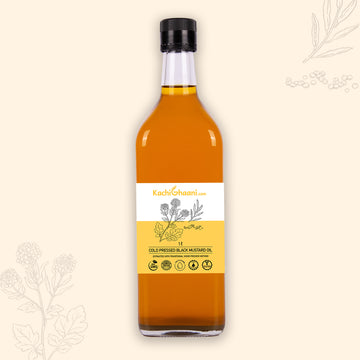
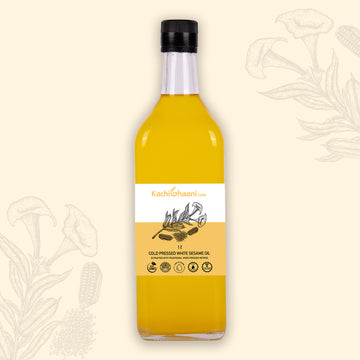
Our Truly Cold Pressed black mustard oil gives the traditional winter warmth, our white sesame oil is the gentler Ayurvedic choice for dry skin, and a spoon of our castor oil mixed into sesame makes a thicker blend for knees. All are pressed slowly in wooden ghaanis and left unrefined, and our castor oil is for external use only.
The bottom line
Warm oil, kind hands and winter sun can make stiff knees feel better for a while, and small studies support short-term relief from massage, but no oil for joint pain repairs the joint. Keep the oil warm, not hot, strain out the garlic, go gently, keep moving, and let a doctor see any joint that is hot, swollen, red, injured or getting worse.
Frequently asked questions
Can I massage a swollen knee?
Not if it is hot, red or suddenly swollen, or swollen after an injury; get it checked first. Mild, long-standing swelling from arthritis that your doctor knows about can usually take gentle strokes around the knee, but avoid pressing on the swollen area itself, and ask your physiotherapist what suits you.
How long should I leave oil on my knees?
Twenty to thirty minutes is enough for the skin to take in what it can. Many elders leave it on overnight under old pyjamas, which is fine if the skin does not react. Wipe off the excess before walking, because oily feet and oily floors are slippery.
Is castor oil good for joint pain?
Castor oil packs are a popular folk practice, but there is no good evidence that castor oil on the skin eases arthritis. It is very thick, so mixing a little with sesame oil makes it easier to massage. Our castor oil is for external use only; never drink it.
Can massage replace exercise or physiotherapy?
No. Exercise that strengthens the muscles around the knee, a healthy weight and staying active are the foundations of looking after arthritic joints, and the NHS advises against stopping all movement of a painful joint. Massage is a pleasant extra that may ease stiffness for a while.
Is it safe to massage the knees of someone with diabetes?
Usually, with care. Diabetes can dull feeling in the legs, so the person may not notice oil that is too hot or a scratch from rough hands. Test the oil on your own wrist, use gentle pressure, check the skin and feet for cuts afterwards, and ask their doctor if they have ulcers or poor circulation.