Vitamin E foods: which cooking oils have the most vitamin E
The top vitamin E foods are wheat germ oil, sunflower seeds, almonds, and sunflower and safflower oils. Here are NIH and USDA figures, how every cooking oil compares, and what refining and heat do.

The richest vitamin E foods are wheat germ oil (20.3 mg a tablespoon), sunflower seeds (7.4 mg in 28 g), almonds (6.8 mg in 28 g), sunflower oil (5.6 mg), safflower oil (4.6 mg) and hazelnuts (4.3 mg), say the US National Institutes of Health (NIH). Peanuts, spinach and broccoli add smaller amounts; adults need 15 mg a day.
Among everyday cooking oils, sunflower, almond and safflower lead, with about 4.6 to 5.6 mg per tablespoon, roughly a third of a day's need. Groundnut gives about 2 mg; sesame and coconut give very little of the form that counts. NIH notes that most American diets fall short of the recommended amount, and oils high in vitamin E are one of the easiest ways to add it. The type of vitamin E matters too, and that is where sesame oil's story gets interesting.
At a glance
- Adults need 15 mg of vitamin E (alpha-tocopherol) a day, or 19 mg when breastfeeding, according to NIH.
- Per tablespoon in USDA data: wheat germ 20.3 mg, sunflower 5.6 mg, almond 5.3 mg, safflower 4.6 mg, groundnut 2.1 mg, olive 1.9 mg.
- Sesame oil has only 0.2 mg of alpha-tocopherol per tablespoon, but carries gamma-tocopherol and lignans such as sesamin.
- Refining, especially deodorising, removes part of the vitamin E, and long frying at 180°C (356°F) uses it up, so use the rich oils raw.
- Top vitamin E foods overall: wheat germ oil, sunflower seeds, almonds, sunflower and safflower oils, hazelnuts and peanuts.
What are the best vitamin E foods?
Seeds, nuts and the oils pressed from them lead, with green vegetables and some fruits adding smaller amounts. These NIH figures are for alpha-tocopherol, the form of vitamin E the body keeps.
| Food | Serving | Vitamin E | Share of 15 mg |
|---|---|---|---|
| Wheat germ oil | 1 tablespoon | 20.3 mg | 135% |
| Sunflower seeds, dry roasted | 28 g (1 oz) | 7.4 mg | 49% |
| Almonds, dry roasted | 28 g (1 oz) | 6.8 mg | 45% |
| Sunflower oil | 1 tablespoon | 5.6 mg | 37% |
| Safflower oil | 1 tablespoon | 4.6 mg | 31% |
| Hazelnuts, dry roasted | 28 g (1 oz) | 4.3 mg | 29% |
| Peanuts, dry roasted | 28 g (1 oz) | 2.2 mg | 15% |
| Spinach, boiled | ½ cup | 1.9 mg | 13% |
| Broccoli, boiled | ½ cup | 1.2 mg | 8% |
| Kiwifruit | 1 medium | 1.1 mg | 7% |
| Mango, sliced | ½ cup | 0.7 mg | 5% |
An Indian kitchen already holds several of these: almonds, peanuts, palak (spinach) and mango.
Which cooking oil has the most vitamin E?
Wheat germ oil, by a long way, but it is a speciality oil rather than a cooking oil. Among oils you would actually cook or dress food with, sunflower, almond and safflower lead. Safflower is kardai in Marathi; our explainer on what kardai oil is covers its kitchen uses.
| Oil or fat | Vitamin E per tablespoon | Share of 15 mg | Notes |
|---|---|---|---|
| Wheat germ | 20.3 mg | 135% | Fragile; not a cooking oil |
| Sunflower | 5.6 mg | 37% | Regular, linoleic-rich type |
| Almond | 5.3 mg | 36% | Best used raw |
| Safflower | 4.6 mg | 31% | Best raw or with gentle heat |
| Groundnut (peanut) | 2.1 mg | 14% | An everyday cooking oil |
| Olive | 1.9 mg | 13% | For comparison |
| Ghee | 0.4 mg | 2% | Per 12.8 g tablespoon |
| Sesame | 0.2 mg | 1% | Rich in gamma-tocopherol instead |
| Coconut | 0.01 mg | under 1% | Almost none |
These are USDA FoodData Central values for alpha-tocopherol in typical commercial oils, and the percentages use the 15 mg adult figure. Unrefined, cold pressed versions can differ, because the seed, the harvest and the processing all change the numbers.
What is vitamin E, and why does the type matter?
Vitamin E is a family of eight related compounds: four tocopherols (alpha, beta, gamma and delta) and four tocotrienols. Alpha-tocopherol is the form the body keeps and the only one that daily values and nutrition labels count. Other forms, such as gamma-tocopherol, also act as antioxidants, in food and in the oil itself, but they do not count towards the 15 mg target.
That is why some oils look poor on a label yet carry plenty of tocopherols in total. Sesame oil is the classic example.
Is sesame oil high in vitamin E?
Not in the form that counts: about 0.2 mg of alpha-tocopherol per tablespoon. But sesame oil carries most of its vitamin E as gamma-tocopherol, about 23 to 26 mg per 100 g in one analysis cited in a 2023 review, or roughly 3 mg per tablespoon. It also holds lignans, natural antioxidants characteristic of sesame, such as sesamin, sesamolin and sesamol.
These antioxidants help explain why sesame oil keeps well for an unrefined oil. They do not count towards your daily vitamin E target, and claims about what they do in the body come mostly from laboratory and animal research. For more on the oil itself, see til oil, gingelly oil, sesame oil: one oil, many names.
Almond oil vitamin E: how much is in a tablespoon?
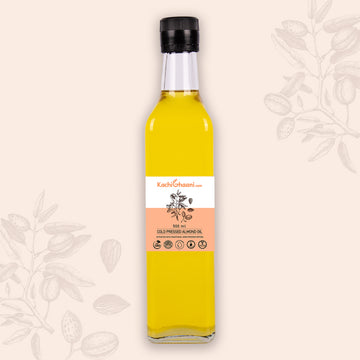
About 5.3 mg, roughly a third of an adult's daily need, according to USDA data. Almond oil is mostly monounsaturated fat and is best used raw: over salads and dals, on warm rotis or in dressings. Whole almonds are another good source, with about 6.8 mg in a 28 g handful of dry-roasted almonds.
Almond is a tree nut, so skip it if you are allergic. Our guide to almond oil for skin and hair covers its uses outside the kitchen; the percentages here are for eating, not for applying to skin.
Does cold pressing keep vitamin E?
It keeps what the seed provides. Refining, and especially the deodorising step, removes part of an oil's tocopherols; a study of common oils during refining found the biggest losses after deodorising. The removed tocopherols end up in the deodoriser distillate, a by-product that is itself a commercial source of natural vitamin E. Unrefined, cold pressed oils skip that step.
But the seed sets the ceiling. Cold pressed coconut oil still has almost no vitamin E, and cold pressed sesame oil still has little alpha-tocopherol. No pressing method can add what the seed never had.
Does heating destroy vitamin E in oil?
Some of it, and long frying destroys most of it. Tocopherols protect oil from oxidising and are used up in the process. In a 2018 study in the Czech Journal of Food Sciences, nine oils were heated at 180°C (356°F), a typical frying temperature; olive, peanut and palm oils had no tocopherols left about halfway through their frying life, while sunflower and soybean oils still had some at the end.
A quick tadka is likely to lose far less than hours of reused deep-frying oil. To get the most vitamin E from an oil, use the rich ones raw. Our myth check on whether hot food destroys everything good in cold pressed oil puts this in perspective.
How much vitamin E do you need each day?
NIH recommends 15 mg of alpha-tocopherol a day for everyone aged 14 and over, including during pregnancy, and 19 mg while breastfeeding. A tablespoon of a high-vitamin-E oil and a handful of almonds or sunflower seeds cover most of that. Talk to your doctor before taking vitamin E supplements, especially if you take blood-thinning medicines.
Getting vitamin E from our oils
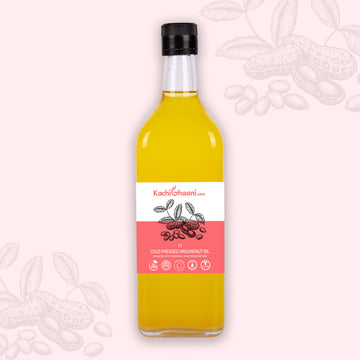
If you want more vitamin E from your oil, use it raw: our Truly Cold Pressed almond oil and safflower oil are pressed slowly in wooden ghaanis and left unrefined, and both suit dressings and a drizzle over finished dishes. Our groundnut oil is the everyday cooking oil of the group. Keep every bottle away from light and heat.
The bottom line
The best vitamin E foods are seeds, nuts and the oils pressed from them. Among cooking oils, sunflower, almond and safflower lead at about a third of a day's need per tablespoon, groundnut is moderate, and sesame brings gamma-tocopherol and lignans instead; use the rich oils raw and store every oil dark and cool.
Frequently asked questions
Which oil is best for vitamin E for skin?
The figures in this article are for eating. On the skin, oils such as almond and safflower are popular moisturisers, but there is little evidence that their vitamin E content is what makes them work. Choose a skin oil by how your skin feels and reacts, and patch test it first.
Does safflower oil have more vitamin E than olive oil?
Yes. USDA lists safflower oil at about 4.6 mg of vitamin E per tablespoon, against about 1.9 mg for olive oil, so safflower gives more than twice as much. Use unrefined safflower oil raw or over gentle heat to keep as much of it as you can.
How much vitamin E is in groundnut oil?
About 2.1 mg per tablespoon in USDA data, or about 14% of an adult's daily 15 mg. That makes groundnut oil a moderate source, below sunflower, almond and safflower but well above sesame and coconut. Because it is mostly used for cooking, some of that is lost to heat.
How much vitamin E is in sunflower oil?
Sunflower oil vitamin E levels are the highest of the everyday cooking oils: about 5.6 mg per tablespoon, according to NIH, or 37% of an adult's daily 15 mg, just ahead of almond and safflower. Like any oil, it loses vitamin E to light, heat and air, so keep the bottle closed, dark and away from the stove.
Can I get enough vitamin E from food alone?
Most people can, with a little planning. A tablespoon of sunflower, almond or safflower oil, a small handful of almonds or sunflower seeds, and some green vegetables such as spinach can cover much of the day's 15 mg. Talk to your doctor before taking vitamin E supplements.
Sources
- NIH Office of Dietary Supplements, Vitamin E fact sheet for health professionals, accessed 2026
- USDA FoodData Central, SR Legacy oil records, accessed 2026
- Fišnar, Sabolová and Réblová, Relationship between tocopherols depletion and polymerised triacylglycerols formation during heating of vegetable oils, Czech Journal of Food Sciences, 2018
- Oboulbiga et al., Physicochemical, potential nutritional, antioxidant and health properties of sesame seed oil: a review, Frontiers in Nutrition, 2023
- Changes in tocopherol contents of mostly consumed vegetable oils during refining process, Manisa Celal Bayar University repository