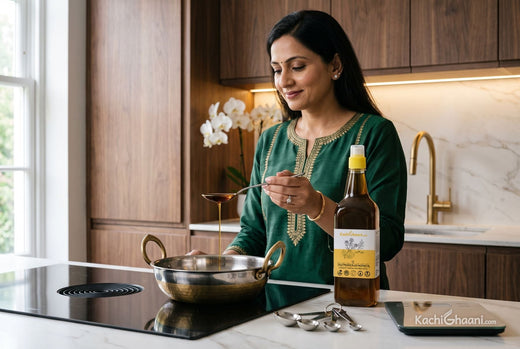
Ayurvedic diet by dosha: which cooking oils suit vata, pitta and kapha
An Ayurvedic diet matches food to your dosha, the season and your digestion. Here is what that means in practice, which oils and ghee suit vata, pitta and kapha, and what modern nutrition adds.

An Ayurvedic diet is a way of eating matched to your dosha, the season and the strength of your digestion. It favours warm, freshly cooked food and chooses cooking fats by their qualities: warming sesame oil and ghee for dry, cold vata; cooling ghee and coconut oil for hot pitta; and a little sharp mustard oil for heavy kapha.
Ayurveda has no single best cooking oil. Its oil map is still useful in a real kitchen, as long as we are honest about what it is: traditional qualities, built from centuries of observation, not laboratory measurements. Modern nutrition adds three habits that matter as much: keep total fat moderate, rotate your oils, and match each oil to the heat you cook at.
At a glance
- An Ayurvedic diet weighs three things: your dosha, the season and your digestion.
- The classical texts rank ghee first among all fats and sesame oil first among oils.
- Vata: sesame oil and ghee. Pitta: ghee and coconut oil. Kapha: mustard oil, used sparingly.
- Groundnut oil is not in the classical texts; the peanut came to India from South America only a few centuries ago.
- ICMR-NIN suggests restricting cooking oil to about 25 to 30 g a day for most adults, whatever their dosha.
What is an Ayurvedic diet?
It is a way of eating that aims to keep the body's doshas in balance. Ayurveda describes three doshas, vata, pitta and kapha, together called tridosha, and holds that each person is born with their own mix of them. Meals are planned around three things.
- Your dosha. A vata diet leans on fresh, warm food with sweet, sour and salty tastes. A pitta diet favours cooling food with sweet, bitter and astringent tastes. A kapha diet is lighter and warmer, with less fat and sugar and more pungent, bitter and astringent tastes.
- The season. Ritucharya, the seasonal routine, shifts the menu through the year: richer, warming food in the cold months, cooler and lighter food in the heat.
- Your digestion. Agni, the digestive fire, decides how well food is used, so the tradition favours warm, freshly cooked meals in sensible amounts. The Ashtanga Hridaya, a classical text, even advises eating dinner before sunset, when the digestive fire is said to grow dull.
Within that frame, the fat you cook with matters, because it goes into almost every dish. The rest of this guide maps everyday cooking oils, and ghee, to each dosha.
Which cooking oil is best according to Ayurveda?
The one that suits you, your season and your dish. Ayurveda describes every food by its qualities: heating or cooling, heavy or light, oily or dry, sharp or soft. Fats are judged the same way. The Charaka Samhita, one of the founding texts, places ghee first among the four fats it discusses and sesame oil first among oils.
| Fat | Traditional quality | Suits | Go easy if | Everyday use | Heat guide |
|---|---|---|---|---|---|
| Sesame oil (untoasted) | Warming, heavy, penetrating | Vata | Pitta runs high | Tadka, South Indian cooking, sabzi | About 177°C (350°F) |
| Mustard oil | Sharp, pungent, heating | Kapha, also vata | Pitta runs high | Bengali and Punjabi dishes, saag, fish, achaar | About 250°C (480°F) |
| Coconut oil | Cooling, heavy | Pitta, also vata | Kapha runs high | Kerala cooking, thoran, avial | About 177°C (350°F) |
| Groundnut oil | Not in the classical texts; usually seen as a middle ground | Most people, in moderation | Peanut allergy | Gujarati and Maharashtrian cooking, frying | About 180°C (356°F) |
| Ghee | Cooling, heavy, nourishing | Vata and pitta | Kapha runs high, or cholesterol is high | Roti, dal tadka, khichdi, sweets | About 250°C (482°F) |
For the full list of temperatures, see our smoke points of Indian cooking oils.
Vata dosha diet: which oils suit vata?
Sesame oil and ghee. Vata is described as cold, dry, light and irregular, so the tradition answers with warm, moist, grounding food cooked in a little warming fat: khichdi with a spoon of ghee, dal with a sesame oil tadka, soft cooked vegetables rather than dry, raw salads.
Groundnut oil also works well for everyday vata cooking. Flaxseed oil can join the plate too, but only drizzled over food after cooking, because it should never be heated.
Pitta dosha diet: which cooking oil is cooling?
Ghee and coconut oil. Pitta is described as hot, sharp and intense, so the tradition cools it with sweet, soothing fats and gentler spicing. Coconut oil is the base of Kerala cooking, and ghee finishes dal and rice across India.
Pitta types are usually advised to go easy on mustard oil and on very hot tadkas heavy with dried red chilli. Sesame oil in moderation is fine; in the heat of summer, many families simply lean more on coconut oil and ghee.
Kapha dosha diet: is mustard oil the right oil?
Yes. In the tradition it is the classic kapha oil. Kapha is described as heavy, slow, cool and oily, while mustard oil is sharp, pungent and heating, so a little of it lifts the heaviness of a kapha meal. Its strong flavour also helps you use less.
Kapha does best with less fat overall, so the key word is "little": a teaspoon of mustard oil in a sabzi rather than a pool in the kadhai. Mustard oil is also the oil behind North Indian achaar, as our article on why achaar is made with mustard oil explains.
Is groundnut oil heating or cooling in Ayurveda?
The classical texts do not say, because they were written long before groundnuts reached India. The peanut is native to South America and was carried around the world by European traders only a few centuries ago. Modern Ayurvedic writers differ; many describe it as a heavy, mildly warming oil that sits between sesame and coconut.
In practice, groundnut oil is the everyday oil of Gujarat, Maharashtra and much of the south for good reasons: a mild, nutty flavour, a balance of fats that suits daily cooking, and enough heat tolerance for most Indian dishes. Used in moderation, it suits most people of any type.
Is ghee better than oil in Ayurveda?
In the tradition, yes. Ghee is the most praised of all fats, said to carry the qualities of the herbs and spices cooked in it and to nourish without heating. Our article on ghee in Ayurveda covers what the texts actually say.
Modern nutrition adds a caution. Around 60 percent of ghee's fat is saturated, and both the World Health Organization and India's ICMR-NIN advise limiting saturated fats such as butter and ghee. The practical middle path is to cook most everyday food in oil and use ghee where you taste it: on roti, in khichdi, as a final tadka.
What modern nutrition adds
Whatever your dosha, three modern habits matter as much as which oil you choose.
- Keep the total moderate. ICMR-NIN's 2024 guidelines suggest restricting cooking oil to about 25 to 30 g a day for most adults, roughly five to six teaspoons, covering every oil and the ghee you use.
- Rotate. Each oil brings a different mix of fats. Using two or three, such as mustard for one dish, groundnut for another and coconut or sesame for a third, spreads the benefits and the risks.
- Match the oil to the heat. A hot tadka or frying needs a fat that holds up, such as mustard oil or ghee; delicate oils such as flaxseed are for raw use only.
Our kitchen oil chart maps oils to dal, sabzi, poori, achaar and baking.
A note on health conditions
- Dosha-based cooking is a traditional way of eating, not a medical plan. If you have heart disease, high cholesterol, diabetes, gallbladder or digestive problems, or are pregnant, follow your doctor's or dietitian's advice on fats.
- Mustard is a recognised food allergen in the EU and Canada, and peanut allergy can be severe. Choose oils with every diner's allergies in mind.
- If a family member needs a low-fat diet, cook for them first and add each person's ghee or oil at the table.
Our oils for a dosha-wise kitchen
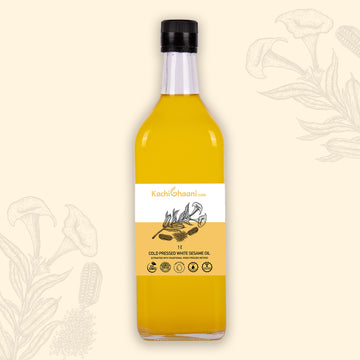
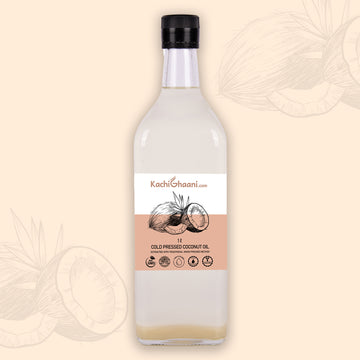
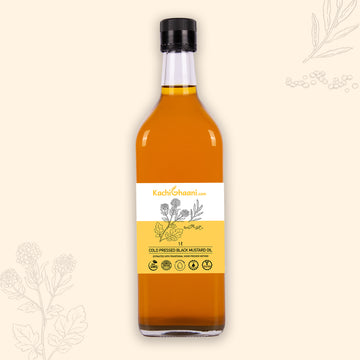
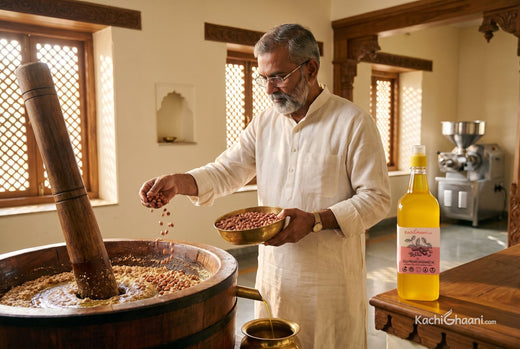
For vata cooking, our Truly Cold Pressed white sesame oil, which is untoasted and gentle in flavour, and our A2 Gir cow ghee; for pitta, our coconut oil and ghee; for kapha, a little black mustard oil or yellow mustard oil; and for every day, our groundnut oil. The oils are pressed slowly in wooden ghaanis and left unrefined; the ghee is churned by the bilona method.
The bottom line
Ayurveda's answer is not one oil but the right oil for the person and the season: sesame and ghee for vata, ghee and coconut for pitta, a little mustard for kapha. Modern nutrition's answer is to keep the total moderate and rotate. Follow both and your kitchen will serve you well.
Frequently asked questions
Do I need to know my dosha to follow an Ayurvedic diet?
Not to begin. The simplest Ayurvedic habits suit everyone: warm, freshly cooked meals, sensible portions, an early dinner and food that suits the season. If you want to go further, an Ayurvedic practitioner can assess your constitution; online quizzes give only a rough idea.
Can I cook with sesame oil every day in summer?
Yes, in moderate amounts. Ayurveda calls sesame oil warming, so in the hottest months, or if you tend to run warm, many families lean more on coconut oil, groundnut oil and ghee and keep sesame oil for tadka. There is no need to stop it entirely; just rotate.
Should the whole family cook to one person's dosha?
Usually not. Most families cook one balanced meal in a sensible amount of fat and adjust on the plate: a spoon of ghee on dal for the vata grandparent, a lighter helping for the kapha teenager, less chilli for the pitta parent. Rotating oils through the week keeps everyone's needs covered.
Is coconut oil bad for kapha?
Not in small amounts. The tradition calls coconut oil cooling and heavy, qualities kapha already has, so kapha types are advised not to make it their main oil. A little in a Kerala-style dish is fine; for daily cooking, mustard or groundnut oil are the more usual kapha choices.
Does Ayurveda change the cooking oil with the season?
Yes. The seasonal routine, called ritucharya, leans on warming sesame and mustard oils in the cold, dry months and on cooling ghee and coconut oil in hot weather. In the monsoon, lighter food with less fat is the usual advice. Matching oil to season is as old as matching it to dosha.
Is refined oil allowed in Ayurveda?
The classical texts were written long before industrial refining, so they say nothing about it directly. They describe oils pressed from seeds without chemicals, which is why many modern practitioners prefer unrefined, cold pressed oils. Modern nutrition focuses on using any oil in moderation and at the right heat.