The best oil for cutting boards and your chakla-belan
The best oil for cutting boards, chakla-belan and wooden spoons: which oils stay fresh instead of turning sticky or rancid, how to apply them, and which hardware-shop oils to keep off food.

The best oil for cutting boards is one that soaks in and will not turn sticky or rancid. Food-grade mineral oil is the usual advice, but two plant oils work well: coconut oil, which is mostly saturated and slow to spoil, and raw linseed (flaxseed) oil, which dries into a hard, food-safe finish when wiped on thin.
It matters because wood is thirsty. Every wash pulls moisture out of the grain, and a dry board turns grey, rough and, in time, cracks or warps. The same goes for the chakla-belan (the round rolling board and pin used for rotis) and for wooden spoons and spatulas. A few minutes with the right oil, once a month, keeps them going for years.
At a glance
- Oil stops wood drying out and cracking. It does not kill germs; washing with hot, soapy water after every use keeps a board clean.
- Food-grade mineral oil never spoils but never hardens, so it needs frequent top-ups.
- Coconut oil is over four-fifths saturated fat, so it resists turning rancid far better than most cooking oils.
- Raw linseed (food-grade flaxseed) oil hardens into a tough finish; hardware-shop 'boiled' linseed oil usually contains metal driers and does not belong on a board.
- Use thin coats, wipe off the excess and repeat about once a month.
Why does a wooden cutting board need oil?
Oil slows how fast water moves in and out of the wood, which keeps a board flat and smooth. It is maintenance, not hygiene.
Wood swells when wet and shrinks as it dries. Repeat that daily and the fibres loosen and the ends can split. An oiled board takes up less water, so it moves less and soaks up fewer stains and smells. What oil does not do is kill germs. The US Department of Agriculture's Food Safety and Inspection Service advises washing boards with hot, soapy water after each use, keeping a separate board for raw meat, poultry and seafood, and replacing boards that develop deep, hard-to-clean grooves.
What is the best oil for cutting boards?
Coconut oil or food-grade mineral oil for easy care, and raw linseed (flaxseed) oil for a harder finish. Any oil sold as food is safe on a board; what differs is how it ages inside the wood, which depends on how readily it reacts with air.
Oils that stay soft: mineral oil and coconut oil
These hardly react with air. They soak in, protect for a while and slowly wash out, so they need regular top-ups, but they almost never turn sticky.
Oils that harden: raw linseed (flaxseed) oil
Linseed is a 'drying oil'. Its many omega-3 fats react with oxygen and link into a solid film that sheds water far better than a soft oil, which is why it has been used for generations on wooden tools, furniture and cricket bats.
Oils in the middle: most cooking oils
Groundnut, sunflower, sesame, mustard and olive oil do not harden properly, yet they oxidise slowly. After months in a board they can leave a stale smell and sometimes a tacky surface. Harmless, but a poor habit.
| Oil | What it does in wood | Verdict for boards |
|---|---|---|
| Food-grade mineral oil | Stays liquid and does not spoil | Safe and simple; needs frequent top-ups |
| Coconut oil | Mostly saturated; stays soft, slow to turn rancid | A good plant choice for boards, chaklas and spoons |
| Raw linseed (food-grade flaxseed) oil | Hardens into a tough film over days to weeks | The most durable plant finish, if applied very thin |
| 'Boiled' linseed oil (hardware shop) | Dries fast because of added metal driers | Not for food surfaces |
| Groundnut, sunflower, mustard, olive | Oxidise slowly; may smell stale or feel tacky | Fine in an emergency, poor as a habit |
Can coconut oil be used on a cutting board?
Yes. Most of coconut oil is saturated fat, which gives oxygen little to attack: USDA figures put it at about 82 g per 100 g, and Harvard Health describes it as about 90% saturated. A coconut-oiled board is far less likely to smell rancid than one rubbed with sunflower oil.
It does not harden, so think of it as a conditioner you refresh rather than a permanent finish. It turns solid below about 24°C (75°F), so in winter stand the bottle in hot water first. Any light coconut aroma fades from the wood quickly. For more on the oil itself, see how cold pressed coconut oil differs and how to use it.
Is raw linseed oil a food safe wood finish?
Pure linseed oil is food safe once dry. 'Boiled' linseed oil usually is not, because of what is added to it.
Food-grade flaxseed oil is linseed oil made for eating, with nothing added. Hardware-shop raw linseed oil is not made to food standards, so for kitchen wood the pantry bottle is the safer pick. It dries slowly; Fine Woodworking notes that raw linseed oil can take weeks to dry. 'Boiled' linseed oil is made to dry faster; most brands contain heavy-metal driers, typically cobalt and manganese salts, and are not considered food safe. Fine Woodworking also suggests pure tung oil for boards. Whatever finish you buy, check that the label says it is food safe.
How to give a board a flaxseed oil finish
- Start with a clean board that has dried overnight.
- Rub about half a teaspoon (2 to 3 ml) into each face with a lint-free cotton cloth, along the grain.
- After 20 to 30 minutes, wipe off every bit that has not soaked in. Thick coats stay gummy.
- Stand the board on its edge in a warm, airy spot for two to three days.
- Build up three or four thin coats over two weeks, then top up every month or two.
How to oil a cutting board, step by step
With coconut or mineral oil, it takes ten minutes of work and a night of waiting.
- Wash the board with hot, soapy water and let it dry completely on its edge.
- Warm the coconut oil until liquid.
- Spread 1 to 2 teaspoons (5 to 10 ml) along the grain with a soft cloth, over both faces and all edges, so the board stays flat.
- Leave it to soak in for a few hours or overnight.
- Wipe off any oil left on the surface and buff with a dry cloth.
How often? Daily for the first week on a new or very dry board, then about monthly. If drops of water bead up, the wood is fine; if they soak in and leave a dark patch, it is time to oil.
What about the chakla-belan, wooden spoons and spatulas?
Same care, less often. A chakla and belan mostly meet flour, so a dry brush and a damp cloth are usually enough. Wash them only when dough has stuck, dry them standing up and rub in a few drops of coconut oil once a month.
Wash wooden spoons and spatulas by hand and dry them straight away, never leaving them in the sink. The USDA notes that laminated boards can crack in a dishwasher; hand washing is kinder to all wooden tools. If a spoon smells of old ghee or onion, scrub it with coarse salt and half a lemon, then dry and oil it.
Safety: what to keep off your board
- Nut allergies. Do not use groundnut (peanut), almond or walnut oil on boards or spoons that serve someone with a nut allergy.
- Hardware finishes. Keep boiled linseed oil, varnish, furniture polish and non-food mineral oil away from food surfaces.
- Oily rags can catch fire. Cloths soaked in linseed (flaxseed) oil can heat up on their own as they dry. Spread them flat outdoors, or soak them in water in a closed container before disposal.
- Raw meat. The USDA suggests sanitising with 1 tablespoon (15 ml) of unscented liquid chlorine bleach in about 3.8 litres (1 US gallon) of water: flood the surface, wait several minutes, rinse and dry.
- Deep grooves. Sand a deeply scored or cracked board smooth, or replace it.
Using our coconut and flaxseed oils on wood
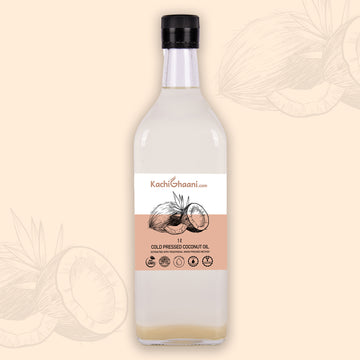
If you want to try it, our Truly Cold Pressed coconut oil is pressed slowly in a wooden ghaani from dried copra and left unrefined. For a harder finish, our Truly Cold Pressed flaxseed oil is pure flaxseed oil with nothing added. Keep it away from light and heat (see how to store cold pressed oil), enjoy most of it raw in these four ways to use flaxseed oil without heating it, and set a little aside for the wood.
The bottom line
For most kitchens, coconut oil is the easy plant-based choice for boards, chaklas and spoons: a thin coat, wipe off the excess, about once a month. For a harder, more water-resistant finish, use food-grade flaxseed (raw linseed) oil in very thin coats and give it days to dry. Skip hardware-shop boiled linseed oil, and keep washing every board with hot, soapy water.
Frequently asked questions
Can I use olive oil or sunflower oil on a cutting board?
You can in a pinch, and it will not harm you, but it is not ideal. Cooking oils like these oxidise slowly inside the wood and can leave a stale smell or a tacky feel after a few months. Coconut oil, food-grade mineral oil or thin coats of flaxseed oil age far better.
Is mineral oil safe for cutting boards?
Food-grade mineral oil is the standard board oil in many kitchens because it is tasteless and never turns rancid. It never hardens either, so it washes out and needs frequent top-ups. Use only oil sold as food grade, never mineral oil from a hardware or machine shop.
Why is my cutting board sticky after oiling?
Usually because too much oil was left on the surface, or because a cooking oil has started to oxidise. Scrub the board with hot water and a little dish soap, let it dry completely, then re-oil with a very thin coat and wipe off everything that has not soaked in after 20 to 30 minutes.
Do bamboo boards need oil?
Yes. Bamboo is a grass rather than a wood, but bamboo boards are strips glued together, and they dry out and split in much the same way. Oil them with thin coats of coconut, mineral or flaxseed oil, and wash them by hand.
How do I remove smells and stains from a wooden board?
Sprinkle coarse salt over the board, scrub it with half a lemon and leave it for a few minutes, then rinse and dry it on its edge. A paste of baking soda and water also helps with onion and garlic smells. Once dry, give it a fresh thin coat of oil.