Dal tadka: the dhaba secret is a second tadka

Everyone has wondered it on a highway: why does dhaba dal taste like that, when the ingredients are the same ones sitting in every home kitchen? The answer is not a secret masala. It is structural: the dhaba tempers the dal twice. Once while cooking, and once more — loudly, in ghee — seconds before the dal lands on your table. Here is the whole method for home.
What you need (serves 4)
- 3/4 cup toor dal + 1/4 cup yellow moong dal, rinsed well
- 1/2 teaspoon haldi, salt, about 3 cups water for pressure cooking
- First tadka: 1 tablespoon ghee or oil · 1 teaspoon cumin · 1 chopped onion · 1 teaspoon ginger-garlic paste · 2 chopped tomatoes · 1 green chilli · 1/2 teaspoon red chilli powder
- Second tadka: 1½ tablespoons ghee · 1/2 teaspoon cumin · 3 cloves of garlic, sliced · 1 dried red chilli · a pinch of hing · 1/2 teaspoon kashmiri chilli powder
- Fresh coriander and a squeeze of lime to finish
The base: cook the dal soft, then build the first tadka
- Pressure-cook the dals with haldi and salt — 4 to 5 whistles, then a rest — until they mash easily against the side of the cooker. Dhaba dal is soft dal; underdone dal cannot be rescued by any tadka.
- Make the first tadka in a kadhai: heat the ghee, crackle the cumin, then cook the onion patiently until golden at the edges. Add ginger-garlic, then tomatoes, green chilli and chilli powder, and cook until the mixture darkens and the fat shows at the edges — the standard sign that the base is done.
- Marry them. Pour in the cooked dal, thin to the consistency you like, and simmer for ten minutes so the base and the dal stop being two separate things. Adjust salt.
At this point you have good home dal. What follows is the difference between good and dhaba.
The second tadka: the part that makes it dhaba dal
- Wait until everyone is ready to eat. The second tadka is a finishing move — it goes on top of served-and-steaming dal and loses its magic if it sits.
- In a small tadka pan, heat the ghee until a cumin seed sizzles on contact. Add the cumin, then the sliced garlic. Let the garlic go properly golden — that toasted edge is the dhaba flavour.
- Off the flame: the dried chilli, the hing, and last the kashmiri chilli powder, which needs only the residual heat — in the pan for two seconds, it turns the ghee brick-red without scorching.
- Pour it over the dal at the table, sizzling, in front of the people who are about to eat it. The theatre is not vanity: the aromas are at their absolute peak in those first thirty seconds — the fat has just finished extracting them — and the point of the second tadka is to serve that peak instead of letting it fade into the pot.
Why ghee — and what are the regional variations?
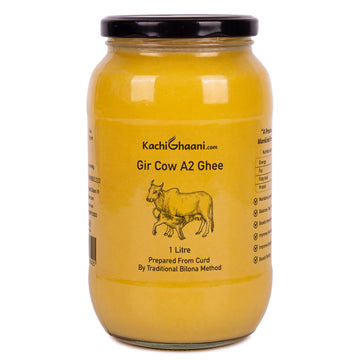
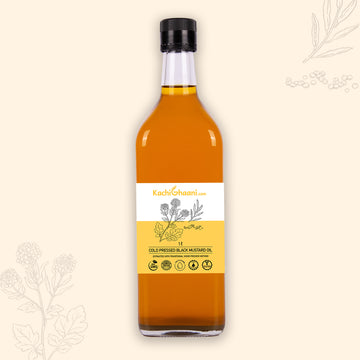
The finishing tadka is where fat quality is most audible, because nothing cooks after it: what you pour is what you taste. Bilona-made A2 Gir cow ghee brings a nutty depth and a clean 250°C / 482°F headroom, so the garlic can toast without the fat complaining. And regional kitchens vote with their own fats: in Bengal and the East, the same dish gets a pungent mustard oil chhonk with panch phoron; in the South, a sesame-oil thalippu with curry leaves. Our tadka pairing guide maps five of these combinations if you want to wander.
Three details the dhaba would never tell you
- Smoked richness without a tandoor: rest a small steel katori on the finished dal, drop in a knob of ghee — and skip the charcoal theatrics; slow-toasted garlic in the second tadka gets you most of the way there honestly.
- Consistency: dhaba dal is pourable, not porridge. Thin it more than feels right; the second tadka carries the richness.
- The lime at the end is load-bearing. One squeeze over the tadka brightens the whole bowl. Coriander is decoration; the lime is doing work.
Two tadkas, one of them at the table. That is the entire secret, and it travels from the highway to your kitchen intact.