1 litre oil in kg, and 1 kg oil in litres: oil and ghee conversions
1 kg oil in litres, 1 litre oil in kg, and why ghee and castor differ: simple tables for mustard, groundnut, sesame and coconut oil, plus spoon, cup and jaggery weights.

A kilo of most cooking oils fills about 1.09 litres, so 1 kg oil in litres is just over one litre. Turned the other way, 1 litre of oil weighs about 0.91 to 0.92 kg. Melted ghee is a little lighter, at about 0.9 kg per litre, and castor oil is heavier, at about 0.96 kg.
Oil is less dense than water, which is why it floats, and that is the whole reason a litre of oil is not a kilo. Knowing the conversion helps when a recipe gives grams and your bottle gives millilitres, and when you compare a 1 litre pack with a 1 kg pack. The tables below cover common oils, ghee, spoons, cups and jaggery.
At a glance
- Most edible oils weigh 910 to 925 g per litre at room temperature.
- 1 kg of oil is about 1.08 to 1.10 litres, so a 1 kg pack holds roughly 9 per cent more oil than a 1 litre pack.
- Melted ghee weighs about 0.9 kg per litre; castor oil about 0.96 kg.
- One tablespoon (15 ml) of oil weighs about 13.5 to 14 g, and one teaspoon about 4.5 g.
- Warm oil takes up slightly more space, but its weight does not change, which makes weight the fairer measure.
1 kg oil in litres and 1 litre oil in kg, oil by oil
For most cooking oils, 1 litre weighs about 0.91 to 0.92 kg and 1 kg fills about 1.09 litres. The exact figure depends on the oil and its temperature.
The ranges below come from the international Codex standard for named vegetable oils, which sets the density each oil must fall within, and from a castor oil pharmacopoeia specification. The ghee figure is our approximation for melted ghee, based on similar fats.
| Oil | 1 litre weighs | 1 kg equals | Measured at |
|---|---|---|---|
| Mustard | 910 to 921 g | 1.09 to 1.10 litres | 20°C (68°F) |
| Groundnut | 912 to 920 g | 1.09 to 1.10 litres | 20°C (68°F) |
| Sesame (white or black) | 915 to 924 g | 1.08 to 1.09 litres | 20°C (68°F) |
| Safflower | 922 to 927 g | about 1.08 litres | 20°C (68°F) |
| Coconut (melted) | 908 to 921 g | 1.09 to 1.10 litres | 40°C (104°F) |
| Castor | 957 to 961 g | about 1.04 litres | 25°C (77°F) |
| Ghee (melted) | about 900 to 910 g | about 1.10 to 1.11 litres | Warm and liquid (approximate) |
How much is 1 litre mustard oil in kg?
About 0.91 to 0.92 kg (910 to 921 g), so 1 kg of mustard oil fills about 1.09 litres. A 15 litre tin, a size many families buy for pickle season, holds about 13.7 kg of oil.
Is 1 litre of ghee the same as 1 kg?
No. A litre of melted ghee weighs about 0.9 kg, so 1 kg of ghee is roughly 1.1 litres.
Ghee is trickier than oil because it changes state. Melted, it behaves like other fats and is lighter than water. Solid milk fat is denser (USDA researchers put it at about 0.93 times the density of water at 10°C, or 50°F), but grainy ghee in a jar traps tiny pockets of liquid and air, so a jar's contents vary. For a fair comparison, go by weight: a 500 g jar of ghee holds about 550 ml once melted.
Why is oil sold by the litre and ghee by the kg?
Mostly habit and practicality: liquids are easy to measure by volume, while semi-solid ghee is easier to weigh. In practice, both are sold both ways.
In India you will find ghee in 1 litre packs as well as by weight, and oil in kilo tins as well as litre bottles. Many oil labels in India state both the volume and the weight, which makes comparing easier. Our guide to reading an oil label in India explains the other lines on the pack.
Comparing packs fairly
If a 1 litre pack and a 1 kg pack of the same oil cost the same, the kilo pack holds more: about 1.09 litres, or roughly 9 per cent extra. To compare any two packs, convert both to the same unit: multiply litres by about 0.915 to get kilos, or multiply kilos by about 1.09 to get litres. We explain what else goes into the price of oil in why cold pressed oil costs more.
Does temperature change how much oil weighs?
Its weight never changes, but its volume does. Warm oil expands slightly, so the same kilo takes up a little more space on a hot day.
Codex figures for one oil show its density falling by about 0.003 for a 5°C rise, which works out to roughly 1.3 per cent more volume when oil warms by 20°C (36°F). Cold does the opposite and also changes how oil looks: coconut oil turns solid below about 24°C (75°F), and unrefined oils can turn cloudy in winter, without any change in weight or quality. Our guide to why cold pressed oil looks cloudy and how to store it explains more.
1 tablespoon oil in grams, plus teaspoons and cups
About 13.5 to 14 g, and one teaspoon about 4.5 g. A tablespoon of oil carries about 120 kcal.
| Measure | Volume | Most cooking oils | Melted ghee | Castor oil |
|---|---|---|---|---|
| 1 teaspoon | 5 ml | 4.6 g | 4.5 g | 4.8 g |
| 1 tablespoon (metric) | 15 ml | 13.7 g | 13.6 g | 14.4 g |
| 1 US tablespoon | 14.8 ml | 13.5 g | 13.4 g | 14.2 g |
| 1 US cup | 237 ml | 216 g | 214 g | 227 g |
| 1 metric cup | 250 ml | 229 g | 226 g | 240 g |
Soft, spooned ghee weighs a little less than melted ghee because of air pockets; USDA data put a tablespoon of ghee at about 12.8 g and 112 kcal. Home cups vary in size, so check what your recipe means by a cup.
How many grams is one cup of jaggery?
There is no single answer, because jaggery comes as blocks, powder and grated shreds that pack very differently. Weigh it when a recipe matters.
Jaggery is not standardised in USDA data, but for comparison a US cup of firmly packed brown sugar weighs about 220 g. Firmly packed jaggery powder can be in that region, while loosely grated jaggery is much airier and lighter. A heaped teaspoon of grated jaggery weighs only a few grams. If a recipe gives cups, ask whether it means packed powder or loose shreds; a small kitchen scale removes the guesswork.
Our oils and ghee
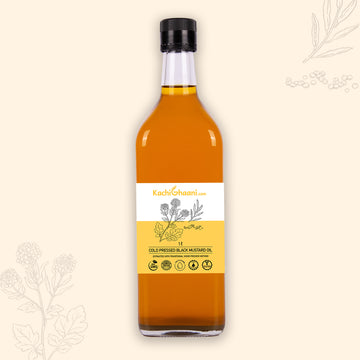
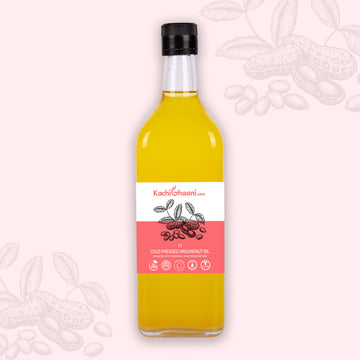
If you are comparing our Truly Cold Pressed black mustard oil or Truly Cold Pressed groundnut oil with another pack, convert both to the same unit first using the tables above. Our oils are pressed slowly in wooden ghaanis and left unrefined and unfiltered, so a little natural sediment may settle at the bottom; it is part of the oil. Our A2 Gir cow ghee is easiest to measure by weight, or by volume once melted.
The bottom line
A litre of cooking oil weighs about 0.91 to 0.92 kg, melted ghee about 0.9 kg and castor oil about 0.96 kg. Weight is the fair way to compare packs, because volume shifts with temperature. Keep the spoon and cup table handy, and weigh jaggery when it matters.
Frequently asked questions
How many litres is 5 kg of oil?
About 5.4 to 5.5 litres for most cooking oils, since each kilo is roughly 1.09 litres. Castor oil is heavier, so 5 kg of it comes to about 5.2 litres. Going the other way, a 5 litre container holds about 4.6 kg of cooking oil.
How much does 1 litre of coconut oil weigh?
About 908 to 921 g when melted, measured at 40°C (104°F) in the Codex standard. A given amount of coconut oil weighs the same whether it is solid or liquid, but solid coconut oil is hard to measure by volume, so weigh it or melt it first.
How many tablespoons are in 1 litre of oil?
About 67. A metric tablespoon holds 15 ml, so a litre is 66.7 tablespoons; with the slightly smaller US tablespoon of 14.8 ml, it is about 67.6. At roughly 120 kcal per tablespoon, a litre of oil holds about 8,000 kcal.
Is 1 litre of water heavier than 1 litre of oil?
Yes. A litre of water weighs about 1 kg, while a litre of cooking oil weighs about 0.91 to 0.92 kg. Oil is less dense than water, which is why it floats on top and why the two separate in a salad dressing left to stand.
How much oil does a family use in a month?
It depends on cooking style and family size, but ICMR-NIN's 2024 guidelines suggest keeping cooking oil to about 25 to 30 g per adult per day, a little under a litre per adult per month. We work through the numbers in how much cooking oil a family needs each month.