Abhyanga snan: the Diwali oil bath before sunrise
Abhyanga snan, the pre-dawn Diwali oil bath, explained: why it is taken on Narak Chaturdashi, which oil to warm, how to use utane, the 2026 timing and how to do it safely.

Abhyanga snan is the ritual oil bath taken before sunrise on Narak Chaturdashi, the first big morning of Diwali: a warm sesame oil massage, a gentle scrub with utane (a fragrant paste of gram flour, turmeric and herbs), then a warm bath. In 2026 it falls on Sunday 8 November.
In Maharashtra, Karnataka, Goa and much of the South, this bath is how Diwali truly begins, and in Tamil homes it is called Ganga snanam. It also arrives as autumn turns towards winter, just when skin starts to feel tight and dry. Here is what the ritual involves, which oil to use, the 2026 timing and how to do it safely.
At a glance
- When: Narak Chaturdashi, after moonrise and before sunrise. In 2026 that is Sunday 8 November; Drik Panchang gives 5:41 to 6:38 am for New Delhi.
- What: a warm oil massage from head to toe, utane to lift the oil, a warm bath, then new clothes.
- Oil: sesame (til) oil is the classic choice; almond or coconut suit those who like a lighter feel.
- Utane: gram flour or a lentil flour with turmeric, sandalwood and fragrant herbs.
- It is a festival ritual with good sense for dry early-winter skin, not a medical practice.
What is abhyanga snan on Diwali?
Abhyanga means oil massage in Ayurveda, and snan means bath. On Narak Chaturdashi, the day many in North India call Chhoti Diwali, families wake in the dark, oil and scrub themselves or one another, and bathe before the sun comes up.
The story behind the day is the victory of Krishna, with Satyabhama, over the demon Narakasura, and many families say the early bath marks that victory and starts the festival clean. Customs vary from region to region:
- Maharashtra and Goa: after the bath, many families crush a small bitter fruit called karit under the left heel, recalling Krishna stamping on Narakasura. Then come new clothes and the first Diwali sweets.
- Tamil Nadu: Deepavali itself is celebrated on this day. Elders wake the family with the words "Ganga snanam", put warm sesame oil (nallennai) on everyone's head, and the oil is washed off with shikakai, gram flour or green gram powder.
- Karnataka: Deepavali starts on this day too, with an early oil bath and aarti.
Why is an oil bath taken on Narak Chaturdashi?
Partly for the story, and partly for good seasonal sense. Diwali comes in late October or November, as autumn (sharad) gives way to early winter (hemanta) in the Ayurvedic calendar of seasons. Classical Ayurvedic advice for the cold months includes regular oil massage, and the dry air of early winter is exactly when skin begins to feel tight.
No study has tested the Diwali oil bath itself. What is well understood is simpler: oil softens and seals dry skin, a warm bath feels good on a cool dawn, and a shared ritual makes a festival morning feel special. That is reason enough.
Which oil is used for abhyanga snan?
Untoasted sesame (til) oil, gently warmed, is the classic choice. Some families use an Ayurvedic herbal oil or a lightly scented one instead, and many choose a lighter oil for children.
| Oil | Feel | Who might prefer it | Good to know |
|---|---|---|---|
| White sesame (til) | Rich; warming in the Ayurvedic view | Most adults on cool mornings | The traditional choice; warm it gently |
| Black sesame | Similar, with a deeper aroma | Those who follow classical routines | Also the classical oil for oil pulling |
| Almond | Smooth, mild scent | Children, and adults who find sesame heavy | Skip with a tree-nut allergy |
| Coconut (from copra) | Light once melted | Warm, humid regions | Sets below about 24°C (75°F), so melt it first |
About 2 to 4 tablespoons (30 to 60 ml) is enough for an adult's head and body, and less for a child. For choosing an oil by body type the rest of the year, see our guide to abhyanga at home, dosha by dosha.
What time should abhyanga snan be done?
After moonrise and before sunrise, while the Chaturdashi tithi (lunar day) is still running. Drik Panchang, a widely used Hindu calendar, notes that the bath is always taken in this window.
In 2026, Narak Chaturdashi falls on Sunday 8 November. For New Delhi, Drik Panchang gives the abhyanga snan muhurat as 5:41 am to 6:38 am, a window of 57 minutes, with the Chaturdashi tithi running from 10:47 am on 7 November to 11:27 am on 8 November. Timings shift from city to city, and outside India the date itself can move by a day, so check a local panchang. If the exact window does not suit your family, many simply bathe as early as they can before sunrise.
What is utane and how is it used?
Utane (ubtan in Hindi) is a fragrant powder mixed into a soft paste just before use. The base is usually gram flour (besan) or a lentil flour, with turmeric, sandalwood and rose; families add their own touches, such as dried orange peel, fragrant roots or green gram powder. It lifts oil from the skin gently, so you need little or no soap.
The abhyanga snan, step by step
- Warm the oil by standing its bowl in hot water. Test a drop on your inner wrist: it should feel comfortably warm, never hot.
- Start with the head, working a little oil into the scalp with your fingertips, as in a champi head massage.
- Oil the body from top to toe for 10 to 15 minutes, with long strokes on the arms and legs and circles over the joints.
- Rest for 10 to 15 minutes in a warm room.
- Mix the utane with water, milk or rose water into a soft paste and rub it on gently, in circles, to lift the oil. Do not scrub hard.
- Take a warm, not scalding, bath. Wash your hair with a mild shampoo or shikakai; our guide to washing hair oil out without stripping your hair helps.
- Pat dry, put on new clothes and join the family for aarti and the first sweets of Diwali.
How to do it safely
- Slippery floors: oiled feet on wet tiles are a fall waiting to happen. Sit on a low stool or wooden paat while oiling, wipe your soles before you stand, use a non-slip mat, and help older family members.
- Heat: never heat oil until it smokes, and always test the temperature on your wrist, especially for children.
- Patch test the utane: turmeric and gram flour can irritate sensitive skin, and turmeric can stain. Try a little on your inner arm the day before.
- Eyes and broken skin: keep oil and paste out of the eyes, and away from cuts, rashes or eczema flares.
- Allergies: skip almond oil with a tree-nut allergy and sesame oil with a sesame allergy.
- Feeling unwell: Ayurvedic practitioners generally advise skipping oil massage during a fever or an upset stomach.
- Babies: follow the gentle routine and safety rules in our baby malish guide instead.
Our oils for the Diwali oil bath
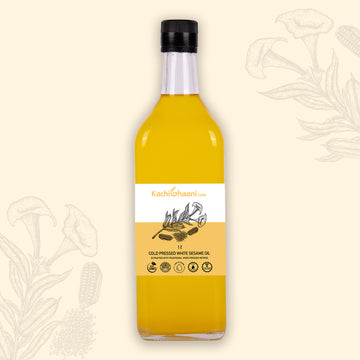
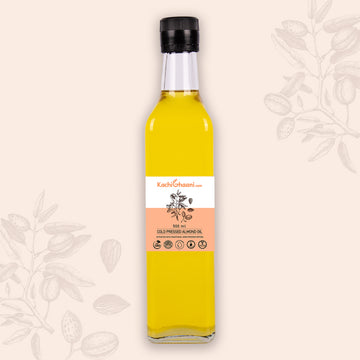
If you want a single-ingredient oil for the morning, our Truly Cold Pressed white sesame oil is the traditional choice, our Truly Cold Pressed black sesame oil has a deeper aroma, and our Truly Cold Pressed almond oil suits children and anyone who finds sesame heavy. All three are pressed slowly in wooden ghaanis and left unrefined, so a little sediment is normal. Warm only what you need.
The bottom line
Abhyanga snan is a warm, unhurried start to Diwali: oil, utane and a bath before sunrise, on Sunday 8 November in 2026. Enjoy it as a family ritual with good sense for dry winter skin, keep floors safe and the oil comfortably warm, and leave the health promises out of it.
Frequently asked questions
Can abhyanga snan be done at night or after sunrise?
Tradition places it between moonrise and sunrise on Narak Chaturdashi, and that early hour is part of its charm. If someone in the family cannot manage it, an oil bath later in the morning still brings the same comfort to dry skin; it simply falls outside the traditional muhurat.
Can children take part in abhyanga snan?
Yes, with care. Use a little lukewarm oil, keep it out of their eyes, oil them in a warm room and hold their hand on wet floors. Almond or sesame oil both work if there is no allergy. For babies, follow a gentle baby malish routine that your paediatrician is happy with.
What is Ganga snanam?
It is the Tamil name for the Deepavali oil bath. Elders wake the family before dawn with the words "Ganga snanam", put warm sesame oil on everyone's head, and the oil is washed off with shikakai or gram flour. The name likens the bath to a dip in the holy river Ganga.
Can I use mustard oil for abhyanga snan?
Some North Indian families use mustard oil for winter massage. It is strong and pungent and can sting sensitive or broken skin, so patch test first and keep it well away from the eyes. For a gentler Diwali morning, sesame oil remains the traditional choice in most homes that keep this ritual.
Sources
- Abhyang Snan timings, Narak Chaturdashi 2026, Drik Panchang, 2026
- Naraka Chaturdashi, Wikipedia, accessed 2026
- Karit fruit, Wikipedia, accessed 2026
- What is abhyanga snan: the Maharashtrian bathing ritual, Free Press Journal, 2024
- Diwali in Tamil Nadu: Naraka Chaturdashi and sacred oil baths, Hindutone, 2026