How to do champi: the warm-oil head massage, step by step

Every Indian family has a champi memory — a grandmother’s knuckles working warm oil into the scalp on a Sunday, usually against the protests of whoever was receiving it. The ritual survives because it feels wonderful and costs almost nothing. Here is how to do it properly at home, oil choices included.
What exactly is champi?
Champi is the traditional Indian head massage with warm oil — the head-and-scalp cousin of abhyanga, the full-body oil massage we have covered separately. The word travelled the world: the English “shampoo” descends from chāmpo, the Hindi instruction to press and knead. The tradition keeps it as weekly maintenance, not an emergency measure — which is why it became a Sunday institution.
What will it do? We will only promise what you can feel: oiled hair is easier to detangle and looks less flyaway, the scalp feels settled rather than tight, and twenty minutes of slow massage is deeply relaxing. That is the honest case, and it has been enough for a few thousand years.
Which oil should you use?
Tradition offers a small menu, and the honest answer is that all of these work — pick by season, hair type and smell preference:
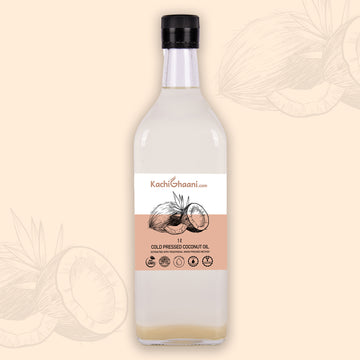
- Coconut — the everyday South Indian choice, light and fresh-smelling. It solidifies below about 24°C, so in winter the jar needs a warm-water bath first.
- Sesame — the classical Ayurvedic default, warming and a little heavier; the traditional winter champi oil.
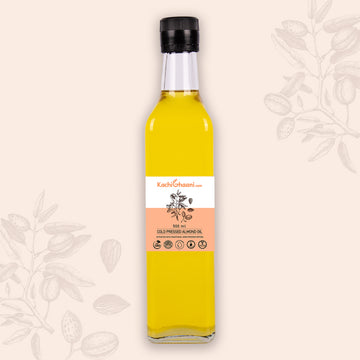
- Almond — light, mild and quick to spread; the one we reach for when the smell of sesame feels like too much.
- Castor — very thick and best used as a blend partner: one part castor oil to two or three parts almond or sesame, or it will feel like tar and wash out like it too.
We have written a fuller comparison of the two classics — coconut vs sesame for hair — and our hair care collection gathers all the champi-friendly oils in one place. Whichever you choose, use an unrefined, Truly Cold Pressed oil: champi predates deodorised oil by several millennia, and the aroma is half the ritual.
How do you do champi, step by step?
- Warm the oil gently. Stand the katori of oil in a bowl of hot water for a few minutes. You want comfortably warm, never hot — test a drop on the inside of your wrist first.
- Start at the crown. Pour a small spoonful, then work it in with fingertip pads — slow circles, firm but kind. Nails stay out of it.
- Move in sections. Part the hair every few centimetres and oil the scalp itself, not just the hair over it. The scalp is the point; the lengths get their share on the way out.
- Finish with the lengths and ends. Whatever oil remains on your palms is usually enough; ends drink up a little extra if the hair is long or curly.
- Take your time. Ten to twenty minutes of massage is the tradition’s pace. This is the part that makes champi champi — rushing it turns a ritual into a chore.
- Let it sit, then wash. An hour is plenty; overnight is the old-school maximum if your pillowcase can take it. Wash with your normal shampoo — thicker blends may want a second lather.
How often, and how much?
Once a week is the classic rhythm, and a tablespoon or two is enough for most hair lengths — the scalp should look glossy, not drenched. More oil does not mean more effect; it mostly means more shampoo. A patch test on the inner arm is sensible the first time you use any new oil, and if your scalp is actively irritated or broken, let it settle before massaging anything into it.
Three small mistakes worth avoiding
- Overheating the oil — warm is the whole idea; hot defeats it and can sting the scalp.
- Scrubbing fast — champi pressure is slow and deliberate, closer to kneading dough than washing a car.
- Skipping the neck and temples — the traditional strokes end with the temples, behind the ears and the top of the neck, and that finish is most of the relaxation.
Warm oil, slow hands, twenty unhurried minutes. Sunday knows what it is doing.