Baby malish, step by step — and the safety rules that matter
The full malish method, plus the half nobody publishes: which oils paediatricians advise against, why oil must never go in a baby's nose, and when not to massage.

It is half past ten on a winter morning. Dadi has the bottle warmed in a katori of hot water and a firm view about how this is done. The baby's mother has a phone in one hand and four contradictory articles open on it. Both of them are right about something, and both of them are missing the part that matters most.
Malish is one of the oldest things Indian families do, and there is a great deal that is good in it — unhurried touch, warmth, a quiet half hour, a routine a baby comes to recognise. The technique half is not complicated. The safety half is where the real content is, and it is the half that almost every page on this subject skips.
Which oil — and what paediatric guidance actually says
Start here, because this is where tradition and current advice genuinely disagree.
The Indian Academy of Pediatrics guidance on paediatric skin care points towards coconut oil, sunflower oil and mineral oil, and it advises against mustard oil and olive oil on infant skin. That is not a soft preference. Mustard oil has been shown to cause irritant and allergic contact dermatitis, and both mustard and olive have been reported to disrupt the skin barrier in babies. If sarson ka tel is the family default, this is the one place we would ask you to change the habit.
A more recent review of Indian newborn skin care lists sunflower, safflower, argan and almond oils among those supporting the skin barrier, with coconut, sesame and mineral oils behaving similarly. So:
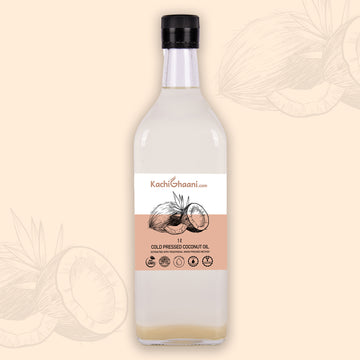
- Coconut oil is the least controversial choice, and the one the guidance names first. It is light, it spreads easily, and it is what much of southern India has always used.
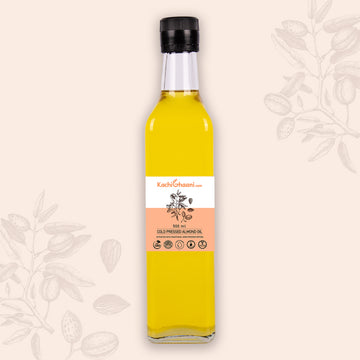
- Almond oil is the traditional badam malish oil of North India, and it is a good emollient — but read the allergy note below before you choose it.
- Black sesame oil is the classical Ayurvedic choice and a proper winter oil. Sesame is also a recognised allergen, so the same caution applies.
- Mustard oil: no. Not on a baby.
The nut and seed caution, stated plainly. Almond is a tree nut and sesame is a seed, and both are recognised food allergens. There is an ongoing concern among allergists that food proteins applied to broken or eczematous skin may make a child more likely to become allergic to that food, rather than less — an association was found in a UK study between products containing crude peanut oil and later peanut allergy in children with eczema. This is not settled science and the oils are not equivalent, but many allergists take the cautious line and advise against nut-oil skincare for children. Our honest position: if your baby has eczema, broken skin, or a family history of nut or seed allergy, use coconut oil and leave almond and sesame alone. If the skin is intact and there is no such history, badam malish is a long tradition and a reasonable choice.
Whichever you pick, choose an unrefined, single-ingredient oil with a date on the bottle, and never a scented or perfumed one.
Before you start
- Patch test, a day ahead. A drop on the inside of the baby's forearm, left for twenty-four hours. Any redness or bumps means a different oil.
- Warm the room, not just the oil. Around 26 to 28°C, no draught, windows and fan off. A cold baby will not settle for anything.
- Wait one to two hours after a feed. Massaging a full stomach brings up milk and makes everyone miserable.
- Warm the oil by standing the katori in hot water for a minute. Never on a flame or in a microwave. Test a drop on your own inner wrist: it should feel barely warm, not hot.
- Cut your nails, take off rings and bangles, wash your hands.
- Lay out a thick towel on the floor or a bed, with a clean nappy and clothes within reach, and put your phone away.
How much oil: about two teaspoons for a newborn, three or four for an older baby. Pour it into your own palm, never straight onto the baby.
The strokes, in order
- Legs. Hold the ankle, and stroke from thigh down to foot with a relaxed hand wrapped around the leg. Five or six times each leg. Then small circles on the sole with your thumb, and each toe between your fingers.
- Arms. The same, shoulder down to wrist, then the palm and each finger.
- Chest. Both hands flat at the centre, moving outward to the sides like opening a book. Light pressure. Never press on the breastbone.
- Tummy. Flat fingers, slow clockwise circles around the navel. Very light. Skip this entirely if the cord stump has not healed.
- Back. Turn the baby onto the tummy, and stroke from the neck down to the bottom with a flat palm, then out across the shoulders. Keep off the spine itself.
- Face and head. A trace of oil only. Light circles on the forehead and cheeks; a gentle palm over the scalp, avoiding any pressure on the soft spot. Nothing near the eyes.
Ten to fifteen minutes is plenty for a newborn; up to twenty or thirty for an older baby if they are enjoying it. Talk while you do it — the voice is half the point.
Reading the baby
The right moment is what health workers call the quiet-alert state: eyes open, body relaxed, looking at you. That baby will take a long massage happily. A baby who arches, stiffens, turns the head away, splays the fingers or starts to grizzle is telling you to stop, and stopping is the correct response. Malish is not a task to be completed.
The safety rules that matter
- Never put oil in a baby's nose, ears or eyes. This is the most important line on this page. Oil instilled into an infant's nose can be breathed into the lungs, and oil in the lungs causes a serious pneumonia that is documented in Indian children. It is a real risk, not a theoretical one. Whatever the tradition says about nasya for babies, do not do it.
- No kajal. Traditional kajal has a documented lead contamination problem and paediatric guidance advises against it.
- Not on broken, inflamed or infected skin. No cuts, no rash, no weeping patches, no unhealed cord stump. Wait, or ask a doctor.
- An oiled baby is a slippery baby. Keep a towel in your hands for the lift, never leave the baby alone on a bed or a table, and be careful on a wet bathroom floor.
- Never leave the oil bottle where a baby or toddler can reach it. Swallowed oil can be aspirated.
- Preterm babies, low birth weight babies, and any baby who is unwell — only on your paediatrician's advice, and with their choice of oil.
- Stop if the skin reacts. Redness, bumps or itching after a massage means that oil is not for this baby.
- No massage in a hot room in summer if there is prickly heat. Guidance is explicit about avoiding oil massage where miliaria is present.
What baby massage will not do
You will read a great many promises. Here is what we will not repeat.
- It does not make a baby sleep through the night.
- It does not increase weight gain, strengthen bones or make a baby taller.
- It does not cure colic, fix digestion or relieve gas.
- It does not improve immunity.
The honest position is that the evidence base for infant oil massage in India is genuinely mixed and incomplete, and the researchers who study it say so themselves. What is not in doubt is that warm, unhurried touch is good for babies and good for the person giving it, that a gentle emollient helps dry skin, and that a predictable routine is worth having. That is a good enough reason on its own.
One last thing, and we mean it: your paediatrician knows your baby and we do not. If their advice differs from anything here — the oil, the timing, whether to massage at all — follow theirs. For the oil itself, see almond oil benefits, honestly assessed.