Can you reuse cooking oil? How many times is safe
Can you reuse cooking oil? Yes, briefly. What FSSAI's limits mean, how many times home cooks can sensibly reuse oil, the signs it is spent, and how to strain, store and dispose of it.

Can you reuse cooking oil? Yes, a few times: once or twice, and at most about three times, if you strain it, store it well and fry similar foods. Throw it out sooner if it turns dark and thick, foams, smokes at a lower heat or smells sharp.
Each frying session breaks oil down a little: heat, air and water from the food turn some of its fat into new compounds that make it darker, thicker and less stable. A little reuse is ordinary home cooking all over the world. Endless reuse, the kind seen in some roadside kadhais, is where the concern lies.
At a glance
- Every fry creates polar compounds, the breakdown products of fat. FSSAI rules say frying oil in food businesses must not exceed 25% total polar compounds (TPC).
- FSSAI warns that frying again and again in the same oil harms health. A common home rule of thumb is no more than three uses.
- Signs oil is spent: much darker colour, a thick or gummy feel, foam that will not settle, smoke at normal frying heat, a sharp or fishy smell.
- Strain used oil once it has cooled, store it covered in a cool, dark place, and use it soon.
- Never pour used oil down the drain. Seal it and dispose of it with household waste or through a collection scheme.
What happens to oil when you fry in it?
It slowly breaks down. Heat, oxygen and the water in food split and change the fat, creating what chemists call polar compounds.
Three things happen at once. Water from the food splits fats into free fatty acids, which lower the temperature at which the oil smokes. Oxygen attacks the fats and creates the sharp-smelling compounds of stale oil. And long heating links fat molecules together into larger ones, which make the oil thick, sticky and foamy. Total polar compounds, or TPC, is a single measure of all this damage. Restaurants can check it with a handheld meter; at home, your eyes, nose and pan do the job. Every oil starts from a different smoke point, and every round of frying pulls it lower.
What does FSSAI say about reusing oil?
FSSAI rules say food businesses must stop using frying oil once its total polar compounds pass 25%, a limit in force since July 2018, and FSSAI warns that using the same oil for repeated frying harms health.
FSSAI also runs RUCO, short for Repurpose Used Cooking Oil, which encourages food businesses to hand their used oil to registered collectors who turn it into biodiesel instead of letting it slip back into the food chain. These rules are written for restaurants, sweet shops and caterers, not home kitchens, but the chemistry is the same at home.
How many times can you reuse frying oil?
At home, once or twice is sensible and about three times is the most. Within that, it depends on what you fried: clean-frying foods leave the oil in far better shape than batter, fish or anything sugary.
| What you fried | Sensible reuse at home | Why |
|---|---|---|
| Puris, bhaturas, plain potato chips | Up to 2 or 3 times | Clean-frying foods leave little behind |
| Samosas, kachoris, mathri | About 2 times | Flour pastry sheds a few crumbs |
| Pakoras, bhajiyas, battered foods | 1 or 2 times | Batter crumbs burn and darken the oil |
| Fish, chicken or meat | Once, for the same food only | Flavours and moisture carry over |
| Heavily spiced or sugary foods | Once at most | Spices and sugar scorch quickly |
How do you know when frying oil should be thrown away?
When it looks, smells or behaves noticeably differently from fresh oil. Any one strong sign is enough.
- Colour. Much darker than when fresh. Some darkening after the first fry is normal.
- Texture. Thicker, sticky or gummy, or leaving a varnish-like film on the kadhai.
- Foam. A layer of foam that does not settle when food goes in.
- Smoke. Smoke at your usual frying heat. Turn the burner off straight away.
- Smell and taste. Sharp, acrid, paint-like or fishy, or food that tastes bitter or stale.
- The food itself. Browning too fast outside while raw inside, or coming out greasy.
Unrefined oils are darker and more aromatic to begin with, so judge them against how they looked and smelled when fresh.
Can you reuse cooking oil without harm?
Reusing cooking oil once or twice is unlikely to harm you. Reusing it again and again is where the concern lies.
Oil that has been heated many times builds up oxidation products, and its smoke contains irritating compounds such as acrolein. A 2020 paper in the journal Nutrients notes that oils rich in polyunsaturated fat form by far the most of these compounds, and that most evidence of harm comes from animal and cell studies, with human research still limited. There is a second problem with some street frying: partially hydrogenated fats such as old-style vanaspati carry trans fat, and WHO lists vanaspati ghee and fried foods among the sources of industrially produced trans fat. The sensible conclusion is short reuse at home, and caution with stalls where the oil is black and thick.
Which oils hold up best for frying and reuse?
Oils rich in monounsaturated or saturated fat break down more slowly than oils rich in polyunsaturated fat.
| Oil (unrefined) | Main type of fat | Smoke point | For frying |
|---|---|---|---|
| Black or yellow mustard | Mostly monounsaturated | About 250°C / 480°F | Good for deep frying |
| Groundnut | More mono than poly | About 180°C / 356°F | Good at moderate heat |
| Coconut | Mostly saturated | About 177°C / 350°F | Stable at moderate heat |
| Sesame (untoasted) | Mixed mono and poly | About 177°C / 350°F | Better for shallow frying and tadka |
| Safflower, flaxseed | Mostly polyunsaturated | Low | Not for frying; best raw |
Whatever you use, keep the oil hot but never smoking, and fry in small batches so the temperature does not crash. Our guide on which oil to deep-fry in goes into more detail.
How should used frying oil be stored?
- Turn off the heat and let the oil cool until just warm. Never pour hot oil.
- Strain it through muslin, or a fine steel sieve lined with paper towel, to catch crumbs, which burn and spoil the oil faster next time.
- Pour it into a clean, dry glass or steel jar with a tight lid, and note the date and what you fried.
- Keep it in a cool, dark cupboard away from the stove, or in the fridge if your kitchen is hot.
- Use it within a week or two, ideally for the same kind of food or for shallow frying.
- Never pour used oil back into your bottle of fresh oil.
Safety: frying and getting rid of old oil
- Stand by your pan while frying. If you see smoke, turn the burner off.
- Keep a lid or baking tray nearby. If oil catches fire, turn off the heat and cover the pan. Never use water.
- Pat food dry before frying, since water makes hot oil spit, and keep children away from the stove.
- Never pour oil down the sink or toilet. Our guide on how to dispose of used cooking oil explains the safe way.
Our frying oils
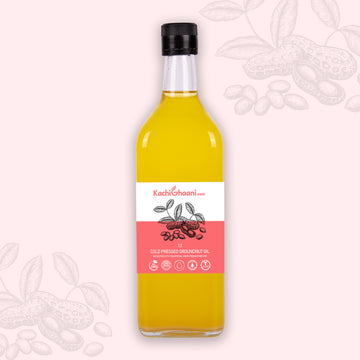
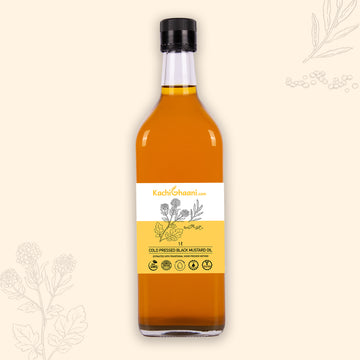
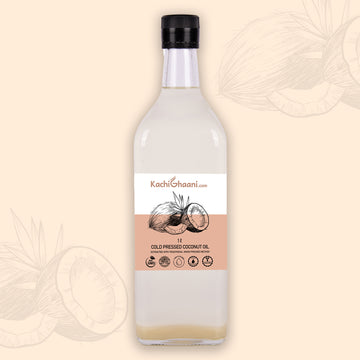
For frying, our Truly Cold Pressed groundnut oil and black mustard oil are the traditional Indian choices, and our coconut oil suits Kerala-style frying. All are pressed slowly in wooden ghaanis and left unrefined, so fry at moderate heat and keep reuse short.
The bottom line
Yes, you can reuse cooking oil, but keep it short: once or twice, and at most about three times, for similar foods. Strain and store it well, watch for darkening, foam, early smoke and sharp smells, and when in doubt, dispose of it responsibly.
Frequently asked questions
Can you reuse oil after frying fish?
Only for more fish, and only once. Fish leaves flavour and moisture in the oil, which speeds its breakdown and carries a fishy taste into anything else you fry. Strain it well, keep it in a separate labelled jar, and use it within a few days.
Should I mix used oil with fresh oil?
It is better not to. Adding fresh oil dilutes the breakdown products but does not remove them, and the damaged oil can hasten the breakdown of the fresh oil. Keep used oil separate, finish it in similar frying, and start the next big batch with fresh oil.
Can used frying oil be used for tadka or sabzi?
Yes, if it is still in good condition. Once-used oil from frying puris or potatoes works well for a tadka or a dry sabzi within a few days. Do not use oil that is dark, thick or sharp-smelling, and keep fish or meat oil away from vegetarian dishes.
Is it safe to eat street food fried in reused oil?
An occasional plate is unlikely to harm you, but oil that is very dark, thick and smoking has been reused too often. Choose stalls where the oil looks clear and is changed regularly, and enjoy deep-fried street food as an occasional pleasure rather than a daily habit.