Castor oil for beard: DIY beard oil with almond and kalonji
Castor oil for beard care, honestly: it softens and adds shine but does not grow hair. A simple 30 ml DIY beard oil with almond and kalonji, and how to apply it properly.

Castor oil for beard growth does not live up to the claims: it will not fill in a patchy beard. Beard density is set mainly by genes and by how your follicles respond to hormones, and no oil has been shown to grow hair where follicles are inactive. What castor oil does well is soften coarse hair and ease dryness.
That still makes a good beard oil worth having, as long as you know what it is for. Below is a simple 30 ml blend, mostly sweet almond oil with a little castor for weight and shine and a few drops of kalonji, and how to apply it so it reaches the skin, where itch and flaking begin.
At a glance
- Beard growth is decided mostly by genes and hormone sensitivity, not by what you put on it.
- Castor oil is thick and sticky, so use it as a small part of a blend, about one sixth.
- A good starter blend: about 24 ml almond oil, 5 ml castor oil and 20 drops (1 ml) of kalonji oil.
- Apply 3 to 8 drops to a damp beard and the skin beneath it, once a day or every other day.
- Patch test first, especially with kalonji, and skip almond oil if you have a tree nut allergy.
Does castor oil for beard growth work?
No. There is no good evidence that castor oil makes beard hair grow faster or fill in bare patches, and no trials have tested it on beards.
Beard hair is driven by androgens, the male hormones. Testosterone is converted into DHT (dihydrotestosterone), and how strongly your facial follicles respond to DHT is largely inherited. That is why a man with normal hormone levels can still have a sparse beard, and why beards often keep filling in until around age 30. Low testosterone is rarely the reason for a thin beard unless levels are clinically low, which only a blood test and a doctor can confirm.
The castor oil claims rest on lab ideas about ricinoleic acid, the fatty acid that makes castor oil thick, and on animal work, including a study in rabbits. A 2022 review of oils used on hair found only weak evidence for castor oil, and that was for scalp hair. We look at that evidence in castor oil for hair growth.
What it does do is worthwhile: it coats coarse hair, adds shine, helps hairs lie flat so the beard looks neater and seals in moisture on dry skin underneath.
What is the best oil for beard care?
A light, easily absorbed oil makes the best base, with a little thick oil for hold and shine. No single oil does everything well.
| Oil | Texture | What it does in a beard | How much |
|---|---|---|---|
| Sweet almond | Light, absorbs well | Softens hair and the skin beneath | The base, about 80 per cent |
| Castor | Very thick, sticky | Weight, shine, tames stray hairs | About 15 to 20 per cent |
| Kalonji (black seed) | Medium, peppery smell | Traditional skin and scalp oil; warm scent | A few drops, about 3 per cent |
| Coconut | Light; solid below about 24°C (75°F) | Softens; can feel heavy on acne-prone skin | An alternative base in hot weather |
Almond oil, the badam rogan of Indian homes, is gentle on skin that turns dry and itchy under a new beard; we assess it honestly in almond oil for skin and hair.
Why not use pure castor oil?
On its own, castor oil is sticky, hard to spread and slow to absorb, so it collects dust and can mat a longer beard. Used as one part in six, you get the shine without the mess.
DIY beard oil: how to make it at home
Mix three oils in a clean dropper bottle. It takes two minutes and makes about 30 ml, which lasts most men one to two months.
- Take a clean, completely dry 30 ml glass dropper bottle, ideally amber or dark glass.
- Add 1 teaspoon (5 ml) of castor oil.
- Add about 20 drops (roughly 1 ml) of kalonji oil.
- Top up with sweet almond oil to the shoulder of the bottle, about 24 ml or just under 5 teaspoons.
- Cap it and roll the bottle between your palms for 30 seconds. Castor oil is heavy and settles, so shake before each use.
- Date the label, keep it somewhere cool and dark, and use it within two to three months.
Adjusting the blend
- Very coarse or curly beard: use up to 2 teaspoons (10 ml) of castor and less almond.
- Oily or acne-prone skin: halve the castor and use fewer drops.
- Scent: kalonji gives a warm, peppery note, so most men need no fragrance. If you add an essential oil, keep it to one or two drops in the whole bottle.
How do you apply beard oil?
Use a few drops on a clean, slightly damp beard, working it into the skin first and then through the hair.
- Wash your face and beard, then pat dry so the hair is just damp.
- Put 3 to 4 drops in your palm for a short beard, 6 to 8 for a long one.
- Rub your palms together to warm the oil.
- Work your fingertips into the skin under the beard, where dryness and itch start.
- Smooth the rest down through the hair, in the direction it grows.
- Comb through with a wide-tooth wooden comb to spread it evenly.
Once a day is enough, or every other day if your skin is oily. If your beard feels greasy an hour later, you used too much.
Can kalonji oil be used on a beard?
Yes, in small amounts and only after a patch test. Kalonji oil, pressed from the black seeds of Nigella sativa, has a long tradition in skin and hair care across South Asia and the Middle East, but it is also one of the more reactive oils.
Doctors have published several reports of allergic skin reactions after people applied black seed oil, including a rare, serious reaction in a woman who used it daily all over her body. That is uncommon, but it is a good reason to keep kalonji to a few drops in a blend rather than using it neat. Our guide to kalonji oil on skin covers what it can and cannot do.
Who should be careful with beard oil?
- Nut allergy: skip almond oil if you have a tree nut allergy; coconut oil can be the base instead.
- Patch test: put a drop of the finished blend on your inner forearm and wait 24 hours before using it on your face.
- Acne-prone skin: use a lighter blend and fewer drops, and stop if you get more spots.
- Beard dandruff: greasy, yellowish flakes on red skin may be seborrhoeic dermatitis, which oils can sometimes make worse. See a dermatologist.
- Sudden bald patches: round, smooth patches appearing in a beard need a doctor, not oil.
- Eyes and mouth: keep the oil away from your eyes and do not swallow it. Our castor oil is for external use only.
Our oils for this blend
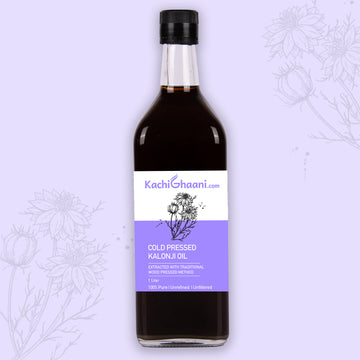
If you want to mix it with our oils, our Truly Cold Pressed almond oil, Truly Cold Pressed castor oil and Truly Cold Pressed kalonji oil are each a single ingredient, pressed slowly in a wooden ghaani, unrefined and free of preservatives. Being unfiltered, they can leave a little natural sediment, so pour from the top of the bottle when you fill your dropper.
The bottom line
No oil will give you a beard your genes have not planned. A simple blend of almond oil, a little castor and a few drops of kalonji will make the beard you have softer, shinier and more comfortable, and the skin beneath it less dry. Patch test, use a few drops and enjoy the routine.
Frequently asked questions
How long does beard oil take to work?
Softness and shine show from the first use, because the oil coats the hair straight away. Less itch and flaking usually take a week or two of regular use. Beard oil will not change how densely your beard grows, however long you use it.
Will beard oil make my beard look thicker?
It can look a little fuller, because oiled hairs lie flatter, reflect more light and stop frizzing out. It does not add hairs or thicken the ones you have. If you want a medical opinion on a patchy beard, a dermatologist can explain your options.
Can I use coconut oil alone as beard oil?
Yes. Coconut oil works well on its own for short beards in warm weather. It turns solid below about 24°C (75°F), so in winter you will need to warm it in your palms first, and some men with acne-prone skin find it too heavy.
Should beard oil go on a wet or dry beard?
On a damp beard, right after washing and towel drying. The oil spreads more evenly and helps hold in the water that is already there. On a soaking wet beard it slides off, and on a bone-dry beard it can feel greasy before it absorbs.
Can I use beard oil every day?
Yes, once a day suits most men. Use only a few drops, wash your beard with a gentle cleanser two or three times a week so oil does not build up, and cut back if your skin turns oily or spotty.