Ghee diya or oil diya: which oil to light this Diwali
A ghee diya for the puja room, oil diyas for the doorstep? How to light a ghee diya, a region by region guide to diya oil, and how to stop new clay diyas drinking your oil.

A ghee diya is a small lamp of clay, brass or silver that burns ghee on a cotton wick, and it is the traditional lamp for the puja room. An oil diya burns sesame, mustard, coconut or castor oil, the usual fuel for doorsteps and the long rows of Diwali lamps. Neither is proven to be more auspicious, and many families use both.
The fuel you pick changes how long a diya burns, how much it smokes, how it behaves on a cold night and what it costs. With Diwali falling on 8 November in 2026, here is how to light a ghee diya well, a region by region guide to diya oil, and an honest word on the claims you will hear.
At a glance
- Ghee diya: the classic lamp for the puja room. A calm, golden flame, and the highest cost.
- Sesame (til) oil: Saturday lamps, temple lamps and most South Indian deepams.
- Mustard oil: the usual oil for diya rows in North India and Bengal, and often the Yama deepam on Dhanteras.
- Castor oil: thick and slow to burn, and a common part of five-oil panchadeepam blends.
- No oil is proven to bring more "positive energy". Choose by family custom, smoke, cost and safety.
Is a ghee diya better than an oil diya?
Not in any way that can be measured, but ghee holds a special place. Many families light a ghee diya before the deity and use oil for the doorstep and the rows outside.
Ghee is butter simmered until only the golden fat is left. In a lamp it gives a soft, golden light and a gentle buttery aroma, but it is also the dearest fuel.
What about smoke? Every open flame makes some. A 2025 laboratory study published in India compared the particles given off by lamps burning kerosene, four plant oils (mustard, peanut, coconut and castor) and cow and buffalo ghee. Kerosene was clearly the worst, and the particles from ghee looked much less like soot. It is a single study, so read it as a hint, not a verdict. A trimmed wick, a clean fuel and an airy room matter more.
How do you light a ghee diya?
Use soft ghee, a short cotton wick and a dry lamp. A ghee diya needs a little more care than an oil one, because ghee sets firm as it cools.
- Start with a clean, completely dry diya of brass, silver or clay. Soak and dry a new clay diya first, as explained below.
- If your ghee has set, stand the jar in warm water for a few minutes until it softens.
- Spoon soft ghee into the diya with a clean, dry spoon, filling it about two-thirds full.
- Press the flat base of a round "flower" wick into the ghee so its tip stands up, or lay a long wick with its tip resting on the lip.
- Give the wick a minute to soak up a little ghee, then light the tip and keep the flame small.
- Set the diya on a metal plate, away from draughts, curtains and loose clothing, and never leave it burning alone.
Which wick goes with which fuel?
Round, flat "flower" wicks (phool batti) sit neatly in ghee. Long, twisted cotton wicks suit oil, which climbs them easily. A wick left too long gives a tall, smoky flame, so trim it to a short tip.
Which oil is best for a diya, region by region?
There is no single best oil for a diya. Most families burn the oil their region has always cooked with, and the table below is a broad guide; customs vary from home to home.
| Region or occasion | Lamp | Usual fuel | Good to know |
|---|---|---|---|
| Puja room, across India | Brass or silver diya, aarti lamp | Ghee, often cow ghee | Sets solid in the cold; use soft ghee and a flower wick |
| North India, Diwali night | Rows of clay diyas on steps, walls and roofs | Mustard oil | Easy to find and stays liquid on cold nights |
| Bengal, Bhoot Chaturdashi | Fourteen small lamps (choddo prodip) | Mustard oil in most homes | Lit on the night before Kali Puja |
| Tamil Nadu, Karnataka, Andhra | Clay agal vilakku, brass kuthuvilakku | Sesame oil (nallennai) or ghee | The everyday temple and household lamp oil |
| Kerala, every dusk | Tall brass nilavilakku | Coconut oil or gingelly (sesame) oil | Coconut oil turns solid below about 24°C (75°F) |
Why is a sesame oil lamp lit on Saturdays?
Saturday is Shani's day, and sesame seeds and sesame oil are the traditional offerings to Shani (Saturn). So many South Indian homes light a til oil lamp on Saturday evening. In North India the same custom usually uses mustard oil, poured as an offering at a Shani shrine or burned in a diya under a peepal tree. Sesame oil is also simply the everyday lamp oil of the South; in Tamil it is nallennai, "good oil". Our guide to til, gingelly and nallennai explains the names.
Coconut oil in Kerala
In Kerala the nilavilakku is lit at dusk with coconut or gingelly oil. A 2023 Kerala Kaumudi report said several temples in Ernakulam district had switched to coconut oil in place of adulterated sesame oil and cheap lamp oil. That is a useful lesson for homes too: a pure, single oil is a safer bet than an unlabelled "lamp oil".
Which oil is used for the Yama deepam on Dhanteras?
Mustard oil in many homes and sesame oil in others, so follow your family's custom. The Yama deepam is a lamp lit on the evening of Dhanteras (Friday 6 November in 2026) for Yama, the god of death, as a prayer for the family's long life.
- Take a clay diya. Many families use a four-wick (chaumukha) lamp, but a single wick is fine.
- Fill it with mustard or sesame oil.
- Place it outside the main door, on a small heap of grain or a plate, with the flame facing south, the direction linked with Yama.
- In a flat, a steel plate just inside the front door works, well away from curtains.
What is panchadeepam oil made of?
Panchadeepam ("five lamp") oil is a blend of five oils, most often sesame, castor, coconut, neem and mahua (iluppai), and some makers add ghee. Recipes differ from one maker to the next, so read the label.
Castor oil does much of the work in these blends. It is very thick, so it climbs the wick slowly and the lamp lasts longer. India has burned it for a long time: an environmental heritage centre in Chennai notes that castor oil use in Indian lamps is documented from around 2000 BC.
Blended lamp oils vary a great deal and adulteration is a known problem, so read the label, or make a small blend at home from oils you trust.
How do you stop a clay diya from soaking up oil?
Soak new clay diyas in water before their first use, then dry them completely. Unglazed clay is full of tiny pores; when they are already full of water, far less of your oil vanishes into the clay.
- Soak new diyas in clean water for two to three hours, or overnight.
- Dry them fully in the sun or an airy room. A damp diya makes the wick sputter.
- Stand each diya on a metal plate, a brass tray or a tile, never straight on cloth or wood.
- Fill to just below the rim and rest the wick so its tip lies on the lip.
- Trim the wick short, and top up only after the flame is out.
Diya safety on Diwali night
- Never leave a lit diya alone, and keep matches and lighters away from children.
- Keep lamps clear of curtains, loose dupattas, sari pallus and children's clothes, especially synthetic fabrics, which melt as they burn.
- Place diyas on a surface that cannot burn, out of reach of pets and toddlers.
- If oil catches fire, never throw water on it. Smother it with a metal lid or sand, and keep a bucket of sand handy.
- Air the room. Smoke from any lamp or incense can bother people with asthma, so keep a window open in a small puja room.
- Do not cook with oil that has been in a lamp, and keep lamp oil in its own labelled bottle.
Our ghee and oils for your diya
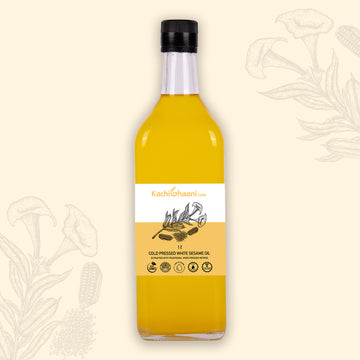
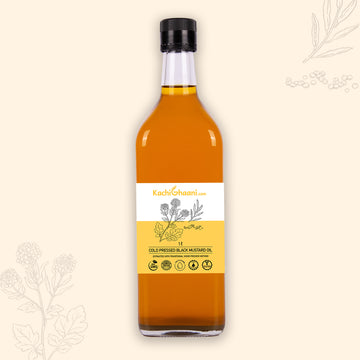
If you want a single-ingredient fuel, our A2 Gir cow ghee is churned by the bilona method. Our Truly Cold Pressed white sesame oil and Truly Cold Pressed black mustard oil are pressed slowly in wooden ghaanis with nothing added. To be fair, a lamp does not need a premium food oil. Many families keep one everyday bottle for daily lamps and save their best ghee for festivals and the puja room.
The bottom line
A ghee diya suits the puja room and oil diyas suit the doorstep and the Diwali rows, but no fuel is proven to make a lamp more auspicious or more powerful. Ghee, sesame, mustard, coconut and castor all burn well, so follow your family's custom, choose a pure fuel, keep the wick trimmed and never leave a flame alone.
Frequently asked questions
Can I use cooking oil to light a diya?
Yes. Any pure vegetable oil will burn in a diya, and the traditional lamp oils, sesame, mustard and coconut, are cooking oils too. Avoid reused frying oil, which can smoke and smell, and keep lamp oil in a separate bottle. To get rid of old oil, see our guide to disposing of used cooking oil safely.
Should a ghee diya use cow ghee?
Tradition favours it. In Hindu ritual it is ghee from cow's milk that carries religious meaning, so many families keep cow ghee for the puja lamp. Any pure ghee will burn, though. If a product sold for lamps does not say it is pure ghee, read the label to see which fats it contains.
Which oil is best for an akhand jyoti?
An akhand jyoti is a lamp kept burning without a break, for example through the nine nights of Navratri. Families usually use ghee or sesame oil in a large brass lamp with a glass cover. Because it burns through the night, set it on a metal tray, far from anything that can catch fire, and check it often.
Is mustard oil good for a diya?
Yes. Mustard oil is the traditional fuel for Diwali rows across North India and for many lamps in Bengal. It is easy to find, stays liquid in cold weather and burns steadily. Keep the wick trimmed to limit soot, and keep lit diyas outdoors or in a well-aired room.
Can you mix two oils in one diya?
Yes. Panchadeepam oil is exactly that, a blend of five oils. A simple home mix is sesame oil with a little castor oil, which makes the fuel thicker and slower to climb the wick. Ghee can be mixed with oil too, though it may set and separate on a cold night.
Sources
- Yama Deepam 2026: the south-facing lamp on Dhanteras, Hindutone, 2026
- Castor bean plant, C.P.R. Environmental Education Centre, 2022
- Lamp oils in Kerala temples, Kerala Kaumudi, 2023
- Jangir R. et al., particulate matter emitted from diya, Interdisciplinary Journal of Yagya Research, 2025
- Ghee, Encyclopaedia Britannica, accessed 2026