Shata dhauta ghrita: the 100-times washed ghee, explained
Shata dhauta ghrita is ghee washed with cold water a hundred times into a soft white cream. How it is made, what it may do for dry skin, who should skip it, and how to store it safely.

Shata dhauta ghrita is ghee that has been washed with cold water 100 times, usually by hand in a bronze or copper vessel, until it turns into a light, white, fluffy cream. It is a classical Ayurvedic preparation used on dry skin. There are no proper clinical trials on skin, and because it holds water it spoils faster than ghee.
It has travelled from Ayurvedic clinics to clean-beauty shelves in London and New York, sold as an ancient face cream. Making it is simple but slow, and the result can be a lovely, rich moisturiser for dry skin. Here is the method, what it may and may not do, who should skip it, and how to keep it safe.
At a glance
- Shata means a hundred, dhauta means washed and ghrita means ghee.
- Repeated washing and rubbing work water and air into the ghee, turning it pale, soft and creamy.
- It is traditionally applied to dry, rough or irritated skin; modern evidence on skin is thin.
- It suits dry skin better than oily or acne-prone skin.
- Keep it in the fridge, use a clean spoon, and finish it within a few weeks.
What is shata dhauta ghrita?
A traditional Ayurvedic cream made by washing ghee again and again with cold water. The name describes the method, and a version washed a thousand times is called sahasra dhauta ghrita.
It appears in the classical Ayurvedic literature as an external application, and practitioners still prepare it for dry, cracked or burning skin, rough lips and heels. In Ayurvedic thinking ghee is cooling and nourishing, and the washing is believed to make it lighter and more cooling still. Those are traditional ideas. Modern research on the preparation is limited to small studies and laboratory analyses, with no solid clinical trials on facial skin. For the wider tradition, see what Ayurveda actually holds about ghee.
How do you make 100-times washed ghee at home?
With clean hands, cold water and two to three hours of patience. Work in small batches.
- Wash your hands, a wide bronze (kansa) or stainless-steel plate and a spoon. Chill a jug of clean, filtered water.
- Put 3 to 4 tablespoons (45 to 60 ml) of ghee on the plate. If it is hard, let it soften first.
- Pour about half a cup (120 ml) of cold water over it.
- Rub the ghee and water together with your palm or fingertips in firm circles for about a minute. The ghee breaks into soft flakes and turns cloudy.
- Tilt the plate and pour the water away, holding the ghee back with your hand.
- Repeat with fresh cold water, keeping count with a tally on paper.
- As the washes add up, the ghee turns from gold to off-white, and then to a soft, white, airy cream.
- After the last wash, drain off every drop of water you can, spoon the cream into a clean glass jar and refrigerate it.
Keep the water cold and the room cool; if the ghee turns oily, chill the plate for a few minutes. Copper and bronze vessels are traditional, but metals such as copper speed up rancidity in fats, which is one more reason to make small batches and keep them cold. A stainless-steel plate works too.
Shata dhauta ghrita benefits: is it good for the face?
It can be a rich, soothing moisturiser for dry skin, but there is no evidence that it reduces wrinkles, lightens pigmentation or tightens skin. The shata dhauta ghrita benefits described in Ayurveda are softening, soothing and cooling dry, rough or burning skin; of these, softening is the easiest to explain. Ghee is mostly saturated fat, which forms a soft, sealing layer that slows water loss. The American Academy of Dermatology notes that extra moisture can help reduce the appearance of fine lines for a while, which is what any good moisturiser does.
If you have dry skin, try a pea-sized amount warmed between your fingertips and pressed onto damp skin at night. It also suits dry lips, cuticles, elbows and cracked heels; our overnight routine for cracked heels shows the method for feet.
Does shata dhauta ghrita clog pores?
Nobody knows for sure, because no good study has tested it. What we do know is that it is rich and heavy, and heavy creams can worsen breakouts on oily or acne-prone skin. Patch test first, as the AAD suggests: apply it to a quarter-sized spot on your inner arm twice a day for 7 to 10 days. If that goes well and you are prone to spots, try it on a small area of your face for a week or two before using it more widely.
How long does washed ghee last?
Much less time than ordinary ghee. Ghee keeps for months because it holds almost no water; Indian standards cap its moisture at 0.5 percent. Washing deliberately works water into it, and water, together with the traces of milk solids in ghee, lets microbes grow and fats break down faster. So handle it as a fresh cream, not a pantry staple.
| Ghee | Shata dhauta ghrita | |
|---|---|---|
| Texture | Grainy or smooth, golden | Light, fluffy, white cream |
| Water | Almost none (no more than 0.5 percent) | Holds water from washing |
| Where to store | Cool, dark cupboard | Fridge, about 4°C (39°F) |
| Practical keeping time | Months | A few weeks; our cautious advice is 2 to 4 |
| Main use | Cooking | External use on skin |
Use a clean, dry spoon each time rather than your fingers, and throw it away if it smells sour or cheesy, changes colour, shows spots, or separates into watery, off-smelling layers.
Who should skip it or take care?
- Oily or acne-prone skin: try it only after a patch test, or skip it.
- Milk allergy: ghee carries traces of milk protein, so avoid it unless your allergist says otherwise.
- Burns: tradition used washed ghee on burning skin, but for a real burn, follow first aid. The NHS advises cooling burns with cool running water and not putting creams, oils or butter on them. Get medical help for serious burns.
- Broken, infected or weeping skin, and eczema flares: do not apply homemade preparations; see a doctor.
- Eyes: keep it out of them.
- Babies: a homemade, non-sterile cream is not a good choice for a baby's face; ask your paediatrician.
Starting with our ghee
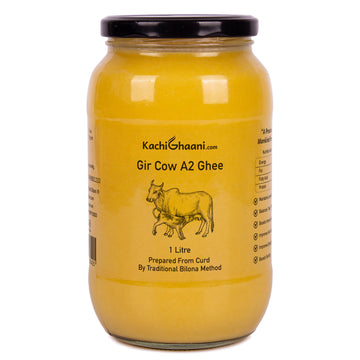
If you want to make it, start with a ghee you trust. Our A2 Gir cow ghee is made by the bilona method: milk from Gir cows set as curd, hand-churned into makkhan, then slowly simmered. It is naturally golden and grainy; the washing will turn it pale and creamy. Make a small batch first and see how your skin likes it.
The bottom line
Shata dhauta ghrita is a patient, traditional way to turn ghee into a soft skin cream. It can be a comforting moisturiser for dry skin, but it is not proven to do more, it can be too heavy for acne-prone faces, and because it holds water it belongs in the fridge and should be used within a few weeks.
Frequently asked questions
Can I use shata dhauta ghrita on my lips?
Yes. A thin layer suits dry or chapped lips, especially at night. It is made only from ghee and water, so a little swallowed is not a worry if it was made cleanly and kept cold. Use a clean spoon, and make fresh small batches rather than keeping one for months.
Do I have to wash it exactly 100 times?
A hundred is the classical number, and it gives the light, fluffy texture people expect. Fewer washes leave a softer, more ghee-like cream. There is no evidence that the exact count changes what it does for skin, so think of the number as a recipe for texture rather than a rule.
Can I add saffron, aloe vera or essential oils?
The classical preparation is plain. Additions can irritate sensitive skin, essential oils in particular, and water-rich ingredients such as aloe gel shorten its life further. If you want to experiment, make a tiny separate batch, patch test it and keep it cold.
Is shata dhauta ghrita the same as whipped ghee?
No. Whipped ghee is ghee beaten with air until fluffy, without water, so it keeps like ordinary ghee. Shata dhauta ghrita is washed with water a hundred times, so it holds water, looks whiter and needs the fridge. They look alike but behave differently.
Can I use buffalo ghee for washed ghee?
You can, and it will wash into a cream too, but Ayurvedic tradition prefers cow ghee for this preparation. There is no good evidence that one works better on skin than the other. Whichever you choose, start with fresh, good-smelling ghee, because washing cannot rescue ghee that is already stale.
Sources
- Warehousing Development and Regulatory Authority (Government of India), Ghee quality specifications (accessed 2026)
- NHS, Burns and scalds (accessed 2026)
- American Academy of Dermatology, How to test skin care products (accessed 2026)
- American Academy of Dermatology, Getting the most from anti-ageing products (accessed 2026)