Does cooking oil go bad? How to tell if oil is rancid
Does cooking oil go bad? Yes: rancid oil smells like crayons or old paint and tastes bitter. How to check any bottle, which oils turn fastest, how long they last and how to store them.

Does cooking oil go bad? Yes. Over months, air, light and heat break down its fats until it turns rancid: it smells sharp and stale, often like crayons, putty, old paint or stale nuts, and tastes bitter and scratchy at the back of the throat. Fresh oil smells of its seed, or of very little.
Unopened, most oils keep until their best-before date; once opened, the clock runs faster. Rancid oil is unlikely to make you ill straight away, but it has lost its flavour and much of its goodness, and it is not something to eat regularly. Here is how to tell if oil is rancid, which oils turn fastest, and how to make each one last.
At a glance
- Rancidity is mostly oxidation: oxygen, helped by light and heat, breaks fats into sharp-smelling compounds.
- Smell first, then taste a drop. Crayon, putty, paint, stale-nut or fishy notes and a bitter aftertaste mean the oil has turned.
- Oils rich in polyunsaturated fat, such as flaxseed, turn fastest; oils rich in saturated fat, such as coconut, turn slowest.
- Cloudiness in the cold and a little sediment are normal in unfiltered oils, not signs of rancidity.
- Store oil tightly closed, in the dark and away from the stove, and finish an opened bottle within a few months.
What does rancid oil smell like?
Sharp, stale and "off". People describe it as crayons, putty, wet cardboard, old paint or stale nuts, and delicate oils such as flaxseed can smell fishy.
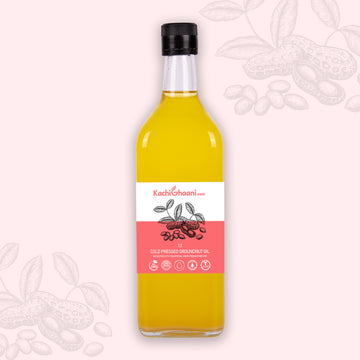
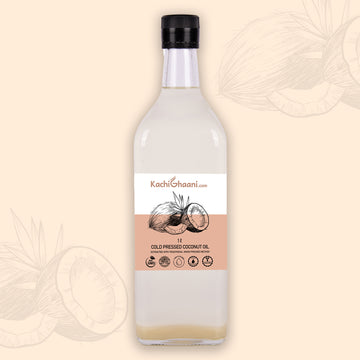
It helps to know what fresh oil should smell like. Cold pressed groundnut oil smells gently of peanuts, sesame oil is nutty, coconut oil smells mildly of coconut, and flaxseed oil is mild and slightly grassy. Mustard oil is the exception that fools people: its strong, nose-tingling pungency is natural and is exactly why it is loved in pickles. Rancid mustard oil smells stale or paint-like underneath that sharpness.
How to tell if oil is rancid: the smell, taste and look test
- Pour a teaspoon into a small white bowl or spoon, so you can see its colour and smell it properly.
- Rub a drop between your fingertips and smell it. Note any crayon, putty, paint, cardboard or fishy smell.
- Taste a drop on the tip of your tongue. Rancid oil tastes bitter, soapy or stale and leaves a scratchy feeling in the throat.
- Look at it. Much darker than when new, thicker, or with a sticky film around the bottle neck, are warning signs.
- If you are unsure, compare it with a fresh bottle of the same oil.
| What you notice | Normal or rancid? |
|---|---|
| Cloudy or solid in cold weather | Normal; it clears at room temperature |
| A little sediment in unfiltered oil | Normal |
| Strong, pungent smell in mustard oil | Normal; that is mustard |
| Nutty aroma in cold pressed groundnut or sesame oil | Normal |
| Crayon, putty, paint or wet-cardboard smell | Rancid |
| Bitter, scratchy aftertaste | Rancid |
| Fishy smell in flaxseed oil | Rancid |
| Sticky, varnish-like film on the bottle neck | Oil has oxidised there; check the rest |
If cloudiness or sediment worries you, our guide to why cold pressed oil looks cloudy explains what is normal.
Why does cooking oil go bad?
Mostly because of oxygen. Air reacts with the fats, especially polyunsaturated ones, in a chain reaction that light and heat speed up.
The first products of this reaction have little smell. They then break down into aldehydes and similar compounds, which give rancid oil its sharp, stale smell. A 2020 paper in the journal Nutrients notes that oils rich in polyunsaturated fat form these products both when heated and when stored at room temperature for long periods. Flaxseed oil reacts with air so readily that, as linseed oil, it is used to finish wood, and fire services even warn that rags soaked in it can heat up as it oxidises.
Natural antioxidants, such as vitamin E and the lignans in sesame, hold the reaction back for a while. Once they are used up, oxidation speeds up, which is why an oil can seem fine for weeks and then turn quickly. A second, smaller cause is water: moisture and enzymes can split fats into free fatty acids, giving a soapy taste.
Which oils go rancid fastest?
Those richest in polyunsaturated fat. The same 2020 paper ranks the formation of these oxidation products as polyunsaturated fats far above monounsaturated, and monounsaturated far above saturated.
| Oil | Main type of fat | How fast it turns | Storage tip |
|---|---|---|---|
| Flaxseed | Polyunsaturated (omega-3) | Fastest | Fridge, tightly closed; finish within a few weeks of opening |
| Safflower (high-linoleic), walnut | Polyunsaturated | Fast | Cool and dark; buy small bottles |
| Sesame | Mixed mono and poly | Moderate; natural antioxidants slow it | Cool cupboard |
| Groundnut, almond, mustard | Rich in monounsaturated fat | Moderate | Cool cupboard, away from the stove |
| Coconut | Mostly saturated | Slowest | Cool cupboard; solid in winter is normal |
How long does cooking oil last once opened?
As a rough guide, finish an opened bottle of unrefined oil within one to three months, and flaxseed oil within a few weeks. Refined oils usually keep longer, because refining removes free fatty acids, pigments and traces of water that speed spoilage, though it also strips away flavour.
An unopened bottle kept cool and dark should be good until its best-before date. Unrefined oils with no preservatives, like ours, carry a best-before of about four to six months from pressing. Buy a size you will finish within a couple of months of opening, and check the date when you shop. Our myth check on whether cold pressed oil goes bad too fast looks at this in more detail.
Is it safe to cook with rancid oil?
A little rancid oil is unlikely to make you ill straight away; it is not like food poisoning. But it tastes bad, it has lost nutrients, and its oxidation products are best not eaten regularly.
Researchers have linked these compounds to long-term harm, but mostly in animal and cell studies, and the human evidence is still weak. The practical rule is simple: if it smells off, throw it out. Do not try to "burn off" the smell by heating it, because heat only speeds oxidation. Do not use rancid oil on your skin or hair either, as it can irritate. And never pour it down the drain; our guide on how to dispose of used cooking oil explains the safe way.
How to store oil so it lasts
- Keep the cap tight. Air is the main enemy.
- Store bottles in a dark cupboard, not on a sunny window sill.
- Keep oil away from the stove, oven and other warm spots.
- Never top up an old bottle with new oil; finish it, wash it and dry it first.
- Keep flaxseed oil in the fridge. It may thicken or cloud, which is harmless.
- Write the opening date on the label.
Our oils and freshness
We press in small batches and hold about a week's stock. Our Truly Cold Pressed flaxseed oil is the most delicate, so keep it in the fridge, finish it quickly and never heat it; our four ways to use flaxseed oil help you do that. Our groundnut oil and coconut oil keep comfortably in a cool cupboard. All are unrefined with no preservatives, so the storage habits above really matter.
The bottom line
Your nose and tongue tell you most of what you need: crayon, putty, paint or stale-nut notes and a bitter, scratchy aftertaste mean the oil has turned. Rancid oil is unlikely to harm you at once, but it is not worth eating, so replace it and store the next bottle cool, dark and tightly closed.
Frequently asked questions
Does oil go bad if it is unopened?
Yes, slowly. Even sealed, oil keeps changing, especially in a warm or bright place. Kept cool and dark, an unopened bottle should be good until its best-before date. After that, check the smell and taste before using it, and replace it if anything seems off.
Can rancid oil be used on skin or hair?
It is better not to. Oxidised oil can irritate the skin and scalp, and its stale smell lingers. Use fresh oil for massage and hair care, keep body oils capped and away from bathroom heat and sunlight, and never use stale oil for baby massage.
Does keeping oil in the fridge stop it going rancid?
Cold slows oxidation a great deal, so the fridge helps delicate oils such as flaxseed and walnut keep longer. Most other oils keep well in a cool, dark cupboard. Refrigerated oils may turn cloudy or thick, which is harmless and clears at room temperature.
Why does my mustard oil smell so strong? Is it rancid?
A strong, pungent, nose-tingling smell is normal for mustard oil. It comes from natural compounds released from the mustard seed, and it is why people love the oil in pickles. Rancid mustard oil smells stale or like old paint underneath that pungency, and it tastes bitter.
Does ghee go rancid too?
Yes, but slowly. Ghee is mostly saturated fat with almost no water, so it keeps far longer than most oils, about a year when stored cool and dry and scooped with a clean, dry spoon. Rancid ghee smells sour or sharp instead of nutty and should be thrown away.