Til gud at Makar Sankranti: why sesame and jaggery in winter
The story behind sharing til gud at Makar Sankranti, how each region makes it, what sesame and jaggery actually bring nutritionally, and the festive sesame oil bath some families still take.

Til gud, sweets made of sesame (til) and jaggery (gud or gur), is shared at Makar Sankranti in mid-January because these warm, oily, sweet foods suit the coldest, driest weeks of the year. In Maharashtra it comes with a wish: 'tilgul ghya, goad goad bola', take til gud and speak sweetly.
Makar Sankranti marks the sun's entry into Makara (Capricorn) in the Indian calendar and is celebrated as the turn towards longer, warmer days. Under different names, from Lohri in Punjab to Pongal in Tamil Nadu and Magh Bihu in Assam, almost every region marks the season with sesame, jaggery or both. Here is why, what these foods actually bring, and how many laddoos are too many.
At a glance
- Makar Sankranti falls on 14 January in most years, and sometimes on 15 January.
- Til gud takes many forms: tilgul laddoo, chikki, gajak, rewri, til-kut and Karnataka's ellu-bella.
- Ayurveda describes sesame as warming and unctuous, and folk wisdom calls jaggery warming too: both suit the cold, dry season.
- Whole sesame seeds are rich in calcium (975 mg per 100 g by USDA figures), fat and fibre. Jaggery adds flavour and a little iron, but it is mostly sugar.
- One or two small laddoos are tradition, not a supplement.
Why do we eat til and gud on Makar Sankranti?
For the season and for the symbolism.
Sankranti falls in the coldest, driest part of the North Indian winter. Sesame and jaggery both keep well through the season and pack a lot of energy into a small bite. Ayurveda describes sesame as warming and unctuous, the qualities it prescribes against the dryness of vata in the cold months, and folk wisdom calls gur warming too. The symbolism is just as old: sharing something sweet to mend quarrels, with sticky jaggery holding countless tiny seeds together as a picture of friendship.
| Region | Festival | How til and gud appear |
|---|---|---|
| Maharashtra | Makar Sankranti | Tilgul laddoos, tilgul vadi and sugar-coated sesame 'halwa' |
| Gujarat | Uttarayan | Sesame and peanut chikki, eaten between rounds of kite flying |
| Punjab and Haryana | Lohri (13 January) | Rewri, gajak, peanuts and popcorn around the bonfire |
| Bihar and eastern Uttar Pradesh | Sakraat or Khichdi | Til-kut and til laddoo, with dahi-chura |
| Karnataka | Sankranti | Ellu-bella: sesame, jaggery, peanuts, roasted gram and dry coconut |
| Assam | Magh Bihu | Til pitha, rice rolls filled with sesame and jaggery |
| Tamil Nadu | Pongal | Sweet pongal of rice, moong dal and jaggery |
What does 'tilgul ghya, goad goad bola' mean?
It is Marathi for 'take til gud and speak sweetly'.
In Maharashtra, friends, neighbours and relatives exchange tilgul with this line, a gentle way to let old grudges go. Women wear black sarees, welcome on this one festival because black is said to soak up the winter sun, and gather for haldi-kunku. Newly-weds and babies are dressed in halwa jewellery, strings of white sugar-coated sesame. Karnataka has its own version of the wish: 'ellu bella thindu olle maathaadi', eat sesame and jaggery and speak good words.
Are sesame and jaggery good to eat in winter?
In small amounts, yes. Sesame brings real nutrition; jaggery mostly brings sweetness.
| Per 100 g | Whole sesame seeds (USDA) | Jaggery (review data) |
|---|---|---|
| Energy | 573 kcal | About 383 kcal |
| Main components | 49.7 g fat, 17.7 g protein, 11.8 g fibre | 65 to 85 g sucrose, 9 to 15 g other sugars |
| Calcium | 975 mg | Small amounts |
| Iron | 14.6 mg | Varies widely; one review lists about 11 mg |
Two honest caveats. Much of sesame's calcium sits in the hull, so the hulled white seeds common in tilgul carry far less, and some of the calcium is bound up and poorly absorbed. Still, 10 g of whole sesame brings close to 100 mg of calcium, about a tenth of the 1,000 mg most adults need, along with good fats and fibre. Jaggery, meanwhile, is mostly sugar, and its iron varies with how and in what pans it is made. For more, read Is jaggery just sugar? An honest answer.
How many til gud laddoos are too many?
For most healthy adults, one or two small laddoos a day over the festival is plenty.
A walnut-sized laddoo of about 20 g, made with equal parts sesame and jaggery, carries roughly 95 kcal: about 57 from 10 g of sesame and 38 from 10 g of jaggery. Two such laddoos bring about 20 g of jaggery, which is close to the whole day's sugar that ICMR-NIN suggests for an adult, 20 to 25 g.
- Roll them smaller.
- Use a little less jaggery and more roasted sesame and peanuts.
- Count chikki, gajak and rewri in the same daily total.
- Share them generously, which is the point of the festival anyway.
Why do some families bathe with sesame oil on Sankranti?
It is an old festive custom with the same logic as the food: oil for skin made dry by the cold.
In some homes the festival morning begins with warm sesame oil massaged into the scalp and body and washed off with warm water, sometimes with a paste of gram flour and sesame as an ubtan. Others simply add a pinch of sesame seeds to the bath water. The festive oil bath is familiar across India, most famously on Diwali morning, and it follows the Ayurvedic practice of abhyanga, explained in abhyanga at home.
- Warm 2 to 3 tablespoons (30 to 45 ml) of sesame oil by standing a small bowl of it in hot water, then test a drop on your wrist.
- Massage the scalp first, then the body, with long strokes on the limbs and circles on the joints, for 10 to 15 minutes.
- Rest for a few minutes while the oil soaks in.
- Wash off with warm water and a mild cleanser or a besan (gram flour) paste.
- Step carefully: an oiled bathroom floor is slippery.
Til oil goes by many names around India; our guide to til, gingelly and sesame oil untangles them.
Who should be careful with til gud?
- Sesame allergy: sesame is a major allergen, and the US added it to its list of major food allergens in 2023. Anyone allergic should skip both the sweets and the oil.
- Diabetes: count til gud as a sweet and agree a portion with your doctor.
- Small children: ICMR-NIN advises no added sugar for children under two, and hard chikki or whole laddoos can be a choking risk for young children, so offer soft, crumbled til gud only to older ones.
- Teeth: chikki is hard and sticky, so take care with dental work.
- The oil bath: patch test first, keep oil out of the eyes and mind the slippery floor.
Making til gud at home
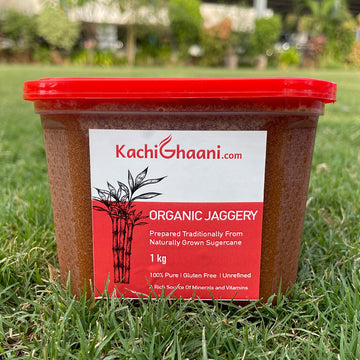
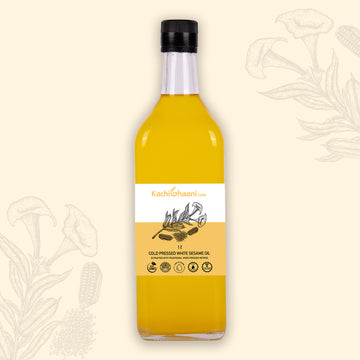
If you make til gud at home, our jaggery is cooked in open pans in small batches with no chemical clarifiers, so it melts into a clean, caramel-scented syrup for laddoos. For the festival oil bath, our Truly Cold Pressed white sesame oil and Truly Cold Pressed black sesame oil are pressed slowly in a wooden ghaani and left unrefined and untoasted.
The bottom line
Til gud is shared at Makar Sankranti because sesame and jaggery suit the coldest weeks of the year, and because sharing sweetness is a wish for kinder words. Sesame brings genuine nutrition and jaggery brings mostly sugar, so enjoy one or two small laddoos, pass the rest around and speak sweetly.
Frequently asked questions
Is til gud the same as til laddoo?
Mostly, yes. Til laddoo is the round sweet of sesame bound with jaggery. In Maharashtra, tilgul also includes flat tilgul vadi and the small white sugar-coated sesame sweets called halwa. Other regions shape the same pairing into chikki, gajak, rewri or til-kut.
Why do people wear black on Makar Sankranti?
In Maharashtra, Sankranti is the one festival where black clothes are welcome, especially for women and newly-weds. The usual explanation is practical: the festival falls in the coldest weeks, and black absorbs the sun's warmth. Black sarees with white halwa jewellery have become the day's signature look.
Which sesame is better for til gud, white or black?
Both work. Hulled white sesame gives a lighter colour and a milder, nuttier taste, which is why it is the usual choice for tilgul. Black sesame, usually sold with its hull, tastes stronger and slightly bitter, and because the hull is kept, it carries much more calcium.
Is til gud good for weight loss?
No. Sesame and jaggery are both energy-dense, and a 20 g laddoo carries roughly 95 kcal. Til gud is a festive sweet to share and enjoy in small amounts, not a slimming food. If you are watching your weight, roll smaller laddoos and keep to one a day during the festival.
Can I make til gud without jaggery?
You can bind sesame with dates or sugar syrup, but those are sugars too, so the calories barely change. Jaggery is the traditional choice for its deep caramel flavour. To lighten the laddoos, use a little less jaggery and more roasted sesame and peanuts, and keep them small.