The best body oil for winter, and why it changes in summer
The right body oil for winter is not the right one for summer. Ayurveda picks warming sesame and mustard oil for the cold, cooling coconut for the heat and gentle almond in between. Here is why.

For most people, sesame oil is the best body oil for winter. Ayurveda calls it warming and nourishing, it stays liquid in the cold, and like other oils it helps seal moisture into dry winter skin. Mustard oil is the North Indian winter favourite for sturdy skin. In summer, lighter coconut oil takes over, and almond oil works in between.
The idea that your body oil should change with the season comes from ritucharya, Ayurveda's seasonal routine. It sounds old-fashioned, but anyone who has tried to scoop solid coconut oil out of a bottle in December already understands half of it. Here is the seasonal logic, oil by oil, and the part modern skin science agrees with. If you would rather choose by body type, our vata, pitta and kapha massage oil guide does that.
At a glance
- Winter: sesame oil for most people; mustard oil for sturdy, non-sensitive skin.
- Summer: coconut oil, which feels light and is traditionally called cooling.
- All year, and for the face or sensitive skin: almond oil.
- Coconut oil turns solid below about 24°C (75°F), one practical reason it suits warm months.
- The science agrees on one thing: oil applied to damp skin after a bath helps hold moisture in.
What is the best body oil for winter?
Sesame oil, for most people. In Ayurveda, cold, dry, windy weather is said to aggravate vata, the dosha of dryness and movement, and sesame oil is the classic oil to settle it: warming, heavy and deeply nourishing in the tradition. The classical texts recommend oil massage, abhyanga, as a daily habit, and especially in the cold months.
It is practical too. Untoasted sesame oil stays liquid on a cold morning, spreads easily and has only a light, nutty smell. Warm the bottle in a bowl of hot water, massage from the scalp down to the feet, wait 10 to 20 minutes, then take a warm bath. Our guide to abhyanga at home walks through the full routine.
Is sesame oil warming for the body?
In the tradition, yes. Ayurveda describes sesame oil as hot in potency (ushna), which is why it is favoured in cold weather. That is a traditional quality, not a thermometer reading. Rubbing in warm oil warms the skin for a while, and the massage itself brings a pleasant glow, but no oil changes your body temperature in any lasting way.
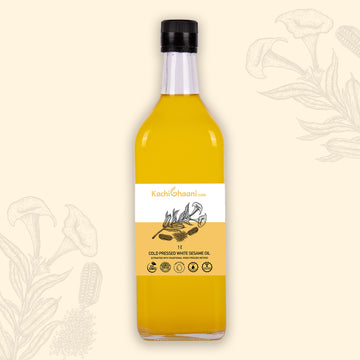
White and black sesame oils are both used. White sesame oil is the everyday massage oil across much of India; black sesame oil, which tradition prizes highly, is a richer alternative.
Is mustard oil good for skin in winter?
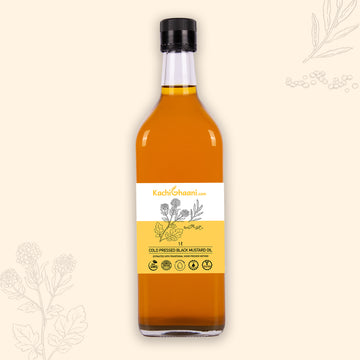
For sturdy, non-sensitive skin, many people love it. In Punjab, Bihar, Bengal and much of the north, a mustard oil massage in the winter sun is a rite of the season. It feels warmer than sesame oil, and that warmth is partly real chemistry: mustard oil's pungent compound, allyl isothiocyanate, the same one that gives wasabi its kick, stimulates nerve endings in the skin, so the skin feels warm.
That same compound is why mustard oil does not suit everyone. It can sting, redden or irritate sensitive, eczema-prone or broken skin. Patch test first, and keep it off the face and away from the eyes. For babies, follow the safety rules in our guide to baby malish, ask your paediatrician, and choose a mild oil for newborn skin.
Can you use coconut oil in winter?
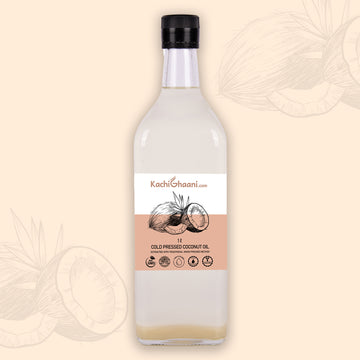
You can, but it is awkward, and Ayurveda would not choose it. Coconut oil turns solid below about 24°C (75°F), so on a cold day you will be scooping white, waxy lumps and melting them in your palms. Once warmed, it moisturises well.
The tradition calls coconut oil cooling, which is exactly why it is kept for hot weather. If it is the oil you love, use it after a warm bath, when your skin and the room are warm, or keep the bottle in a warm spot and melt a little in your hands.
Which body oil should you use in summer?
Coconut oil, for most people. In hot, humid months heavy oils can feel sticky, while a thin film of coconut oil after a bath feels light to many people. The tradition calls it cooling, the opposite of sesame oil's warmth, and that is why the two swap places with the seasons. Use less oil overall, apply it after a cool or lukewarm bath, and pat off the excess. Almond oil is a good alternative if coconut oil feels too heavy.
| Season | Weather | Oil | How to use it |
|---|---|---|---|
| Winter | Cold, dry | Sesame oil; mustard oil for sturdy skin | Warm the oil, massage before a warm bath, or apply a little to damp skin after |
| Spring | Mild, damp | Sesame or mustard oil, lightly | A shorter, brisker massage with less oil |
| Summer | Hot, humid or hot, dry | Coconut oil | Room temperature, a thin layer after a cool bath |
| Monsoon | Warm, very humid | Sesame or coconut oil, sparingly | Less oil; dry skin folds well |
| All year | Any | Almond oil | Face, sensitive skin, anyone who dislikes strong smells |
What science agrees on: oil holds in moisture
The warming and cooling qualities are traditional. The moisture part is plain skin science. Winter air holds little water, indoor heating dries it further, and skin loses water faster. A thin film of oil slows that loss.
The American Academy of Dermatology's advice for dry skin fits the old routine neatly:
- Keep baths and showers to five to ten minutes, in warm rather than hot water.
- Apply your moisturiser, or your oil, while the skin is still damp after bathing.
- Choose richer textures in winter; the AAD notes that ointments and creams hold moisture better than lotions.
- Run a humidifier in the bedroom if your home is heated and dry.
For very dry patches, such as cracked heels, a thicker overnight routine works better: see the overnight oil routine for cracked heels.
Who should be careful with body oils
- Eczema, psoriasis or very sensitive skin: ask a dermatologist before using plant oils, and avoid mustard oil.
- Seborrhoeic dermatitis or acne-prone areas: some dermatologists advise keeping plant oils off these areas, because the yeast involved in seborrhoeic dermatitis can feed on them.
- Allergies: sesame and mustard are recognised food allergens in many countries, and almond is a tree nut. Patch test every new oil on your inner arm for 24 hours.
- Babies: use only mild oils, gently, and ask your paediatrician first.
- Slips: oil makes bathroom floors slippery, so wipe your feet before you step out.
Our oils through the year
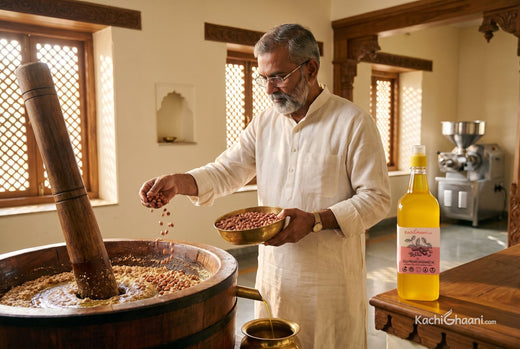
For winter, our Truly Cold Pressed white sesame oil or the richer black sesame oil, and for sturdy skin our black mustard oil. For summer, our coconut oil, and for every season our almond oil. All are pressed slowly in wooden ghaanis and left unrefined, so a little cloudiness in the cold is normal.
The bottom line
Choose warming sesame oil, or mustard oil if your skin is sturdy, for the cold, dry months, and switch to light coconut oil when the heat arrives, with almond oil as the gentle all-rounder. The tradition explains the choice; the science explains why any of them helps: oil on damp skin keeps winter dryness at bay.
Frequently asked questions
Should I apply body oil before or after a bath in winter?
Both work. The Ayurvedic way is to massage warm oil in, wait 10 to 20 minutes and then bathe, so a thin film stays on the skin. Or bathe first and apply a little oil to damp skin, which dermatologists recommend for dry skin. Pat yourself dry gently instead of rubbing.
Can I use sesame oil on my face in winter?
You can try a few drops on dry skin, but the face is more prone to clogged pores and spots than the body. Start with a small area, use very little, and stop if you break out. Almond oil is the gentler, more common choice for the face in winter.
Can I mix coconut oil with sesame oil in winter?
Yes. A half-and-half blend stays liquid at cooler temperatures than coconut oil alone, and in the tradition it softens sesame oil's warmth. It is a sensible in-between choice for spring and autumn, or for people who run warm but still get dry skin in winter.
How often should I oil my body in winter?
Daily is traditional, and in very dry weather it suits most people. If daily feels like too much, two or three times a week still helps, along with a little oil or cream on damp skin after every bath. On oily or acne-prone areas such as the back and chest, use less.
Is a body oil better than a lotion in winter?
Neither is always better. Lotions and creams bring water and oil together, while a plant oil adds no water but is good at slowing water loss. For dry winter skin, oil smoothed onto damp skin after a bath works well, and so does a rich cream: the American Academy of Dermatology notes that creams and ointments are more effective than lotions.
Is mustard oil better than sesame oil in winter?
Not better, just different. Mustard oil feels warmer and is much loved in North India, but its pungent compound can irritate sensitive skin. Sesame oil is milder, smells gentler and suits more people. If your skin is sturdy and you enjoy the smell, mustard oil is a fine winter choice.