Mustard oil uses across Bengal, Bangladesh, Punjab and Nepal
Mustard oil uses change from kitchen to kitchen: raw on Bengali bhorta and Bihari chokha, hazed for curries, the pickling oil of Punjab and Nepal, and a warming winter massage oil.

Mustard oil uses across eastern and northern South Asia fall into three groups: raw, as a sharp seasoning for mashes, puffed rice and soaked rice; heated, as the everyday frying and curry oil; and as the classic pickling and winter massage oil. How it is used, and how hot it is taken, changes from Bengal to Punjab to Nepal.
It helps to know the difference if you grew up with one style and meet another, or are buying mustard oil abroad for the first time. The same bottle can dress a Bihari chokha raw, carry a Bengali fish curry and keep a Punjabi pickle for months, and each use asks something different of the oil.
At a glance
- Raw mustard oil, used by the spoonful, is the signature of Bengali, Bangladeshi, Bihari and Assamese mashes, jhal muri and panta bhat.
- For curries and frying, most cooks heat it to a light haze first, which softens its sharp, nose-tingling bite.
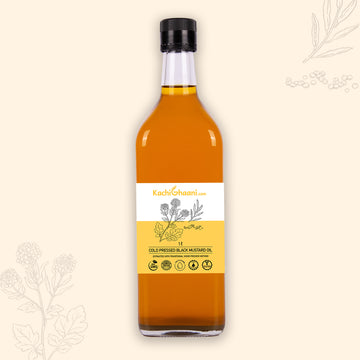
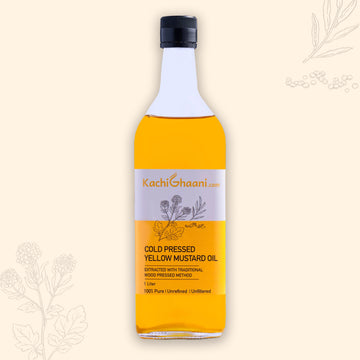
- Yellow mustard oil is usually paler and milder; black mustard oil is darker and more pungent.
- It is the traditional pickling oil from Punjab to Nepal, and a familiar winter body oil across the north and east.
- Traditional mustard oils are high in erucic acid, so rules abroad differ; the US does not allow expressed mustard oil to be sold for cooking.
What are the uses of mustard oil in South Asian kitchens?
Mostly as the everyday cooking fat of the east and north, as a raw seasoning, and as the oil that keeps pickles. Mustard has long been the local oilseed of the northern and eastern plains, sown as a winter crop. In Hindi and Punjabi it is sarson ka tel, in Bengali shorsher tel, and in Nepali tori ko tel.
Here is how it changes from kitchen to kitchen:
| Region | Signature dishes | How the oil is used |
|---|---|---|
| West Bengal and Bangladesh | Shorshe ilish, macher jhol, aloo bhorta, jhal muri, panta bhat | Heated for fish curries; raw over mashes, puffed rice and soaked rice |
| Bihar and Jharkhand | Litti chokha, baingan chokha | Raw in the chokha and in the spiced sattu filling of litti |
| Assam | Aloo pitika, masor tenga | Raw in pitika; heated for sour fish curry |
| Kashmir | Haak, dum aloo, Kashmiri Pandit rogan josh | Heated to a haze, cooled slightly, then the spices |
| Punjab (India and Pakistan) | Mango, lime and mixed vegetable achaar; fish marinades | The pickling oil; a spoonful in some marinades |
| Nepal | Achar, sadeko salads, everyday tarkari | Raw or briefly tempered over salads and achar; everyday frying |
Why do Bengalis cook with mustard oil?
Because it is the local oil, and because its sharp flavour is part of the food, not something to hide. Bengali and Bangladeshi cooking is built around freshwater fish, rice and greens, and mustard often appears twice in one dish: as a paste of ground seed and as the oil.
Take shorshe ilish, hilsa cooked in mustard paste and mustard oil with green chillies, often finished with a little raw oil. Everyday macher jhol, a light fish curry, starts with fish fried in mustard oil and a tempering of paanch phoron, a five-spice mix of fenugreek, nigella, cumin, mustard and fennel seeds. The pungency, which Bengali cooks call jhaanj, cuts through the richness of oily fish and wakes up plain rice.
Can raw mustard oil be eaten?
Yes. In South Asia it is eaten raw every day in small amounts, as a seasoning rather than a cooking fat. A teaspoon or two (5 to 10 ml) is enough for a bowl, and the raw sharpness is exactly the point.
- Aloo bhorta in Bangladesh, or aloo bhaate in West Bengal: boiled potato mashed with raw oil, onion, green chilli and salt.
- Jhal muri: Kolkata's puffed rice tossed with mustard oil, onion and chilli.
- Panta bhat: rice soaked overnight in water, eaten with salt, onion, chilli and a drizzle of oil, especially on Pohela Boishakh, the Bengali New Year.
- Baingan chokha in Bihar: fire-roasted aubergine mashed with raw oil, garlic and chilli.
- Aloo pitika in Assam and sadeko salads in Nepal, both finished with raw oil.
One honest note. Traditional mustard oils are naturally high in erucic acid, a fatty acid linked to heart changes in animals fed large amounts. The US Food and Drug Administration says expressed mustard oil may contain 20 to 40 percent erucic acid and does not allow it to be sold as a cooking oil, and the European Union caps erucic acid in mustard oil at 50 g per kg. If you live abroad, follow your local labelling, and read our explainer on what the 'banned in America' story actually means.
Why is mustard oil heated until it smokes?
To tame its raw pungency before cooking. The sharp kick comes from allyl isothiocyanate, a volatile compound, so heat drives much of it off and leaves a rounder, nuttier oil for curries and frying.
A light haze is enough:
- Heat the oil in a dry kadhai or heavy pan over medium heat.
- Watch for the first thin wisps of haze; the colour often turns a shade paler.
- Take the pan off the heat for 30 to 60 seconds, so it is still very hot but no longer hazing.
- Add your whole spices, onions or fish, and carry on cooking.
Mustard oil has a high smoke point, about 250°C (480°F), so it handles frying well. Holding any oil at heavy smoke, or reheating it again and again, breaks it down, so stop at the haze. Our guide to smoke points of Indian cooking oils compares it with the others. For pickles, the oil is heated to the haze and then cooled completely; we cover that in preparing mustard oil for achaar the traditional way.
Is yellow mustard oil milder than black mustard oil?
Usually, yes. Yellow mustard oil, pressed from yellow seed, is a brighter gold and gentler on the nose and tongue. Black mustard oil, pressed from dark seed, is a deeper amber-brown and noticeably sharper. The difference comes from the natural sulphur compounds in each seed: dark mustard seed carries more of the kind that turns sharply pungent when the seed is crushed.
Many cooks keep both: black for fish curries, achaar and anything that wants the full bite; yellow for raw dressings, everyday sabzi and anyone who finds black mustard oil too strong.
Mustard oil uses beyond the kitchen
Mainly as a winter body and hair oil, and as lamp oil. On cold mornings from Punjab to Bangladesh and Nepal, many families rub warm mustard oil into the skin before a bath, sometimes warmed with a clove of garlic or a pinch of ajwain (carom seeds). Some oil their hair with it, and in much of North India it fills the clay diyas at Diwali.
As a body oil it does what any rich oil does: it softens dry winter skin. It can also sting or redden sensitive skin, so patch test it first. Babies are a special case: researchers working in Bangladesh and Nepal have raised concerns that mustard oil may be harsh on a newborn's thin skin, and many paediatricians prefer milder oils. Our baby malish guide covers the safe way.
Who should be careful with mustard oil?
- People with a mustard allergy should avoid it in food and on skin. Mustard is a listed food allergen in the EU, the UK and Canada.
- Sensitive or broken skin: test a little on your inner arm first, and keep it away from eyes, cuts and rashes.
- Newborns and young babies: ask your paediatrician before using mustard oil on a baby's skin.
- Anyone with a heart condition, or on a diet that limits fat, should ask their doctor which oils suit them.
- Everyone: ventilate the kitchen when heating it, and do not let it smoke heavily.
Using our mustard oils
If you want to cook along with these traditions, our Truly Cold Pressed black mustard oil is the darker, sharper one for fish curries and achaar, and our Truly Cold Pressed yellow mustard oil is the gentler one for raw dressings and everyday cooking. Both are pressed slowly in wooden ghaanis and left unrefined and unfiltered, so a little sediment is normal.
The bottom line
Mustard oil is one oil with many personalities: raw and fiery on a Bengali bhorta, mellowed by heat in a Kashmiri curry, and steady in a Punjabi or Nepali pickle jar. Pick black for bite and yellow for gentleness, heat it to a haze rather than a heavy smoke, and use it with the same moderation as any oil.
Frequently asked questions
Is mustard oil good for frying?
Yes. With a smoke point of about 250°C (480°F), it is the everyday frying oil for fish, pakoras and vegetables in Bengal, Bihar and Nepal. Heat it to a light haze first to mellow its pungency, fry in small batches, and do not reuse the same oil many times.
Why does mustard oil make my eyes and nose sting?
The sting comes from allyl isothiocyanate, a natural compound released from crushed mustard seed, the same one that gives wasabi and horseradish their kick. It rises as vapour, especially when the oil is heated. Open a window or run the extractor fan, and do not lean over the pan while it hazes.
Can mustard oil be used as a salad dressing?
Yes, in small amounts. Nepali sadeko and Bengali bhorta both use raw mustard oil as a dressing. Whisk a teaspoon with lime juice, salt and a little chilli, or use yellow mustard oil if you want it milder. Its flavour is strong, so start with less than you would of other oils.
How long does mustard oil keep once opened?
Unrefined mustard oil keeps well with the cap closed, away from light and heat. Our mustard oils are best used within about 6 months. If it smells stale, flat or paint-like instead of sharp and fresh, it is past its best and should not be used for cooking.
Sources
- US Food and Drug Administration, Import Alert 26-04 on mustard oil, 2026
- AGES (Austrian Agency for Health and Food Safety), Erucic acid in mustard oils, 2025
- Summers et al., Sunflower seed oil versus mustard seed oil and newborn skin barrier function, BMC Pediatrics, 2019
- Darmstadt and Saha, Neonatal oil massage, Indian Pediatrics, 2003