Vanaspati ghee is not ghee: what vanaspati really is
What is vanaspati? Many kitchens still call it ghee, but it contains no milk at all. How it is made, why it carried so much trans fat, what has changed, and how to tell it from desi ghee.

Vanaspati is hardened vegetable oil: refined plant oils, often palm blended with others, that a factory process called hydrogenation turns solid and grainy so they look and cook like ghee. Despite the name vanaspati ghee, it contains no milk at all; real ghee is made only from milk fat.
The confusion is old. Vanaspati was first imported by Dutch traders and was being made in Indian factories by the 1930s, sold as a cheaper stand-in for ghee, and in many homes and shops the two words still blur. The difference matters, because for most of its history vanaspati was one of the biggest sources of trans fat in the Indian diet.
At a glance
- Vanaspati is a Sanskrit word for the plant kingdom. The product is hardened vegetable oil, with no milk or animal fat.
- Desi ghee is milk fat: butter or cream simmered until the water is gone and the milk solids are strained away.
- Old-style partially hydrogenated oils hold about 25 to 45% trans fat, according to WHO. India now limits trans fat in oils and fats, vanaspati included, to 2%.
- Today's vanaspati is far less harmful than it was, but it is still a heavily processed fat, and it is still not ghee.
- The label tells you: look for "vanaspati" or "hydrogenated vegetable oil" in the name or ingredients.
What is vanaspati ghee made of?
Refined vegetable oils, today usually palm oil and palmolein, sometimes blended with soybean, cottonseed or rice bran oil, that are hardened in a factory.
The oil is first refined (here is how refined oil is made). Then comes hydrogenation: hydrogen gas is bubbled through the hot oil with a metal catalyst, usually nickel. The hydrogen attaches to the fat molecules and straightens some of them, so the oil turns solid at room temperature. Stop the process partway, as vanaspati makers long did, and you get a cheap fat that keeps for months and has the grainy look of ghee. You also get trans fat, created as a side effect.
Newer methods, such as blending fully hydrogenated fat with liquid oil or rearranging the fats (interesterification), produce far less trans fat. That is how makers now meet India's limits.
Is vanaspati made from animal fat?
No. Vanaspati is made only from vegetable oils, with no milk, butter or animal fat. That is exactly why it is not ghee.
For decades, Indian food rules required vanaspati to carry a little sesame oil as a marker, so that ghee cut with cheaper vanaspati could be caught by a simple laboratory colour test. The rule existed because passing vanaspati off as ghee was, and still is, a real problem.
What is the difference between vanaspati and desi ghee?
They come from different sources and different processes. Ghee is cooked milk fat; vanaspati is hardened plant oil.
| Desi ghee | Vanaspati | |
|---|---|---|
| Made from | Milk fat from cow or buffalo butter or cream | Refined vegetable oils, often palm |
| How it is made | Butter or cream simmered until the water evaporates; milk solids strained off | Oil refined, then hydrogenated or blended in a factory |
| Look | Golden (cow) or white (buffalo); grainy when set | White or pale cream; smooth or evenly grainy |
| Aroma when warmed | Nutty and buttery | Flat or faintly oily |
| Trans fat | Small amounts of natural trans fat, as in all dairy fat | Industrial trans fat, now capped at 2% in India |
| Saturated fat | High, roughly 60% | High |
Ghee is not a free pass either. It is rich in saturated fat, so it belongs in small amounts. But it is a traditional food made from one ingredient, and our guide to the bilona method shows how the most traditional kind is made.
Is vanaspati harmful? The trans fat story
Old-style vanaspati was genuinely harmful because of its trans fat. Today's vanaspati in India carries far less, but it is still best kept to a minimum.
The American Heart Association explains that trans fat raises LDL ("bad") cholesterol and lowers HDL ("good") cholesterol. WHO links industrial trans fat to more than 278,000 deaths a year worldwide and says it has no known health benefit. That is why WHO asks every country either to cap industrial trans fat at 2 grams per 100 grams of fat or to ban partially hydrogenated oils, and why the United States stopped allowing them in food from 2018.
India chose the cap. Since January 2022, FSSAI rules have limited trans fat in edible oils and fats, including vanaspati, margarine and bakery shortening, to 2% by weight. So the vanaspati on shelves now is far less harmful than the vanaspati of your grandparents' day. It remains a processed, saturated fat, and WHO advises keeping all trans fat below 1% of daily energy, which is less than 2.2 grams on a 2,000-calorie diet.
How can you tell vanaspati from desi ghee?
Read the label first, then trust your nose. Texture alone can fool you, because vanaspati is made to look grainy too.
- Name and ingredients. Ghee is sold as ghee and lists milk fat. Vanaspati is named as vanaspati, hydrogenated vegetable oil or vegetable fat. Our guide to reading an oil label in India explains the rest of the pack.
- Smell. Warm a spoonful. Ghee smells nutty and buttery; vanaspati smells flat or faintly oily.
- In the pan. Cow ghee melts into a clear golden liquid and perfumes the kitchen; vanaspati melts clear but quiet, and can leave a waxy feel in the mouth.
- Skip the home "purity tests". Videos using acids or iodine need lab chemicals and are easy to misread.
Who should be most careful
If you have high cholesterol, heart disease or diabetes, keep both vanaspati and ghee to small amounts and follow your doctor's advice on fats. Watch for vanaspati in fried snacks, sweets and bakery items too, where it is easy to miss. For everyday cooking, liquid oils used in moderate amounts are the simpler choice.
If you want real ghee
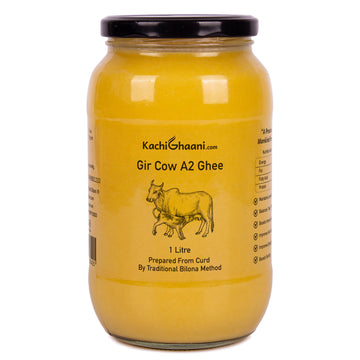
If a recipe calls for ghee, use the real thing. Our A2 Gir cow ghee is made the bilona way: milk from Gir cows set as curd, hand-churned into makkhan (butter) and slowly simmered, so it is naturally golden and grainy. It is rich, so a spoon goes a long way.
The bottom line
Vanaspati is hardened vegetable oil, not ghee. Today's Indian vanaspati carries far less trans fat than it once did, but it remains a processed fat best kept to a minimum. Read the label, and when a dish needs ghee, use a little of the real thing.
Frequently asked questions
Why is vanaspati called ghee?
Because it was made to replace ghee. When it reached India, first as an import and then from Indian factories in the 1930s, it was sold as a cheaper fat that looked, set and cooked much like ghee, and people began calling it vegetable ghee. The habit stuck in kitchens, shops and recipes, even though it contains no milk.
Is vanaspati vegan?
It is made only from vegetable oils, so it contains no milk or animal fat. Strict vegans may still want to read the ingredient list for any added vitamins or flavourings, and ask the maker if anything is unclear. It is also, of course, completely different from ghee.
Is it safe to cook with vanaspati occasionally?
An occasional dish made with today's low trans fat vanaspati is unlikely to matter much for a healthy person. The concern is regular use, especially in fried snacks and bakery foods, where it adds up quickly. Use liquid oils for everyday cooking and keep every solid fat, ghee included, to small amounts.
Does ghee contain trans fat too?
A little. All dairy fat contains small amounts of natural trans fat, formed by bacteria in the cow's stomach. The amount in ghee is far below old-style vanaspati, but ghee is high in saturated fat, so it still belongs in small portions within a balanced diet.
Can vanaspati be mixed into ghee?
Yes, and mixing cheaper fats into ghee is an old problem in India, which is why the sesame marker rule was brought in. Buy ghee from makers you trust, check that the pack shows an FSSAI licence number, and be wary of ghee sold for far less than the usual rate.