Coconut oil for hair, the way Kerala and Sri Lanka use it
In Kerala and Sri Lanka, coconut oil for hair is an everyday habit. Here is their method made simple: how much to use, how long to leave it, how to wash it out, and its honest limits.

To use coconut oil for hair the way Kerala and Sri Lanka do, warm a little until it is liquid, massage some into the scalp and the rest into the lengths and ends, leave it for 30 minutes or overnight, then shampoo it out. Used before washing, it softens hair and reduces breakage. It does not grow new hair.
In both places this is not a trend. It is simply what families do. In Kerala, coconut oil is velichenna in Malayalam, and the weekly oil bath, enna thechu kuli, is a childhood memory for millions. In Sri Lanka it is pol thel, kept in every kitchen and bathroom. Here is that habit turned into a clear method, with what the science says and where it stops.
At a glance
- In Kerala and Sri Lanka, coconut oil goes on before the bath as a pre-wash conditioner, not as a styling product.
- A 2003 laboratory study found that coconut oil used before washing reduced protein loss from hair; mineral oil and sunflower oil did not.
- Use about 1 teaspoon (5 ml) for short hair and up to 2 tablespoons (30 ml) for very long, thick hair.
- Leave it on for 30 minutes to overnight, then apply shampoo to the oiled hair before adding water.
- It softens and protects. It does not grow new hair or clear dandruff, and fine hair may find it heavy.
How do Kerala and Sri Lanka use coconut oil on hair?
Generously, regularly and before washing. Hair oil is part of bathing, not something left in to style.
Kerala
In traditional Malayali homes, oil goes on the scalp and down the length of the hair, daily in many older households and once or twice a week in most homes today. Children sit on the steps while a grandmother works the oil through their hair, and then everyone bathes. Long, heavy plaits finished with jasmine are the picture people carry of Kerala hair, and coconut oil is part of that picture.
Sri Lanka
Sri Lankan families use coconut oil in much the same way, and the habit reaches into ritual. At the Sinhala and Tamil New Year in April, many households still keep a ritual bath with herbal oils, a fresh start for the year ahead.
The Philippines
Further east, Filipino families have long made coconut oil at home by slowly boiling coconut milk until the oil separates from the toasted curds, called latik in much of Luzon.
How to use coconut oil for hair, step by step
The everyday Kerala method, written down. Start with dry hair.
- Melt it if it is solid. Coconut oil turns solid below about 24°C (75°F). Stand the closed bottle in a bowl of warm water for a few minutes. It should feel just warm on your wrist, never hot.
- Section your hair into four parts so the oil reaches the scalp evenly.
- Do the scalp first. Put a little oil on your fingertips and massage it in with small, gentle circles for three to five minutes. Our guide to champi, the warm-oil head massage, shows the full technique.
- Work the rest into the lengths. Most of the oil belongs on the mid-lengths and ends, the oldest and most worn part of each hair.
- Wait at least 30 minutes. Overnight is fine if your scalp is comfortable; wear a cotton scarf or use an old pillowcase.
- Wash it out. Apply shampoo to the oiled hair first, work it in, then add water and rinse. Shampoo again if needed. Our guide to washing hair oil out without stripping your hair has more tips.
How much coconut oil for your hair length
| Hair length | Coconut oil | Where it goes |
|---|---|---|
| Short, above the chin | 1 teaspoon (5 ml) | Mostly the scalp, a little on the ends |
| Shoulder length | 2 teaspoons (10 ml) | A quarter on the scalp, the rest on the lengths |
| Mid-back | 1 tablespoon (15 ml) | A quarter on the scalp, the rest on the lengths and ends |
| Waist length or very thick | 1½ to 2 tablespoons (about 22 to 30 ml) | Mostly the lengths and ends |
Start with less: too much only means a harder wash.
How to make a coconut oil hair mask
A coconut oil hair mask is simply a longer, richer version of the pre-wash oiling above, useful when hair feels especially dry. Warm 1 to 2 tablespoons (15 to 30 ml) of coconut oil, work it through dry hair from the mid-lengths to the ends, cover your hair with a shower cap or a warm towel for 30 to 60 minutes, then shampoo it out.
Some people stir in a teaspoon of honey or aloe vera gel. These add-ins are popular, but there is little research behind them, so keep the mix simple and patch test anything new on your inner arm first.
Should coconut oil go on before or after shampoo?
Before, mainly: that is both the tradition and where the evidence sits.
In a 2003 study in the Journal of Cosmetic Science, Rele and Mohile compared coconut oil, sunflower oil and mineral oil on hair. Coconut oil was the only one that reduced protein loss, in both undamaged and damaged hair, when used before washing and as a light grooming product after washing. Sunflower and mineral oil did not help.
The authors put this down to coconut oil's main fat, lauric acid. Its molecule is small and straight, so it can travel into the hair shaft, and it has an affinity for hair protein. Mineral oil has no such affinity, and sunflower oil's bulkier fats stay on the surface. Less protein loss means hair that is less likely to fray and snap when washed and combed.
After washing, use only a few drops on damp ends, rubbed between your palms first, to calm frizz. One caution: this was laboratory work on hair fibres, not a trial on people, and it measured damage to the hair shaft, not growth from the root.
How long should coconut oil stay in hair? Can you leave it overnight?
Thirty minutes is enough to soften hair before a wash, and one to two hours is typical. Overnight is fine for most people, and many Kerala grandmothers would call it the proper way.
Do not leave it for days, though: it collects dust and smells stale. If your scalp itches, feels heavy or breaks out along the hairline, keep the time short and the oil mostly on the lengths.
Is coconut oil good for fine or low porosity hair?
It can be, in small amounts. Fine hair is easily weighed down, so use half the amounts in the table, keep the oil on the lengths, and wash it out after 30 to 60 minutes.
Low porosity hair, whose outer layer lies flat and tight, tends to let oil sit on top. Warm the oil slightly, use very little, and apply it before a warm shower. If hair still feels coated or stiff after washing, try a lighter oil such as almond. Thick, coarse or curly hair usually takes coconut oil well.
How do you use coconut oil when it has turned solid?
Melt it gently. Solid, white coconut oil in winter is normal and does not mean it has gone off; it turns clear again when warmed. Stand the bottle in warm water, or scoop a little out with a clean, dry spoon and melt it between your palms. Never let water into the bottle. A little cloudiness or sediment is also normal for unrefined oil, as our note on why cold pressed oil looks cloudy and how to store it explains.
Who should be careful
- Dandruff or seborrhoeic dermatitis. The yeast linked to dandruff, Malassezia, feeds on fats. In a 2023 letter in Skin Appendage Disorders, three dermatologists pointed to laboratory tests in which this yeast grew on common oils, coconut oil included, and suggested keeping oils off the scalp and on the lengths instead. For dandruff, the American Academy of Dermatology suggests shampoos with ingredients such as zinc pyrithione, ketoconazole or selenium sulfide.
- Acne along the hairline or on the back. Keep oil away from your face and rinse your hairline well.
- Allergy. Coconut allergy is uncommon but real. Test a little on your inner arm first.
- Broken or inflamed skin. Do not oil a scalp with cuts, sores or an active rash.
- Sudden or patchy hair loss. See a doctor or dermatologist; oil will not fix the cause.
Using our coconut oil
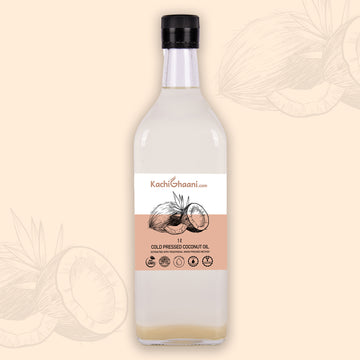
If you want to try the Kerala way, our Truly Cold Pressed coconut oil is pressed slowly in a wooden ghaani from dried copra, the kind of oil Kerala homes have long used, and left unrefined. If you are curious how copra oil differs from oil made from fresh coconut, our guide to cold pressed coconut oil and how to use it explains.
The bottom line
Kerala and Sri Lanka got the essentials right long before the laboratory did: coconut oil works best as a pre-wash conditioner, used regularly and washed out well. It softens hair and protects it from breakage. It will not grow new hair, and a flaky scalp is better served by the right shampoo.
Frequently asked questions
Can I use coconut oil on my hair every day?
You can, but you rarely need to. Daily oiling means daily washing, which can dry hair out. Once or twice a week before washing is enough for most people. On dry, coarse hair, a few drops on the ends each day, after styling, is a gentler way to use it.
Does coconut oil make hair grow faster?
There is no good evidence that it does. Hair growth starts in the follicle under the skin, which oil does not change. What coconut oil can do is reduce breakage, so ends stay intact and hair may look longer and fuller over time. For thinning or shedding, see a dermatologist.
Is coconut oil good for dandruff?
Not as a fix. Dandruff is linked to a yeast that thrives on fats, and dermatologists suggest keeping oils on the lengths, not the scalp, if you are prone to flakes. Medicated dandruff shampoos, left on the scalp for a few minutes before rinsing, are what dermatologists recommend.
Should I warm coconut oil before putting it on my hair?
Only enough to make it liquid and comfortably warm, never hot. Warm oil spreads more easily and feels pleasant during a scalp massage. Stand the bottle in warm water rather than heating the oil directly, and test a drop on your wrist first.
Can I mix coconut oil with castor or almond oil?
Yes. Many people mix one part castor oil with three parts coconut oil for the ends, because castor oil is very thick on its own. Almond oil blends easily and makes the mix lighter. Keep any blend in a clean, dry bottle and use it within a few weeks.